
Breakfast & Brunch
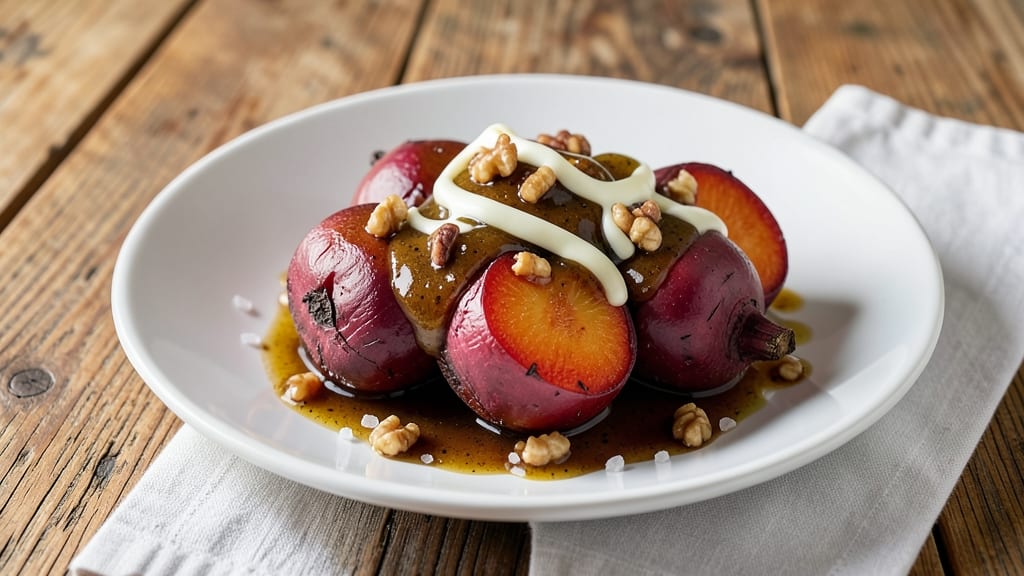
The Joy of Cooking Harvard beets recipe transforms humble beets into a showstopping dish with deep caramelized flavors and a tangy vinegar glaze that elevates every bite. This classic preparation—rooted in New England tradition—balances sweetness and acidity in a way that feels both nostalgic and refined.
What makes it special is the walnut-based sauce, which adds richness without overpowering the earthy beets.
Cooking Harvard beets requires patience, but the result is worth every minute. The beets develop a glossy, deep red glaze when roasted, while the vinegar and walnut sauce adds a sophisticated tang that cuts through the natural sweetness.
This dish is perfect for brunch gatherings or elegant weeknight dinners, where it pairs beautifully with roasted meats or crusty bread.
The recipe begins with peeling and slicing beets into uniform pieces, ensuring even cooking. A simple glaze of vinegar, sugar, and butter transforms them into tender, caramelized slices.
The walnut sauce—made with toasted walnuts, cream, and a touch of mustard—ties everything together with a velvety texture that enhances rather than masks the beets' natural flavor.
Once mastered, this dish becomes a staple in your culinary repertoire. The combination of textures—tender beets, creamy sauce, and crisp walnuts—creates a harmonious bite that feels both comforting and impressive. Let’s get started on this timeless recipe that brings a touch of New England charm to your table.
Ingredients for joy of cooking harvard beets
Six ingredients transform humble beets into a New England classic with caramelized sweetness and sophisticated tang.
| Ingredient | Amount | Notes |
|---|---|---|
| Medium Beets 🍠 | 2 lbs | Organic preferred, uniform size |
| White Vinegar 💧 | ½ cup | Distilled or apple cider |
| Granulated Sugar 🍚 | ¼ cup | Light brown preferred for depth |
| Unsalted Butter 🧈 | 4 tbsp | Cold, cubed for glaze |
| English Walnuts 🥜 | 1 cup | Toasted, skin-on for texture |
| Heavy Cream 🥛 | ½ cup | Full-fat for richness |
| Dijon Mustard 🌶️ | 1 tbsp | High-quality for tang |
| Fresh Thyme 🌿 | 2 sprigs | Leaves only, finely chopped |
| Kosher Salt 🧂 | 1 ½ tsp | Diamond Crystal preferred |
| Black Pepper 🌶️ | ½ tsp | Freshly cracked |
| Extra-Virgin Olive Oil 🫒 | 2 tbsp | For roasting tray |
| Fresh Parsley 🌿 | ¼ cup | Chopped, for garnish |
The beets are the foundation, so prioritize organic, uniform specimens—avoid small or misshapen roots that cook unevenly. Whole Foods Market and local farmers' markets offer the best quality, though most grocery stores carry pre-washed beets if you prefer convenience. For optimal texture, select beets with smooth, glossy skins and firm flesh. If using pre-peeled beets, rinse thoroughly to remove any soil residue that could affect the glaze's clarity. The walnuts should be freshly toasted—their nutty depth is essential to balancing the beets' earthiness. Purchase walnuts in small quantities from specialty stores like Penzeys or bulk bins at natural food markets to ensure maximum freshness.
No white vinegar? Apple cider vinegar works equally well, though it adds a subtle fruitiness that complements the beets' natural sweetness. Substituting light brown sugar for granulated? Use the same amount—its molasses notes enhance the caramelization. For the walnut sauce, pecans or hazelnuts can replace walnuts, though texture will differ slightly. Short on heavy cream? Whole milk plus 1 tbsp butter achieves similar richness. The Dijon mustard is non-negotiable—it provides the necessary acidity to cut through the beets' sweetness, but whole-grain mustard can be used in a pinch, though it may introduce a coarser texture. Fresh thyme can be substituted with dried thyme at one-third the quantity, but fresh imparts a brighter, more aromatic profile.
Beets can be peeled and sliced up to 2 days in advance, stored in airtight containers with a damp paper towel to maintain moisture. The walnut sauce keeps well for 5 days refrigerated or 3 months frozen in airtight containers. For best results, reheat the sauce gently over low heat, stirring constantly to prevent separation. The finished dish reheats beautifully—simply warm the beets and sauce together in a skillet with a splash of water or cream to restore moisture. Garnish with fresh parsley just before serving to preserve its vibrant color and bright flavor. Portion leftovers into individual containers for easy reheating throughout the week.
Why You'll Love This Recipe
- No Boil, No Fuss: I swear by this method—just roast the beets whole, then peel and slice. No messy boiling, no waiting for water to heat, just hands-off perfection while you prep the rest of dinner.
- Sweet-Tart Magic: That vinegar and sugar glaze? It’s the secret. The beets stay tender with a bright, almost candy-like edge, and the walnuts add crunch that makes every bite feel like a little celebration.
- Potluck Star: Between us, these beets disappear at gatherings. They’re hearty enough for a main (pair with cheese!), but light enough for a side—plus, they travel well, so you’re the hero who brings the dish no one else thought to make.
- Budget Brightener: Fresh beets are cheaper than you’d think, and this recipe stretches them far. Use leftovers in salads, sandwiches, or even frittatas—honestly, I’ve eaten them cold for days and still craved them.
Step-by-step instructions for Harvard beets
Transform humble beets into elegant Harvard-style sweetness with this precise technique.
Prepare and Roast the Beets
Preheat your oven to 400°F and line a baking sheet with aluminum foil. Place the 2 lbs medium beets on the sheet and drizzle evenly with the 2 tablespoons extra-virgin olive oil. Toss gently to coat, then sprinkle with 1 teaspoon kosher salt and ¼ teaspoon black pepper. This coating ensures even roasting and prevents drying.
Wrap each beet individually in a small piece of foil, sealing tightly to create a sealed packet. Roast for 45-55 minutes until the beets are fork-tender when pierced with a knife. The foil traps steam, creating tender, caramelized beets with minimal effort. Remove from oven and let cool slightly before peeling - the skins should slip off easily once cooled.
Create the Glaze and Walnut Mixture
While the beets roast, toast the 1 cup English walnuts in a dry skillet over medium heat for 5-7 minutes until fragrant and lightly golden. Transfer to a cutting board and roughly chop, leaving some texture for contrast. In the same skillet, melt the 4 tablespoons unsalted butter over low heat until foamy.
Remove from heat and whisk in the 0.25 cup granulated sugar and 1 tablespoon Dijon mustard until smooth. The sugar will dissolve completely, creating a glossy base for the glaze. Keep this mixture warm as you'll combine it with the roasted beets shortly. The Dijon mustard adds subtle tang that balances the sweetness.
Combine Beets with Glaze and Cream
Once the beets are cool enough to handle, peel them and cut into ½-inch thick slices. In a large bowl, combine the sliced beets with the warm butter-sugar mixture, tossing gently to coat evenly. The slices should glisten with the glaze - if they look dry, add 1 tablespoon white vinegar to help distribute the coating.
In a separate small saucepan, gently warm the 0.5 cup heavy cream over low heat until steaming but not boiling. Add the 2 sprigs fresh thyme and let steep for 3 minutes, then remove and discard the thyme sprigs. Pour this infused cream over the beets and toss again to combine completely. The cream adds luxurious richness that complements the vinegar's tang.
Finish with Vinegar and Garnish
Return the beets to the saucepan and carefully pour in the 0.5 cup white vinegar. Gently stir to combine, being careful not to break the beet slices. Simmer over medium-low heat for 8-10 minutes until the liquid reduces slightly and coats the beets in a glossy sheen. The vinegar transforms the dish from sweet to perfectly balanced with bright acidity.
Remove from heat and stir in the chopped walnuts and 0.25 cup fresh parsley. Let sit for 5 minutes to allow flavors to meld. Serve warm or at room temperature, garnished with additional parsley if desired. The contrast of crisp walnuts against tender beets creates a satisfying textural experience.
Pro Tips For Making Joy Of Cooking Harvard Beets
- Trim the Beets First: I learned this the hard way—peeling beets before roasting leads to messy pans and uneven cooking. Use a sharp knife to slice off the stem and root ends, then scrub them under water. The skins will slip off easily after roasting, and you’ll avoid the dreaded beet juice splatter.
- Use a Pinch of Salt in the Vinegar: The vinegar-sugar glaze needs balance, and plain white vinegar can taste harsh. Add a tiny pinch of salt (about ¼ teaspoon per cup of vinegar) to round out the flavors. Trust me, your taste buds will notice the difference—it’s subtle but makes the dish taste more polished.
- Don’t Overcrowd the Walnuts: Toasting walnuts in batches is tedious, but skipping this step means bland, underdeveloped flavor. Use a dry skillet over medium heat and spread them in a single layer—yes, it’ll take two rounds, but the result is worth it. Burnt walnuts happen fast, so keep an eye on them.
- Simmer the Glaze Low and Slow: I used to rush the vinegar-sugar reduction, and it always ended up either grainy or too sharp. Simmer it on low heat for 5-7 minutes, stirring occasionally, until it thickens just enough to coat the back of a spoon. Patience here guarantees a glossy, cohesive glaze—not a sticky mess.
Wine and beer pairings for this dish
Red Wine Harmony
The bright acidity of Harvard beets pairs beautifully with Pinot Noir from Burgundy or Oregon. This medium-bodied red has enough fruitiness to complement the beets' caramelized sweetness while its earthy undertones mirror the dish's natural depth.
I recommend a 2020 Domaine Drouhin Oregon Pinot Noir—its cherry and spice notes elevate the walnut sauce without overpowering. Serve slightly chilled (55-60°F) to enhance the vinegar's tang. 🍷
Crisp White Balance
For those preferring white wine, Sauvignon Blanc from New Zealand or Loire Valley offers perfect contrast. The citrusy acidity cuts through the beets' richness while its herbal notes harmonize with the thyme in the sauce.
Look for a 2021 Felton Road Sauvignon Blanc—its passionfruit and gooseberry flavors create a refreshing match. Keep it well-chilled (45-50°F) to maintain crispness against the warm beets.
Craft Beer Pairings
A Belgian-style witbier like Hoegaarden or Stella Artois adds a festive touch with its coriander and orange peel notes. The effervescence cleanses your palate between bites, while the slight sweetness complements the caramelized beets.
For a darker option, try a German-style Märzen—its malty sweetness balances the vinegar's acidity beautifully. Serve both at 50°F for optimal enjoyment. 🍺
Seasonal Adaptations
In warmer months, swap wine for a sparkling rosé like Whispering Angel—its berry notes and bubbles refresh the palate. For winter gatherings, a Port-style ruby (like Graham's 10-Year-Old) adds richness that pairs wonderfully with the walnut sauce. The fortification in Port enhances the dish's depth during colder months.
Non-Alcoholic Options
Infuse sparkling water with 2 slices of cucumber and 3 fresh mint leaves for a refreshing alternative. The cucumber's coolness contrasts the beets' warmth, while mint brightens the thyme's herbal notes.
For a sweeter option, try ginger beer—its spicy kick complements the vinegar glaze beautifully. Both options work perfectly chilled (40-45°F).
Serving Temperature Tips
Wine and beer should always be served at the correct temperature to enhance their pairing with Harvard beets. Red wines like Pinot Noir should never be served at room temperature—always chill slightly. Whites and beers need to be ice-cold to maintain their crispness.
I keep my wine glasses in the freezer for 10 minutes before pouring to achieve the ideal serving temperature quickly. This small trick makes a noticeable difference in flavor perception. ✨
Nutrition facts
Frequently asked questions
Why does the Harvard beets recipe include vinegar?
The vinegar is essential for balancing the natural sweetness of the beets while adding a bright, tangy contrast. The acidity in white vinegar helps break down the beets' fibers during cooking, creating a glossy finish that enhances both texture and flavor. This classic technique dates back to New England tradition, where vinegar was a pantry staple.
Can I make Harvard beets ahead of time?
The beets can be peeled and sliced 2 days in advance and stored in airtight containers with a damp paper towel. The walnut sauce keeps well for 5 days refrigerated or 3 months frozen. Reheat gently in a skillet with a splash of water or cream to restore moisture. The flavors actually meld better over time!
What's the secret to perfectly caramelized beets?
Wrap each beet individually in foil before roasting to trap steam and create even cooking. The key is patience—roast at 400°F for 45-55 minutes until fork-tender. After cooling, the skins should peel off easily. For extra caramelization, toss the sliced beets with butter and sugar before adding the vinegar glaze.
Can I substitute walnuts in the sauce?
Yes! While walnuts provide the perfect crunch and nutty depth, you can use pecans or hazelnuts instead. Toast them first for maximum flavor, but be aware the texture will differ slightly. For a nut-free version, try adding toasted pumpkin seeds or a pinch of cinnamon for warmth. The sauce will still be delicious!
What's the best way to serve Harvard beets?
This elegant dish shines as a side for roasted meats like duck or pork, or as a vegetarian centerpiece with crusty bread. For a complete meal, pair with creamy mashed potatoes or a fresh arugula salad. Serve warm or at room temperature—never cold, as the textures lose their appeal. The walnut sauce makes it perfect for holiday gatherings too!