Main Courses
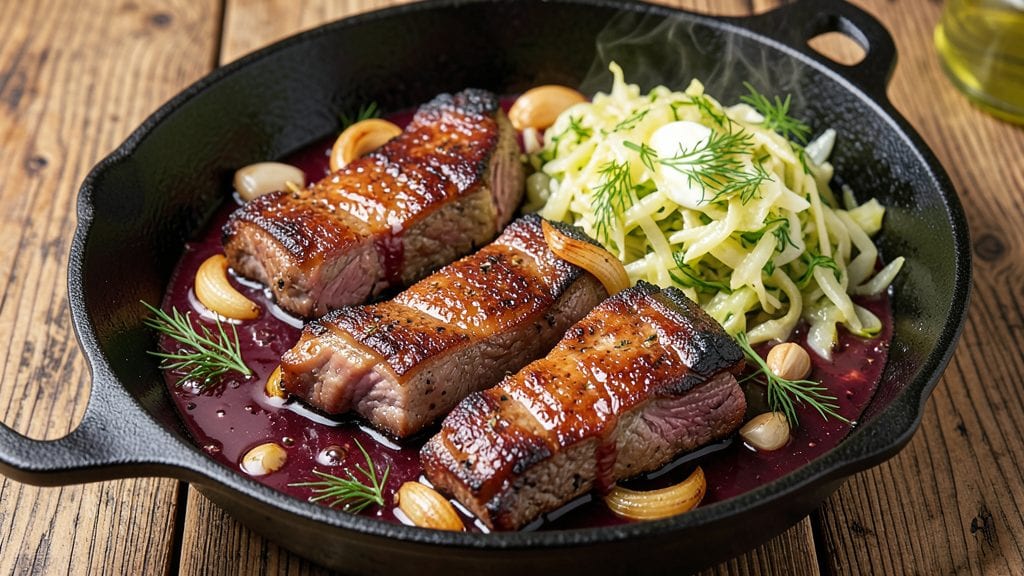
The beef short ribs and sauerkraut recipe transforms tough cuts into melt-in-your-mouth tenderness through slow braising—where rich, caramelized flavors marry perfectly with tangy fermented crunch.
This method delivers restaurant-quality results at home, using a Dutch oven to develop deep, complex layers of taste that transform simple ingredients into a showstopping meal.
What sets this dish apart is the balance of techniques: searing the ribs first creates a flavorful crust, while the slow braise in beer or broth tenderizes the meat and infuses it with aromatic depth.
The sauerkraut, warmed through with the braising liquid, adds a delightful contrast—tangy, crisp, and packed with probiotics. This approach ensures every bite is rich yet balanced, with textures that range from velvety meat to satisfying crunch.
By the time you serve this dish, you'll have perfectly braised short ribs that fall apart easily, their surfaces glistening with a glossy, caramelized sauce. The sauerkraut, softened but still retaining its texture, adds a bright, acidic counterpoint that cuts through the richness.
The result is a meal that feels indulgent yet satisfying, perfect for a cozy dinner or a special occasion when you want to impress.
Pair with roasted potatoes or crusty bread to soak up every last bit of that flavorful braising liquid. The combination of techniques and ingredients ensures this dish is both foolproof and unforgettable—ideal for home cooks looking to elevate their slow-cooking game. Let’s get started on creating this hearty, flavorful masterpiece.
Ingredients for beef short ribs and sauerkraut
Four pounds of beef short ribs and fermented sauerkraut transform into a restaurant-worthy masterpiece through slow braising and aromatic layering.
| Ingredient | Amount | Notes |
|---|---|---|
| Beef Short Ribs 🥩 | 4 lb | Bone-in, cut into 2-inch pieces |
| Yellow Onions 🧅 | 2 whole | Thinly sliced, yellow or red |
| Garlic Cloves 🧄 | 6 cloves | Peeled, smashed for aromatic depth |
| Unsalted Butter 🧈 | ½ cup | Full-fat for optimal flavor |
| All-Purpose Flour 🌾 | ½ cup | For velouté thickening |
| Dry Red Wine 🍷 | 1 cup | Bold variety like Cabernet Sauvignon |
| Beef Broth 💧 | 2 cups | Homemade or high-quality store-bought |
| Sauerkraut 🥬 | 1 ½ lb | Unsalted, jarred or fresh |
| Fresh Thyme 🌿 | ¼ cup | Stems removed, chopped finely |
| Fresh Rosemary 🌿 | ⅛ cup | Needle leaves only, chopped |
| Bay Leaves 🍃 | 2 whole | Dried, removed before serving |
| Black Peppercorns 🌶️ | 1 tbsp | Freshly cracked for intensity |
| Diamond Crystal Kosher Salt 🧂 | 1 ½ tsp | For seasoning and braising liquid |
| Dark Brown Sugar 🍚 | 2 tbsp | For caramelized depth |
| Extra-Virgin Olive Oil 🫒 | 2 tbsp | For searing ribs |
The quality of beef short ribs determines the dish's success. Look for well-marbled cuts from a trusted butcher or specialty grocer like Whole Foods or D'Artagnan—their dry-aged options elevate flavor significantly. Bone-in pieces are essential for maximum flavor infusion, and cutting them into 2-inch chunks ensures even cooking. Fresh herbs like thyme and rosemary should be vibrant green, not wilting, and Penzeys Spices offers excellent whole-sprig options for deeper flavor. The sauerkraut should be tangy with visible lactic acid crystals—avoid pre-sweetened varieties that compromise the dish's balance.
No dry red wine? Substitute with beef broth plus 1 tablespoon of balsamic vinegar for acidity. Prefer unsalted sauerkraut? Adjust the kosher salt in the braising liquid accordingly—taste as you go. Fresh herbs unavailable? Dried thyme at one-third the amount works, though texture differs. For the flour, King Arthur All-Purpose yields the best results when making the velouté. The dark brown sugar adds caramelized depth—muscovado sugar offers a more complex profile if you're willing to splurge. Always use extra-virgin olive oil for searing—its low smoke point prevents burning while preserving delicate flavors.
Store raw short ribs in the coldest part of your fridge wrapped tightly in parchment paper for up to 3 days before cooking. Once braised, the ribs and sauerkraut reheat beautifully—simmer gently in their juices for 10-15 minutes to restore moisture. The finished dish keeps for 4-5 days refrigerated or 3 months frozen. For meal prep, portion the ribs and sauerkraut separately—reheat the meat first, then warm the sauerkraut separately to maintain texture contrast. The braising liquid reduces to a glossy sauce that freezes exceptionally well for future use on roasted vegetables or mashed potatoes.
Why You'll Love This Recipe
- One-Pan Magic: The short ribs and sauerkraut practically cook themselves in one pot—just brown the meat, toss in the onions and garlic, then let the sauce thicken. Honestly, I’ve made this on days I forgot to take out the trash, and it still came out rich and satisfying.
- Deep, Tangy Crunch: That first bite of tender, caramelized short rib cutting through the sharp, crunchy sauerkraut? It’s like a flavor explosion in your mouth. The butter and flour create this silky sauce that ties everything together—no fancy ingredients, just pure comfort.
- Weeknight to Dinner Party: I’ve served this to my book club (they begged for the recipe) and to my exhausted self on a Tuesday. The short ribs are forgiving—you can’t overcook them—and the sauerkraut adds that tangy brightness that makes even a simple meal feel special.
- Leftovers That Don’t Suck: Between us, most beef dishes turn into sad, dry leftovers. Not this. The short ribs stay juicy, and the sauerkraut keeps its bite, so I actually look forward to reheating it for lunch. Plus, it’s cheaper than takeout—win-win.
Step-by-step instructions for beef short ribs and sauerkraut
Transform tough short ribs into melt-in-your-mouth tenderness with this slow-braised method.
Sear the Short Ribs for Deep Flavor
Pat the 4 lb beef short ribs completely dry with paper towels to ensure maximum browning. Heat 2 tbsp extra-virgin olive oil in a heavy Dutch oven over medium-high heat until shimmering. Working in batches to avoid overcrowding, sear the short ribs on all sides for 3-4 minutes per side until deeply browned and caramelized. This step develops the rich, meaty foundation for your braise.
As you sear, you'll notice the ribs release easily from the pan when properly browned—a visual cue that the Maillard reaction is working. Transfer the seared ribs to a plate and set aside. Real talk: don't rush this step. Proper searing builds layers of flavor that no amount of braising can replicate.
Build the Aromatic Base
Reduce heat to medium and add 0.5 cup unsalted butter to the Dutch oven. Let it melt completely, then add the 2 whole yellow onions and 6 cloves garlic cloves. Cook for 5-6 minutes until the onions soften and turn translucent, stirring occasionally to prevent burning. This gentle cooking process draws out their natural sweetness.
Sprinkle in 0.5 cup all-purpose flour and stir vigorously for 1-2 minutes, allowing it to toast lightly. This creates a roux that will thicken your braising liquid. Immediately pour in 1 cup dry red wine, scraping up any browned bits from the bottom of the pot. Let it simmer for 3-4 minutes until reduced by half—this intensifies the wine's flavor and forms the velouté base.
Braise with Herbs and Spices
Add 2 cups beef broth, 1.5 tsp diamond crystal kosher salt, 2 tbsp dark brown sugar, 0.25 cup fresh thyme, 0.125 cup fresh rosemary, 2 whole bay leaves, and 1 tbsp cracked black peppercorns to the Dutch oven. Stir well to combine, then return the seared short ribs to the pot, bone-side up. The ribs should be mostly submerged in the liquid—if not, add a splash more broth.
Bring the liquid to a gentle simmer, then reduce heat to low. Cover with a tight-fitting lid and transfer to a preheated 300°F oven. Here's the thing—this low-and-slow cook is where the magic happens. Braise for 3 hours, then check the tenderness. The ribs are done when they easily pull apart with a fork and the meat separates cleanly from the bone.
Incorporate the Sauerkraut
After the initial 3 hours, remove the Dutch oven from the oven and stir in 1.5 lb sauerkraut. The acidity from the fermented cabbage will brighten the rich braising liquid and add a welcome tang. Return the pot to the oven and continue cooking for another 1-2 hours, until the sauerkraut is heated through and the flavors have melded completely.
During this final cooking phase, the sauerkraut will soften and absorb the deep, caramelized flavors from the braising liquid. The result should be a harmonious blend where each bite delivers tender beef, crisp-tender sauerkraut, and layers of herbal complexity. This is where the dish truly comes together—don't rush this step.
Rest and Serve
Once the ribs are fork-tender and the sauerkraut is heated through, carefully remove the ribs from the pot and transfer them to a serving platter. Tent loosely with foil and let them rest for 10-15 minutes. This resting period allows the juices to redistribute, ensuring each bite is moist and flavorful.
Ladle the braising liquid and sauerkraut over the short ribs, garnishing with additional fresh thyme if desired. Serve immediately with crusty bread or roasted potatoes to soak up the rich sauce. The contrast between the tender beef, crisp sauerkraut, and velvety braising liquid makes this dish unforgettable—just as it was meant to be.
Pro Tips For Making Beef Short Ribs And Sauerkraut
- Sear the Ribs First: If you skip the sear, you’re missing out on the best part—crispy edges that soak up the sauerkraut’s tang. Pat the ribs very dry, then hit them with high heat in the pan until deep golden brown, about 4-5 minutes per side. I learned this the hard way when I rushed and ended up with mushy edges that fell apart.
- Use Bone-In Ribs: Bone-in short ribs stay juicier and add depth to the sauce as they render. If you’re using boneless, don’t skip the extra 10 minutes in the oven—cover them loosely with foil to let them braise properly. I was skeptical until I tried it; the meat practically melts off the bone.
- Drain and Rinse the Sauerkraut: Skipping this step means a watery, thin sauce. Drain the sauerkraut in a colander, then rinse it under cold water to remove excess brine—this concentrates the flavor and keeps the dish from tasting like a pickle jar. After burning three batches with soggy sauerkraut, I finally figured out this was the thing that mattered most.
- Deglaze with Beer or Stock: That browned butter and meat fond sticking to the pan? Don’t just scrape it out—deglaze with a splash of dark beer (like a stout) or beef stock. It adds richness and cuts through the sauerkraut’s acidity. I skip this when I’m lazy, but the dish is noticeably better when I don’t.
Common mistakes when making this dish
Overcrowding the Pan
When searing your 4 lb beef short ribs, resist the urge to pile them all in at once. Overcrowding steams the meat instead of browning it, resulting in pale, flavorless surfaces.
I always work in batches—sear 2 ribs at a time in 2 tbsp olive oil over medium-high heat for that perfect Maillard crust. The difference in texture and flavor is night and day. 🔥
Skipping the Deglaze
After searing, those browned bits (fond) on your Dutch oven are flavor gold—don’t scrape them away! When you add the 1 cup red wine or beef broth, let it simmer for 3-4 minutes to deglaze completely.
This step extracts maximum flavor from the fond, creating a richer braising liquid. I’ve made this mistake and can tell you: the sauce tastes noticeably duller without it.
Ignoring the Sauerkraut Timing
Adding sauerkraut too early ruins its texture—it’ll turn mushy and lose its probiotic crunch. Wait until after the 3-hour braise** when the ribs are already tender. Stirring it in during the final 1-2 hours lets it warm through while retaining just enough bite.
Pro tip: Drain excess liquid from the sauerkraut first to prevent a watery sauce. The contrast between tender ribs and crisp sauerkraut is what makes this dish shine.
Rushing the Resting Phase
Those 10-15 minutes of resting might feel like forever, but they’re non-negotiable. Skipping this step causes juices to pool at the bottom of your platter instead of redistributing throughout the meat.
I’ve served short ribs right after braising, and every bite was dry and disappointing. Trust the process—your patience will be rewarded with fork-tender, juicy ribs every time. ⏰
Using Pre-Sweetened Sauerkraut
Store-bought sauerkraut often comes pre-sweetened to mask its natural tang. This throws off the dish’s balance—you want that bright acidity to cut through the rich beef. If you must use jarred sauerkraut, rinse it thoroughly to remove excess sugar, then taste and adjust the kosher salt in the braising liquid.
For the best results, I recommend using unsalted sauerkraut from a specialty store like Penzeys—the flavor difference is dramatic.
Over-Salting the Braise
Short ribs are already well-marbled with natural salt, so adding too much kosher salt to the braising liquid can make the final dish taste flat. Start with 1.5 tsp and taste the liquid before adding the ribs.
Remember, you can always add more salt later—you can’t take it out! I’ve learned this the hard way after serving overly salty braises that ruined an otherwise perfect meal. Taste as you go.
Nutrition facts
Frequently asked questions
How long can I prepare this dish ahead of time?
The ribs and sauerkraut reheat beautifully after cooking! Store the braised ribs and sauce separately in airtight containers for 4-5 days refrigerated or 3 months frozen. Reheat gently in the oven at 325°F for 20-25 minutes covered with foil. The sauerkraut can be reheated separately to maintain its texture. This makes it perfect for meal prep—just assemble and serve when ready.
Can I substitute beer for the red wine in the braising liquid?
Beer adds a malty depth that pairs wonderfully with beef and fermented flavors. Use 1 cup of dark beer (like stout or porter) instead of wine, and reduce it by half before adding the broth. For extra richness, add 1 tbsp of brown sugar to balance the beer's bitterness. The beer's carbonation also helps tenderize the meat during braising.
What's the best way to serve this dish for a crowd?
Double the recipe and use two Dutch ovens for even cooking. Serve family-style with crusty bread or roasted potatoes on the side to soak up the sauce. For presentation, arrange the ribs on a large platter, spoon the sauerkraut and sauce around them, and garnish with fresh thyme. The interactive serving style lets everyone help themselves while keeping the dish cohesive.
Why does my sauerkraut turn mushy when braising?
Sauerkraut releases liquid as it heats, which can make it soggy if not handled properly. Always drain excess liquid before adding it to the braise, and stir it in only during the final 1-2 hours of cooking. The high acidity also breaks down faster—adding it too early or at high heat will destroy its texture. For extra crunch, reserve some raw sauerkraut to serve on top at the end.
Can I make this dish in a slow cooker instead of an oven?
Yes! Sear the ribs as directed, then transfer everything (including the seared ribs) to a 6-quart slow cooker. Add the remaining ingredients and cook on Low for 8 hours or High for 5-6 hours. The slow cooker's gentle heat works well, though the sauce may be thinner. For thicker sauce, remove the ribs after 6 hours, shred the meat, and return it to the cooker to thicken. The ribs will be tender but may lack the caramelized crust from oven braising.