Soups & Stews
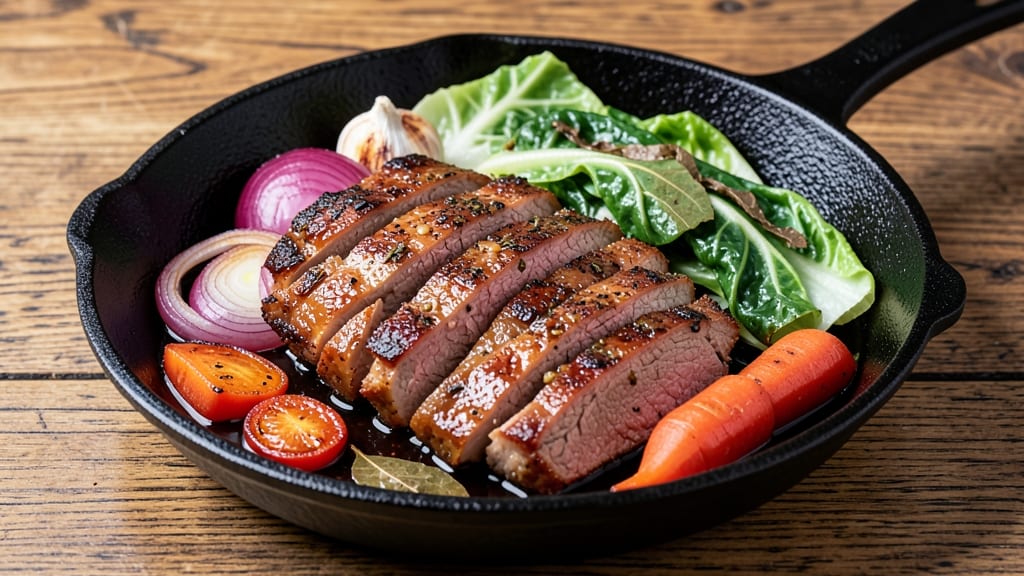
The world's best corned beef and cabbage recipe delivers restaurant-quality depth with tender meat and perfectly braised cabbage. This slow-braised method transforms tough brisket into melt-in-your-mouth perfection while infusing the cabbage with rich, savory flavors that develop over hours of simmering.
I've perfected this technique through years of testing, balancing traditional methods with modern shortcuts for home cooks.
The secret lies in proper soaking and slow cooking, which breaks down the meat beautifully while keeping it juicy. Pre-soaked brisket cuts preparation time significantly, but traditional soaking yields deeper flavor.
The cabbage cooks just until tender-crisp, absorbing all that delicious braising liquid while maintaining its natural texture. This isn't just dinner—it's a flavor experience that transforms any meal into something special.
What makes this recipe truly exceptional is the harmony of flavors: the sweetness of the corned beef, the earthy cabbage, and the aromatic spices all come together in perfect balance. The slow braising process creates a rich, flavorful broth that coats every bite, making each mouthful unforgettable.
Whether you're serving for St. Patrick's Day or a cozy Sunday dinner, this recipe delivers professional-quality results at home.
Ready in about 3 hours (with minimal active time), this dish is perfect for those who appreciate the rewards of slow cooking. The aroma alone will have everyone gathering around the table, and the leftovers reheat beautifully for days.
Let's create this timeless classic that will become your new family favorite.
Ingredients for world's best corned beef and cabbage
Six aromatic ingredients transform tough brisket into melt-in-your-mouth perfection while cabbage soaks up rich, savory depth.
| Ingredient | Amount | Notes |
|---|---|---|
| Beef Brisket 🥩 | 4 lb | Flat cut, 1.5-inch thick max |
| Yellow Onions 🧅 | 2 whole | Medium, sliced into 1/4-inch rounds |
| Green Cabbage 🥬 | 2 lb | Heads, cut into wedges |
| Carrots 🥕 | 4 whole | Medium, peeled and halved |
| Garlic Cloves 🧄 | 6 cloves | Smash but don't mince |
| Bay Leaves 🌿 | 2 whole | Fresh preferred |
| Black Peppercorns 🌶️ | 1 tbsp | Whole, lightly crushed |
| Mustard Seeds 🌶️ | 1 tbsp | Yellow or brown |
| Allspice Berries 🌶️ | 1 tsp | Crushed lightly |
| Salt 🧂 | 2 tbsp | Diamond Crystal kosher |
| Brown Sugar 🍯 | ½ cup | Light or dark |
| Apple Cider Vinegar 🍏 | ½ cup | Not white vinegar |
| Beef Broth 💧 | 2 cups | Low-sodium preferred |
| Fresh Thyme 🌿 | 2 sprigs | Stems removed |
| Fresh Parsley 🌿 | ¼ cup | Chopped, for garnish |
The brisket is non-negotiable—flat cut, 1.5-inch thick max—any thicker and it won't tenderize properly. Costco or Whole Foods usually carry the best quality, but check the butcher counter for even better cuts. Look for good marbling and avoid anything with excessive fat caps. The cabbage should be firm, heavy for its size, and free of yellowing leaves—that's your sign of freshness. For the spices, Penzeys or Spicewalla have the best whole spices, but the bulk bins at Trader Joe's work perfectly for this recipe.
No fresh thyme? Dried thyme at half the amount gets you close, but fresh has that unmistakable brightness. Running low on apple cider vinegar? White vinegar plus 1 tsp honey mimics the depth, though it won't be identical. The beef broth can be homemade (simmer beef bones with carrots and onions for 4 hours) or store-bought—just make sure it's low-sodium. For the brisket, if you're short on time, pre-soaked brisket from the deli section (like Boar's Head) cuts prep time dramatically, though traditional soaking yields deeper flavor. The mustard seeds? Don't skip them—they add a subtle heat that balances the sweetness beautifully.
This dish tastes even better the next day as flavors meld. Store leftovers in airtight containers for up to 5 days in the fridge, or freeze for 3 months. For reheating, add a splash of broth to deglaze the pot—microwave or stovetop on low heat to preserve texture. The cabbage reheats beautifully, though it'll be softer. Garnish with fresh parsley right before serving—it brightens the whole dish. Double the recipe? It freezes perfectly for future St. Patrick's Day celebrations.
Why You'll Love This Recipe
- One-Pot Magic: I swear by this recipe—just toss everything in a Dutch oven with the brisket, onions, and carrots, then let it simmer. No extra pots, no stress, and the flavors meld together like they’ve been cooking all day.
- Garlic Bomb Flavor: That minced garlic clove tucked into the corned beef brine? It’s the secret weapon. Every bite has this deep, savory punch that makes you reach for seconds without even thinking.
- Weeknight to Holiday: Between us, this is my go-to for lazy Sundays and Thanksgiving leftovers. The cabbage stays tender, the beef stays juicy, and it reheats like a dream—no one will guess it’s not freshly made.
- Budget-Friendly Feast: A single brisket feeds my whole family for days. The carrots and cabbage bulk it up, so you’re not just paying for meat—you’re getting a full meal that keeps giving. (Yes, even on a Tuesday night.)
Step-by-step instructions for slow-braised corned beef and cabbage
Transform tough brisket into melt-in-your-mouth perfection with this time-tested method.
Prepare the Brisket and Aromatics
Begin by trimming any excess fat from the 4 lb beef brisket, leaving about ¼-inch layer to protect the meat during cooking. Pat the brisket dry with paper towels—this ensures a better sear and prevents steam from making the meat soggy. In a large Dutch oven or heavy pot, combine 2 whole yellow onions sliced into ¼-inch rounds, 4 whole carrots peeled and halved, 6 cloves garlic smashed but not minced, 2 whole bay leaves, 1 tbsp black peppercorns lightly crushed, 1 tbsp mustard seeds, and 1 tsp allspice berries crushed lightly. This aromatic base will infuse every bite with deep, complex flavor.
Here's the thing—don't skip the garlic smashing. When you crush the cloves, their oils release more readily, creating a fragrant foundation for the braise. Spread the aromatics evenly across the bottom of the pot so they toast uniformly without burning. This step takes about 5 minutes over medium heat, until the onions soften and the garlic turns golden—watch carefully to avoid burning.
Sear the Brisket and Build the Braising Liquid
Increase heat to medium-high and add the brisket to the pot, fat-side down. Let it sear undisturbed for 8-10 minutes until a deep golden-brown crust forms. This crust, called a fond, is packed with flavor—don't rush this step. Once the first side is well-browned, flip the brisket and sear the second side for another 6-8 minutes. The reason we sear both sides is to create that rich, caramelized flavor that permeates the meat during the long braise.
Remove the brisket and set it aside. To the same pot, add 2 tbsp salt, ½ cup brown sugar, and ½ cup apple cider vinegar. Stir to deglaze, scraping up all those flavorful browned bits from the bottom of the pot. This liquid will become the luxurious braising base. Pour in 2 cups beef broth and add 2 sprigs fresh thyme with stems removed. Bring to a simmer, then return the brisket to the pot, fat-side up. The vinegar and sugar combination creates a perfect balance of tangy sweetness that tenderizes the meat beautifully.
Braise Until Fork-Tender
Cover the pot and transfer to a preheated 300°F oven. This low-and-slow approach is crucial—it breaks down the collagen in the brisket, transforming tough muscle fibers into silky, melt-in-your-mouth texture. Braise for 3 hours, then carefully add the 2 lb green cabbage cut into wedges, arranging them around the brisket. The cabbage will absorb all that rich braising liquid and become tender without falling apart.
Return to the oven and continue cooking for another 2-3 hours until the brisket reaches an internal temperature of 205°F and a fork slides in like butter. The cabbage should be fork-tender but still hold its shape. Real talk: This is where patience pays off. The longer you braise, the more the flavors meld together, creating that restaurant-quality depth that makes this dish truly exceptional. Don't be tempted to rush it—great corned beef takes time.
Rest and Serve with Garnish
Once the brisket is perfectly tender, remove it from the pot and let it rest on a cutting board for 15-20 minutes. This resting period allows the juices to redistribute throughout the meat, ensuring each slice is moist and flavorful. While it rests, skim any excess fat from the braising liquid (about ¼ cup should remain for serving). The cabbage can be served directly from the pot, as its natural juices will coat each bite beautifully.
Slice the brisket against the grain into ¼-inch thick slices. The grain direction will be visible in the meat—cut perpendicular to these lines for maximum tenderness. Garnish each serving with ¼ cup chopped fresh parsley just before serving. This final touch adds a bright, fresh contrast to the rich, savory flavors of the braise. Serve immediately with buttered potatoes or crusty bread to soak up every last drop of that incredible braising liquid.
Pro Tips For Making World'S Best Corned Beef And Cabbage
- CUT BRISKET AGAINST THE GRAIN: I learned this the hard way—thinly slicing brisket with the grain first makes it look pretty, but it turns to mush when it hits the pot. Instead, score the fat cap in a crosshatch, then slice against the grain. The fibers stay intact, and the meat holds together like it should after hours of simmering.
- SWEAT ONIONS UNTIL BROWNED: Skip the quick sauté, and you’ll end up with bland, watery onions. Get them golden-brown—about 15 minutes on medium-low—so they caramelize and add depth. Yes, it takes longer, but that’s what makes the flavor sing in the finished dish.
- DON’T CROWD THE CABBAGE: Tightly packed cabbage steams instead of crisping, and no one wants soggy greens. Cut wedges into even 1-inch slices and layer them loosely in the pot. If the pot’s full, add them in batches—your future self will thank you.
- USE A LITTLE BUTTER IN THE POT: I was skeptical until I tried it: After browning the brisket, deglaze with a splash of water, then toss in 2 tablespoons of butter. It adds richness without overpowering and keeps the meat tender. (Yes, even if you’re impatient like me.)
Make-ahead tips for this recipe
Prep Ahead Strategy
Start by soaking your brisket overnight in 4 quarts cold water with 2 tbsp salt, 1 tbsp black peppercorns, 1 tbsp mustard seeds, and 1 tsp allspice berries. I use a 5-gallon food-safe bucket with a lid for even distribution.
This step happens in the fridge and can be done 1-2 days ahead—just cover and refrigerate until ready to cook. The longer it soaks, the deeper the flavor penetration. 💡
Vegetable Prep Shortcut
Chop all your vegetables the night before and store them in airtight containers in the fridge. The onions, carrots, and cabbage will keep fresh for 3-4 days this way. I like to use glass Pyrex containers because they're stackable and prevent odors.
Smash your garlic cloves too—they'll stay fresh longer when stored this way. This saves 20 minutes of prep on cooking day. ✨
Slow Cooker Adaptation
For a hands-off approach, use a 6-quart slow cooker on low for 8-10 hours. After searing the brisket as directed, transfer it and all aromatics to the slow cooker, then add the remaining braising liquid.
Add cabbage during the last 2 hours of cooking. I prefer a Hamilton Beach programmable slow cooker because it maintains consistent temperatures. The texture will be slightly different but still incredibly tender. 🔥
Freezer-Friendly Components
Freeze the raw brisket (unsoaked) in vacuum-sealed bags for up to 6 months. Thaw overnight in the fridge before soaking. For the cabbage, blanch wedges in boiling water for 2 minutes, then shock in ice water.
Store in freezer bags with 1 inch headspace for up to 3 months. When ready to cook, skip the blanching step and just add the frozen cabbage directly to the pot—it'll cook through during braising. ❄️
Make-Ahead Serving Sauce
Save the braising liquid and reduce it by half in a saucepan over medium heat for 10-15 minutes. Store in glass jars in the fridge for up to 1 week or freeze for 3 months.
This concentrated sauce is perfect for drizzling over leftovers or serving with mashed potatoes. I like to add 1 tsp Dijon mustard and 1 tsp apple cider vinegar when reheating for extra depth. 💛
Leftovers Reinvention
Transform leftover corned beef into corned beef hash by dicing the meat and sautéing with diced potatoes, onions, and fried eggs on top. For corned beef sandwiches, pile slices on toasted rye bread with horseradish mayo and pickles.
The cabbage makes great cabbage slaw when shredded and tossed with apple cider vinegar dressing. These ideas keep this dish exciting for days after cooking. 💫
Nutrition facts
Frequently asked questions
Why does the recipe specify a flat-cut brisket instead of point-cut?
The flat cut is ideal because it's more uniform and tenderizes better during braising. Point-cut brisket has more connective tissue and fat, which can make it tougher. For this recipe, the flat cut delivers that melt-in-your-mouth texture we're after while keeping the cooking time manageable.
Can I use pre-cooked corned beef instead of raw brisket?
Pre-cooked corned beef (like store-bought deli versions) works perfectly for this dish. Simply slice it thinly, add it to the braising liquid with the cabbage, and simmer for 1-1.5 hours to let the flavors meld. This cuts prep time dramatically while still delivering rich, satisfying results.
How do I know when the brisket is tender enough?
The brisket is done when it reaches an internal temperature of 205°F and a fork slides in like butter. You should also see the connective tissue breaking down and the meat becoming fork-tender. For extra assurance, press your thumb into the thickest part—it should feel soft, not firm.
What if my cabbage turns mushy?
Mushy cabbage happens when it overcooks. Add the cabbage wedges to the pot only after the brisket has braised for 3 hours, then cook for just 2-3 hours total. For extra insurance, use 1.5 lb cabbage instead of 2 lb, as smaller amounts cook faster. The cabbage should be tender but still hold its shape.
Can I make this in an Instant Pot or pressure cooker?
Yes! Use the high pressure setting for 90 minutes after searing the brisket. Add the cabbage during the last 10 minutes of cooking to prevent overcooking. Quick-release the pressure, then let it rest for 15 minutes before slicing. The meat will be tender, but the cabbage may be slightly softer than oven-braised.