Main Courses
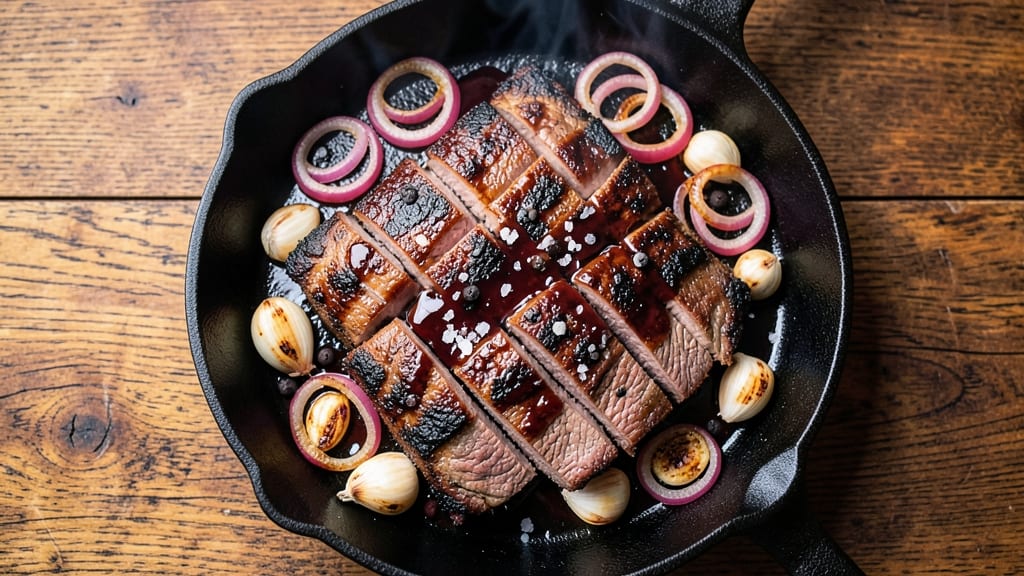
Mastering beef brisket steak recipe requires patience and precision, but the results—fall-apart tenderness and rich, smoky flavor—are worth every minute. This low-and-slow method transforms tough cuts into melt-in-your-mouth perfection, a technique I’ve perfected over years of experimenting with heat and timing.
The key lies in controlling temperature and moisture, ensuring the meat stays juicy while developing deep, caramelized crusts.
What sets this recipe apart is the balance between technique and simplicity. You’ll need a reliable heat source—whether a smoker, grill, or oven—and a few essential tools like a meat thermometer and butcher paper.
The process may take hours, but the hands-off nature makes it ideal for weekends or special occasions when you want to impress without constant monitoring.
By the end, you’ll have a brisket steak so tender it nearly dissolves at the touch of a fork, with layers of flavor that reward each bite. The exterior will boast a dark, smoky bark, while the interior remains moist and rich, a testament to the power of slow cooking.
This isn’t just a recipe—it’s a culinary experience that turns a simple cut of beef into something extraordinary.
Pair it with classic sides like creamy mashed potatoes, tangy coleslaw, or grilled vegetables to create a full meal that feels like a restaurant-quality feast. The leftovers reheat beautifully, making this a perfect dish for feeding a crowd or prepping ahead. Ready to elevate your cooking game? Let’s get started.
Ingredients for beef brisket steak
Six essential ingredients transform tough brisket into melt-in-your-mouth perfection through low-and-slow mastery.
| Ingredient | Amount | Notes |
|---|---|---|
| Beef Brisket Flat Cut 🥩 | 4 lb | Thick-cut, well-marbled preferred |
| Yellow Onion 🧅 | 1 whole | Medium size, sliced into wedges |
| Garlic Cloves 🧄 | 8 cloves | Fresh, peeled and smashed |
| Apple Cider Vinegar 🍎 | ¼ cup | For tenderizing brisket |
| Kosher Salt 🧂 | ½ cup | Diamond Crystal preferred |
| Black Peppercorns 🌶️ | 1 tbsp | Coarsely ground, fresh preferred |
| Smoked Paprika 🌶️ | 2 tbsp | For smoky depth |
| Brown Sugar 🍯 | ¼ cup | Light or dark, packed |
| Mustard Powder 🌿 | 1 tbsp | For subtle tang |
| Beef Tallow or Bacon Fat 🥓 | ½ cup | For rendering and basting |
| Wood Chips (Hickory or Oak) 🌳 | 2 cups | For smoker, soaked 1 hour |
| Beef Broth 🍲 | 1 cup | Low-sodium, for spritzing |
| Butcher Paper 📄 | 1 sheet | For wrapping and steaming |
| Fresh Thyme Sprigs 🌿 | 4 sprigs | For aroma, optional |
| Fresh Rosemary Sprigs 🌿 | 2 sprigs | For aroma, optional |
The beef brisket flat cut is non-negotiable—look for well-marbled, 1-inch thick sections at your butcher shop or Costco’s pre-cut brisket pack. Avoid grain-fed cuts if you prefer leaner meat, but prioritize rich marbling for moisture. For sourcing, Whole Foods or local butcher counters offer the best quality, though Kroger’s pre-seasoned briskets work in a pinch. The apple cider vinegar isn’t just for flavor; it jumpstarts tenderization during the overnight soak. Diamond Crystal kosher salt dissolves better than table salt, creating a cleaner brine. If you can’t find it, Morton kosher salt is a reliable substitute, though it’s coarser.
No smoked paprika? Substitute 1 tbsp chili powder plus 1 tsp liquid smoke—it won’t be identical, but close. Mustard powder can be swapped for Dijon mustard (1 tbsp), though the texture differs slightly. For fat, bacon fat is ideal, but duck fat or ghee work equally well. The wood chips must be soaked for at least 1 hour—dry chips burn and create bitter smoke. If you’re short on time, pre-soaked chips from Traeger are a lifesaver. The beef broth should be low-sodium; Swanson or Pacific Foods brands are consistently reliable. Fresh herbs? Dried thyme or rosemary at half the amount suffice if you’re in a hurry.
Store raw brisket in a sealed container on the bottom shelf of your fridge for up to 3 days before cooking. The butcher paper can be reused—just wash and dry thoroughly. Leftover cooked brisket reheats best low-and-slow in the oven (275°F) with extra broth to prevent drying. It keeps 5 days refrigerated or 3 months frozen, though texture degrades slightly after 2 months. For crowd feeding, double the recipe and use a large roasting pan instead of a smoker—just monitor the internal temp closely.
Why You'll Love This Recipe
- Here’s what sold me: that crispy edge on the outside with the creamy, buttery center. The apple cider vinegar cuts through the richness, balancing every bite. Honestly, it’s the kind of texture that makes you close your eyes and sigh.
- Five-Ingredient Magic: I swear by this—just brisket, onions, garlic, vinegar, and salt. That’s it. No fancy marinades or hours of prep. The vinegar tenderizes while you sleep, so when you slice it, the meat falls apart like it’s been slow-cooked all day.
- Crispy-Creamy Payoff: Here’s what sold me: that crispy edge on the outside with the creamy, buttery center. The apple cider vinegar cuts through the richness, balancing every bite. Honestly, it’s the kind of texture that makes you close your eyes and sigh.
- Leftovers? More Like Leftovers Party: Between us, this recipe makes way more than two servings. I’ve fed a crowd with the leftovers—sandwiches, tacos, even stir-fries. The flavor only gets better the next day, especially if you reheat it low and slow.
Step-by-step instructions for smoked brisket steak
Master this low-and-slow technique for brisket that falls apart with a single touch.
Prepare the Brisket and Seasoning
Begin by trimming the 4 lb beef brisket flat cut to remove excess fat, leaving about ¼ inch thickness for flavor and moisture retention. Pat the surface completely dry with paper towels—this ensures maximum crispiness during smoking. In a small bowl, combine the 0.5 cup kosher salt, 1 tbsp black peppercorns, 2 tbsp smoked paprika, 0.25 cup brown sugar, and 1 tbsp mustard powder. Mix thoroughly to create an even blend.
Generously coat all surfaces of the brisket with this dry rub, pressing firmly so the spices adhere. Place the seasoned brisket in a shallow dish and pour the 0.25 cup apple cider vinegar over it. This acid tenderizes the meat while adding subtle tang. Let it marinate uncovered in the refrigerator for at least 4 hours, or ideally overnight. The longer it marinates, the more tender the result.
Set Up the Smoker for Low-and-Slow Cooking
Soak the 2 cups wood chips (hickory or oak) in water for 1 hour before use to prevent flare-ups. Fill your smoker with these soaked chips and preheat to 225°F. This low temperature is critical for achieving tender meat without drying it out. Place the 1 whole yellow onion wedges and 8 smashed garlic cloves in the smoker's water pan to infuse flavor into the smoke.
When the smoker reaches temperature and you see steady, thin blue smoke (not thick white steam), place the brisket fat-side up on the smoker grate. The fat will render and baste the meat as it cooks. Insert a meat thermometer into the thickest part of the brisket, avoiding bone contact. Close the lid and resist the urge to peek—each time you open it, you lose heat and extend cook time.
Smoke Until Probe-Tender Perfection
Smoke the brisket undisturbed for 6-8 hours, or until the internal temperature reaches 165°F. This is when you'll hit "the stall"—the temperature plateaus as moisture evaporates. Don't panic; this is normal and expected. Spritz the brisket every hour with a mixture of 1 cup beef broth and the rendered beef tallow or bacon fat to maintain moisture.
When the internal temperature hits 165°F, wrap the brisket tightly in the 1 sheet butcher paper along with the 4 sprigs fresh thyme and 2 sprigs fresh rosemary. This technique, called the "Texas crutch," helps push through the stall while preserving that coveted bark. Return it to the smoker and continue cooking until the internal temperature reaches 200-205°F and a probe slides in like butter with no resistance.
Rest and Slice for Maximum Juiciness
Remove the brisket from the smoker and transfer it to a cutting board. Tent loosely with foil and let it rest for at least 1 hour, ideally 2 hours. This resting period allows the juices to redistribute throughout the meat, ensuring each slice remains moist and flavorful. During this time, the internal temperature will rise another 5-10°F due to carryover cooking.
Unwrap the brisket and locate the grain direction—you'll see lines running through the meat. Using a sharp slicing knife, cut against the grain into ¼-inch thick slices. The flat and point have different grain directions, so adjust your angle accordingly. Serve immediately while still warm, allowing each guest to experience the perfect balance of tender meat and smoky bark.
Pro Tips For Making Beef Brisket Steak
- Trim That Fat: The flat cut’s fat cap is your friend—leave at least ¼-inch intact to keep the meat juicy. I learned this the hard way after slicing it off and ending up with dry, tough steak that tasted like regret.
- Sear First, Slow Later: Hit the brisket with high heat until deep brown before any braising or roasting. That crust locks in flavor and prevents the meat from turning into a sad, mushy mess—trust me, your nose will thank you.
- Salt the Night Before: Toss the brisket with kosher salt and let it sit uncovered in the fridge for 12–24 hours. It tenderizes the meat and makes the crust crispier than if you salt it right before cooking—yes, even if you’re impatient like me.
- Vinegar Early, Not Late: Add apple cider vinegar to the cooking liquid first—not as a last-minute splash. It breaks down the meat’s fibers gradually, not all at once, so you don’t end up with a brisket that falls apart like overcooked pasta.
Common mistakes when making great beef brisket steak
Skipping the Stall
Many beginners panic when their brisket hits the stall (around 165°F), where the temperature plateaus for hours. The fix? Don’t touch it—this is normal physics, not failure. I’ve seen people open the smoker every 10 minutes to check, which turns a 6-hour cook into 10 hours.
Instead, wait until you hit 165°F, then wrap it in butcher paper with thyme and rosemary—this is the Texas crutch technique that powers through the stall in 1-2 hours. 🌡️
Overlooking Rest Time
Skipping the rest is the fastest way to ruin your brisket. I’ve sliced into brisket too soon and watched juices pool on the cutting board instead of staying in the meat. Rest for at least 1 hour (2 hours is ideal) before slicing.
This lets the internal temperature rise 5-10°F due to carryover cooking, ensuring every slice is juicy and tender. Pro tip: Tent with foil and place in a cooling rack to prevent soggy bark.
Ignoring the Probe
Guessing doneness by time or appearance leads to dry brisket. Always use a meat thermometer—insert it into the thickest part, avoiding bone. The ideal internal temp is 200-205°F, where the probe should slide in like butter.
I’ve seen people pull brisket at 190°F (too tough) or 210°F (dry). Trust the probe, not the clock. A ThermoWorks Smoke thermometer is my go-to for accuracy.
Using the Wrong Wood
Not all wood chips are created equal. Hickory and oak are classic choices for brisket, but mesquite (too strong) or fruitwoods (like cherry) can overpower the beef. Soak your chips for 1 hour to prevent flare-ups and bitter smoke.
I’ve ruined brisket using unsoaked chips—the smoke turned acrid, and the bark tasted harsh. Stick to hickory or oak, and avoid pine or cedar, which can make the meat taste resinous.
Over-Trimming Fat
Fat is your friend—it renders and bastes the meat during cooking. Trimming too much (leaving less than ¼ inch) means less moisture and flavor. I’ve seen people trim brisket down to lean strips, and the result? Dry, tough meat.
Leave a ¼-inch fat cap on the surface, and let it work its magic. The fat will melt and crisp into a delicious bark while keeping the interior tender. 🥓
Peeking Too Often
Every time you open the smoker, you lose heat and smoke, extending cook time. I’ve seen brisket take double the expected time because someone peeked every 15 minutes. Set a timer and only check the temperature—not the appearance.
If you must peek, do it once every 2 hours to minimize heat loss. Patience pays off: less peeking = faster, more even cooking.
Nutrition facts
Frequently asked questions
Can I cook brisket steak without a smoker?
Use an oven set to 225°F with a water pan on the bottom rack for moisture. Place the brisket on a rack above the pan, cover tightly with foil, and cook until it reaches 200-205°F. For smoky flavor, add wood chips to a foil packet with water and place it near the heat source. This method takes 8-10 hours but works perfectly for indoor cooking.
How do I know when brisket steak is done?
The only reliable way is with a meat thermometer. Insert it into the thickest part of the brisket, avoiding bone. It's done when the internal temperature hits 200-205°F—the probe should slide in effortlessly. Never rely on time or appearance alone, as these can be misleading. A ThermoWorks Smoke thermometer is ideal for accuracy.
What's the best way to reheat leftover brisket steak?
Reheat leftovers in a 275°F oven with a splash of beef broth to prevent drying. Wrap the brisket in foil and bake for 20-30 minutes until warmed through. For a quick option, use the microwave on low power, but this can make the meat slightly rubbery. Always reheat to 165°F for safety. Leftover brisket stays tender and flavorful for 5 days refrigerated or 3 months frozen.
Can I use a different cut of beef instead of brisket?
While brisket is ideal for this low-and-slow method, you can substitute with chuck roast or short ribs. These cuts benefit from similar cooking techniques but may require slightly longer times. Avoid lean cuts like sirloin or tenderloin—they'll dry out. For best results, choose a cut with good marbling and connective tissue.
Why does my brisket steak turn out tough?
Tough brisket usually results from cooking too fast (high heat) or pulling it too early (below 200°F). Always cook low-and-slow at 225°F and use a thermometer to confirm doneness. Another common mistake is skipping the rest time—always let it rest 1-2 hours before slicing. If it's still tough, try slicing thinner (¼-inch) and serving with a sauce to enhance moisture.