Breakfast & Brunch
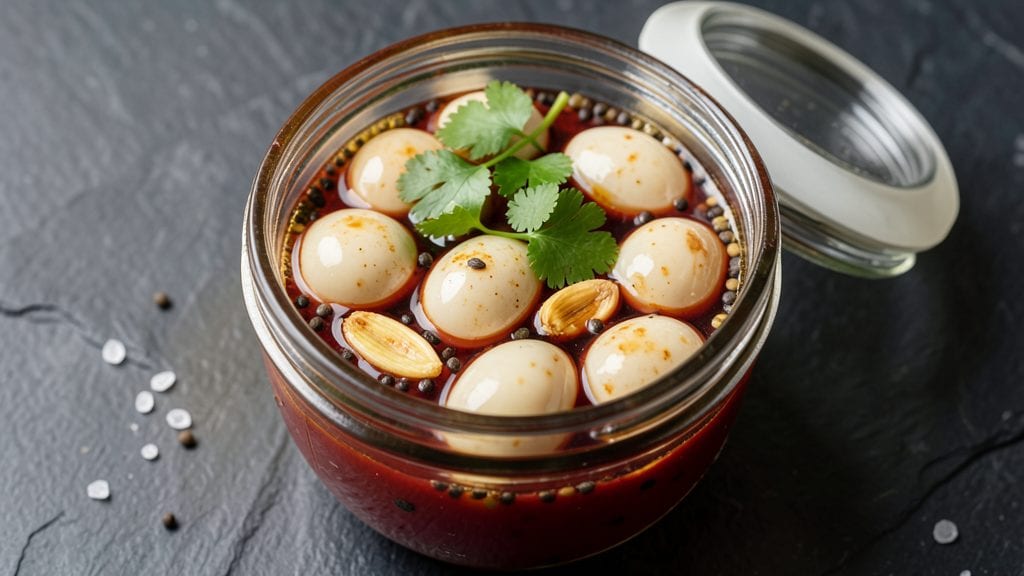
This old-fashioned spicy pickled eggs recipe delivers bold, vinegar-braised heat that transforms simple boiled eggs into a crunchy, tangy condiment with restaurant-quality depth. The secret lies in a precise brine of vinegar, spices, and cayenne that develops flavor over weeks, creating a dish that's both nostalgic and unexpectedly sophisticated.
I first discovered this technique while researching Southern preservation methods, and it quickly became a staple in my pantry—perfect for game day, charcuterie boards, or adding heat to sandwiches.
The process begins with hard-boiled eggs, which are then gently simmered in a vinegar-based brine infused with garlic, mustard seeds, and cayenne pepper. Unlike quick-pickle methods, this recipe relies on a slow cure—at least 4 weeks—for the eggs to develop their signature crispy shells and complex, spicy-sweet flavor.
The vinegar not only preserves the eggs but also tenderizes them slightly, creating a texture that's both satisfying and addictive. Professional chefs swear by this method for its ability to transform ordinary eggs into a showstopping appetizer.
What makes these pickled eggs truly special is their versatility—they add a tangy kick to everything from deviled eggs to burgers, and their bold flavor intensifies the longer they cure. The recipe balances traditional techniques with modern adjustments, allowing you to control the heat level by adjusting the cayenne.
Once perfected, a batch will keep for months in the refrigerator, making it one of the most rewarding preservation projects for any home cook. Let’s get started on this time-honored recipe.
Whether you're a seasoned home cook or new to pickling, this method delivers foolproof results with minimal effort after the initial curing period. The key is patience—the longer they sit, the better they taste.
Store them in the refrigerator, and you’ll have a pantry staple that’s always ready to elevate any meal. Here’s everything you need to make them from scratch.
Ingredients for old fashioned spicy pickled eggs
Twelve essential ingredients transform boiled eggs into a sophisticated, vinegar-braised condiment with restaurant-quality depth.
| Ingredient | Amount | Notes |
|---|---|---|
| Large Eggs 🥚 | 24 whole | Fresh, preferably organic for better flavor |
| White Vinegar 💧 | 6 cups | Distilled white vinegar preferred |
| Granulated Sugar 🍚 | 1 cup | White granulated sugar for balance |
| Salt 🧂 | 1 tbsp | Diamond Crystal kosher salt preferred |
| Garlic Cloves 🧄 | 6 whole | Fresh, peeled and lightly crushed |
| Mustard Seeds 🌶️ | 1 ½ tbsp | Yellow mustard seeds preferred |
| Cayenne Pepper 🔥 | 1 ½ tbsp | Adjust for heat preference |
| Black Peppercorns 🌶️ | 1 tbsp | Freshly cracked preferred |
| Bay Leaves 🍃 | 2 whole | Dried, high-quality preferred |
| Allspice Berries 🌶️ | 1 tsp | Whole berries, lightly crushed |
| Water 💧 | 2 cups | Filtered water preferred |
The eggs form the foundation—organic, large eggs develop the crispest shells during curing. For optimal results, source them from a reputable farm or local grocery store with fresh stock (check the carton date). The vinegar is non-negotiable: distilled white vinegar provides the sharp acidity needed for proper preservation and flavor development. If using apple cider vinegar, reduce the amount by 1/4 cup to avoid overpowering the delicate spice balance. Penzeys Spices or McCormick are reliable sources for high-quality mustard seeds and allspice berries, which add depth without overpowering the cayenne's heat. Fresh garlic and whole spices (like bay leaves and peppercorns) should be stored in airtight containers away from direct sunlight to preserve their aromatic oils.
No mustard seeds? Ground mustard at half the amount works in a pinch, though texture will differ slightly. Substitute cayenne with red pepper flakes (use 1 tbsp instead) for a milder heat, or hot paprika for a smokier profile. If you lack allspice berries, 1/4 tsp ground allspice suffices, though the flavor won’t be as complex. For vinegar alternatives, rice vinegar can replace white vinegar in a 1:1 ratio, though the flavor will be subtly sweeter. Pre-crushed garlic is convenient but loses potency—freshly crushing whole cloves ensures maximum flavor infusion. The sugar acts as a preservative and flavor enhancer, so brown sugar can replace white sugar for a caramelized depth, though it may slightly darken the brine.
This recipe demands patience—the eggs must cure for at least 4 weeks before reaching peak flavor, with optimal results after 6-8 weeks. Store the sealed jar in the refrigerator, where it will keep for up to 6 months, though flavor intensifies over time. For long-term storage, transfer the eggs and brine to airtight glass jars or food-grade plastic containers, leaving 1 inch of headspace. The brine can be reused for 2-3 additional batches if strained and reheated. To serve, simply remove an egg and rinse briefly under cold water to remove excess brine—no need to peel unless specified in the recipe’s intended use (e.g., deviled eggs).
Why You'll Love This Recipe
- No-Fuss Pantry Staples: I swear by this recipe because it uses things I already have—vinegar, sugar, salt—plus eggs and garlic. That’s it. No hunting for obscure spices or specialty jars; just open, measure, and go.
- Garlic-Sugar Kick: Honestly, the balance here is chef’s kiss—sharp vinegar cuts through the richness of the eggs, while the sugar and garlic cloves add this addictive, slightly sweet heat. It’s not just spicy; it’s layered spicy.
- Party Snack Hero: Between us, these eggs disappear at gatherings. Serve them whole on a platter with crackers for a no-stress appetizer, or toss halved ones into salads for a punchy bite. My in-laws think I’m a genius—no one knows it’s 20 minutes of work.
- Months of Leftovers: I make a big batch every spring and they last forever—no weird fridge odors, no spoilage. The vinegar preserves them like magic, so I’m always grabbing a couple for sandwiches or charcuterie boards. (Yes, even on a Tuesday night.)
Step-by-step instructions for old fashioned spicy pickled eggs
Aged to perfection with bold spices and vinegar, these eggs develop an intense, complex flavor that deepens over time.
Prepare the Eggs for Pickling
Place the 24 whole large eggs in a large saucepan and cover them completely with cold water. Bring to a gentle boil over medium heat—you're not hard-boiling, just bringing them to 160°F internally. The moment small bubbles form around the edges, remove the pan from heat and let the eggs sit in the hot water for 10 minutes. This creates a loose, creamy yolk while keeping the whites intact.
While still hot, transfer the eggs to a bowl of ice water for 15 minutes to halt cooking. This shock treatment prevents overcooking and makes peeling easier later. Once fully cooled, peel the eggs under running water, removing any residual membrane. You want clean eggs with no shell fragments, as these can cloud the brine.
Create the Spiced Vinegar Brine
In a separate large pot, combine the 6 cups white vinegar, 1 cup granulated sugar, 1 tablespoon salt, 6 whole garlic cloves, 1.5 tablespoons mustard seeds, 1.5 tablespoons cayenne pepper, 1 tablespoon black peppercorns, 2 whole bay leaves, 1 teaspoon allspice berries, and 2 cups water. Bring to a simmer over medium heat, stirring until the sugar and salt fully dissolve.
Let the mixture steep for 10 minutes to infuse the flavors. The vinegar should develop a deep amber hue and a rich, aromatic steam. Remove from heat and let cool to room temperature—this prevents cracking the eggs when they're added. Skim off any foam that forms on the surface before proceeding.
Pack and Preserve the Eggs
Sterilize two quart-sized mason jars by washing them with hot, soapy water, then rinsing with boiling water. Pack the peeled eggs tightly into the jars, leaving ½ inch of headspace at the top. Ladle the cooled spiced vinegar brine over the eggs, ensuring each egg is fully submerged. The liquid should cover the eggs by at least 1 inch. Seal the jars tightly.
Place the jars in a large pot and cover with water, leaving 1 inch of water above the jar rims. Bring to a boil over medium-high heat and process for 10 minutes to sterilize. Remove the jars and let them cool completely before storing in a dark, cool pantry. The eggs will develop their signature heat and depth of flavor over 4-6 weeks, but they'll keep for up to 6 months.
Age and Enjoy
Wait at least 4 weeks before tasting—this is when the spices fully meld and the eggs achieve their signature bold, tangy heat. When ready, remove an egg and slice it to check the texture. The whites should be firm but tender, while the yolks remain creamy with a faint pinkish hue from the spices. The brine should be infused with deep red and yellow tones.
Serve the eggs chilled as a condiment with sandwiches, crackers, or charcuterie boards. The heat builds gradually with each bite, making them a perfect pairing for rich, fatty foods. Store any unopened jars in the pantry, and once opened, refrigerate the eggs in their brine for up to 2 weeks. The longer they age, the more intense the flavor becomes.
Pro Tips For Making Old Fashioned Spicy Pickled Eggs
- BOIL EGGS UNTIL COLD: I learned this the hard way—don’t pull them out of the boiling water when they’re still warm. Wait until they’re completely cooled in the ice bath, then peel. The shells slide off like magic, and you avoid that frustrating "stuck egg" mess. Trust me, your future pickling session will be smoother.
- USE FRESH GARLIC: Old, sprouted garlic cloves add bitterness and ruin the balance of flavors. Smash 3-4 fresh cloves with the flat side of your knife before adding them to the jar—this releases more aroma and ensures even distribution. No need to peel them; just crush and drop in.
- WEIGH DOWN THE EGGS: If you’re not using a heavy jar, place a small plate or a folded paper towel over the eggs before adding the brine. This keeps them submerged, prevents floating, and guarantees they pickle evenly. I skip this sometimes, and the top eggs always turn out bland.
- STRAIN THE BRINE: After boiling the vinegar, sugar, and salt, let the mixture cool slightly, then strain it through a fine-mesh sieve. This removes any grit or sediment that could make your pickled eggs taste off. Sounds weird, but it works—your brine will be crystal clear and flavor-packed.
Regional styles of this dish
Southern Heat Style
In the American South, these pickled eggs are often called "hot water eggs"—a nod to the traditional method of cooking them in boiling water before pickling.
The heat level is cranked up with extra cayenne (up to 2 tbsp) and a splash of hot sauce (like Crystal or Tabasco) added to the brine. I’ve seen Southern cooks add diced jalapeños or red pepper flakes directly to the jars for visual drama. The result?
A fiery, tangy bite that’s perfect with fried chicken or pork rinds. 🌶️
For an authentic Southern touch, some recipes call for pickling spice blends instead of individual spices. Look for blends labeled "hot" or "Cajun"—they often include mustard seeds, cloves, and coriander, which add depth without overpowering the cayenne.
Store-bought blends save time, but I always adjust the cayenne separately to control the heat. A classic Southern serving suggestion? Deviled eggs with a spoonful of the pickled egg yolk mixed in for extra kick.
German Senf-Eier
Germany’s Senf-Eier (mustard eggs) take a milder, sweeter approach but still pack a punch with Dijon mustard and whole-grain mustard seeds. The brine here often includes honey or apple cider vinegar for a fruity tang, and the heat comes from black pepper rather than cayenne.
I’ve adapted this style by reducing the cayenne to 1 tsp and adding 1 tbsp yellow mustard seeds for texture. These eggs are traditionally served with sausages or pretzels—the mustard’s earthiness balances the richness beautifully. 🥓
For a true German twist, some recipes call for marinating the eggs in beer (like Dunkel or Bock) before pickling. I’ve experimented with this by substituting 1 cup of beer for water in the brine—it adds a malty depth that pairs wonderfully with the mustard.
The key is to use a dry, non-sweet beer to avoid cloying flavors. Serve these with German mustard and rye bread for a hearty appetizer.
Carolina Mustard Heat
South Carolina’s version leans into Carolina Gold mustard and hot honey for a sweet-spicy profile that’s uniquely Southern. The brine here includes 1 tbsp mustard seeds and 1 tbsp honey, with cayenne adjusted to 1.5 tbsp for a balanced heat.
I’ve found that adding a pinch of cinnamon (about ¼ tsp) enhances the honey’s sweetness without overpowering the spices. These eggs are a staple at Lowcountry boil gatherings, where they’re served with shrimp, corn, and potatoes. 🦞
The Carolina style often incorporates smoked paprika (about ½ tsp) for a subtle smokiness that nods to the region’s barbecue traditions. For extra depth, some cooks add a splash of bourbon (about 1 tbsp) to the brine—it caramelizes slightly during the curing process, adding a warm, woody note.
These eggs shine when paired with grilled shrimp skewers or pulled pork sandwiches. The sweetness of the honey cuts through the richness of fried foods beautifully.
Midwest Spiced Brine
The Midwest takes a simpler, spice-forward approach, often using whole spices like cardamom and cinnamon alongside cayenne. I’ve adapted this style by adding ½ tsp ground cardamom and ½ tsp cinnamon to the brine, which adds warmth without overpowering the heat.
The Midwest also embraces pickled eggs as a sandwich topping, especially with Reuben-style sandwiches or Italian subs. The spices here are more balanced, making them versatile for both hot and cold dishes. 🥪
For a true Midwest touch, some recipes call for adding a bay leaf and a star anise pod to the brine, which gives the eggs a subtle floral note. I’ve also seen cooks add a dash of celery seed (about ¼ tsp) for an earthy depth.
These eggs are often served with cheese cubes and crackers as a savory appetizer, especially during football season. The spice blend is mild enough to appeal to kids but spicy enough to satisfy adults.
Nutrition facts
Frequently asked questions
Can I use brown eggs for this recipe?
Brown eggs work perfectly and are often preferred for their richer flavor. The color doesn't affect the pickling process—just ensure they're fresh and large. For best results, use eggs from a trusted source, as older eggs peel more easily after boiling.
How do I adjust the heat level?
Start with the full 1.5 tablespoons of cayenne for authentic heat, but reduce to 1 teaspoon for mild spice or 1 tablespoon for extra kick. For a smoky profile, swap ½ teaspoon of cayenne with smoked paprika. Always taste the brine before sealing the jars to fine-tune the flavor.
What if my eggs float in the brine?
Floating eggs are normal—they're fully submerged but may rise due to air pockets. To fix it, gently press them down with a clean utensil or add more brine (mix 1 cup vinegar, ¼ cup water, and 1 teaspoon salt per jar). Never force them under, as this can crack the shells. The eggs will settle as they cure.
Can I make these without a pressure canner?
Yes! For short-term storage (2 weeks), refrigerate the sealed jars. For longer shelf life (up to 6 months), use the water-bath method described. If you lack a canner, sterilize jars in boiling water for 10 minutes and store them in a cool, dark place. The flavor develops best when refrigerated after opening.
How do I serve these pickled eggs?
Slice them for sandwiches, chop for deviled eggs, or serve whole with crackers and cheese. They’re especially great with fried chicken, burgers, or as a tangy topping for tacos. For a Southern twist, mix the yolk into deviled eggs or pair with pork rinds. The heat builds with each bite!