
Side Dishes
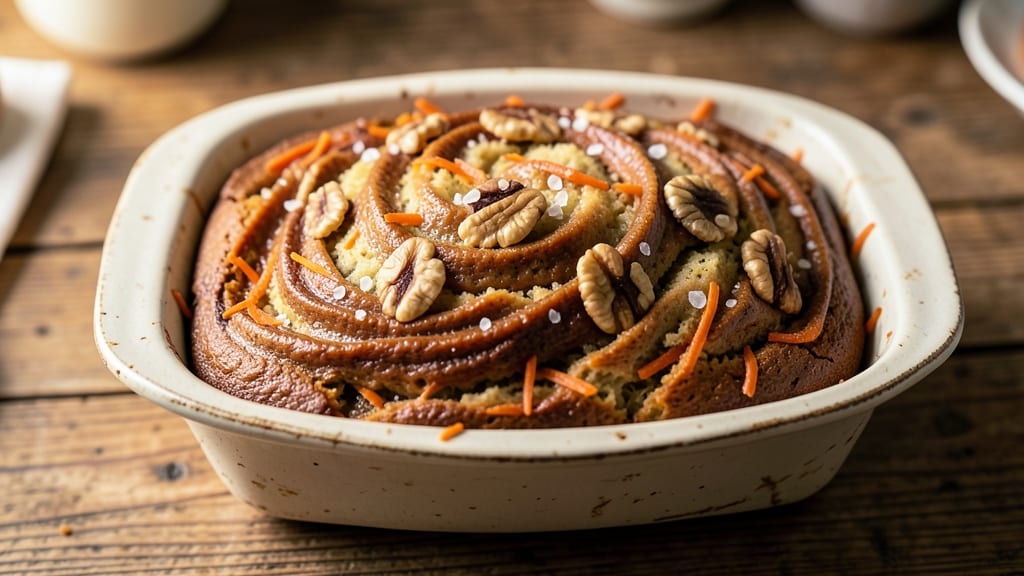
This old-fashioned carrot bread recipe delivers the perfect balance of tender crumb and rich walnut swirl that makes every slice irresistible. The secret lies in precise ingredient ratios and a moist crumb that stays fresh for days—no dry, crumbly texture here.
I've baked countless batches, refining the recipe until it became a staple in my kitchen, especially when paired with cream cheese frosting.
The recipe combines classic ingredients like shredded carrots, walnuts, and warm spices with a foolproof mixing method that ensures maximum moisture. You'll need just 30 minutes of active prep time, followed by 50-55 minutes in the oven at 350°F.
The walnut swirl adds a delightful crunch and nutty depth that transforms this bread from ordinary to extraordinary.
What makes this carrot bread truly special is its ability to stay moist for days, thanks to a combination of brown sugar and vegetable oil. The walnut swirl creates pockets of rich, buttery flavor that cut through the sweetness, making each bite satisfying.
Whether you serve it as a side with dinner or enjoy it as a sweet snack, this recipe delivers restaurant-quality results at home.
For added indulgence, consider topping with a simple cream cheese frosting or dusting with powdered sugar. The possibilities are endless, but the foundation remains the same: a tender, flavorful loaf that brings comfort to any table. Let's get baking!
Ingredients for old fashioned carrot bread
Classic pantry staples meet moist crumb perfection. These simple ingredients transform into a tender loaf with rich walnut swirl.
| Ingredient | Amount | Notes |
|---|---|---|
| All-Purpose Flour 🌾 | 2 ½ cups | Sifted for light texture |
| Granulated Sugar 🍚 | 1 cup | White sugar preferred |
| Packed Brown Sugar 🍚 | ¾ cup | Light or dark variety |
| Vegetable Oil 🫒 | ½ cup | Light or canola oil |
| Unsalted Butter 🧈 | ½ cup | Room temperature for mixing |
| Shredded Carrots 🥕 | 2 cups | Freshly grated, not pre-shredded |
| Large Eggs 🥚 | 2 whole | Room temperature for best mixing |
| Ground Cinnamon 🌿 | 1 ½ tsp | Freshly ground preferred |
| Ground Ginger 🌿 | 1 tsp | Freshly ground for warmth |
| Ground Nutmeg 🌿 | ½ tsp | Freshly grated nutmeg |
| Salt 🧂 | ½ tsp | Kosher or sea salt |
| Baking Soda 🧪 | 1 tsp | Freshly opened for best results |
| Chopped Walnuts 🥜 | 1 ½ cups | Toasted for enhanced flavor |
| Unsalted Butter (for swirl) 🧈 | ¼ cup | Cold and cubed for texture |
| Packed Brown Sugar (for swirl) 🍚 | ¼ cup | Same as above for consistency |
The carrots are the star, so freshly grated is non-negotiable—the pre-shredded kind loses moisture fast. Organic carrots from Trader Joe's or your local market work best, but any bright orange carrots will do. For the walnuts, toasting them in a dry skillet for 3-4 minutes brings out their nutty depth—don’t skip this step. The butter matters too: use unsalted so you control the saltiness, and let it sit out for 30 minutes before mixing. For the spices, Penzeys or Spicewalla have the best quality, but the grocery store’s ground spices work fine if they’re fresh.
No walnuts? Pecans or macadamias work in a pinch, though the flavor will differ slightly. Short on brown sugar? Substitute white sugar at the same amount, but the loaf will be slightly less moist. If you’re avoiding gluten, Bob’s Red Mill 1:1 baking flour replaces the all-purpose flour perfectly. For the swirl, cold butter cubes create pockets of buttery crunch—don’t let them soften before mixing. The baking soda is crucial for that classic rise, so check the expiration date—old baking soda won’t work.
This bread stays moist for 4-5 days at room temperature, wrapped in foil. For longer storage, freeze it in 1-inch slices for up to 3 months. Reheat slices in the oven at 300°F for 5-7 minutes to restore freshness. I always bake two loaves—one for the freezer and one to enjoy immediately. The walnut swirl keeps best when stored separately, so mix it in just before baking if you’re making ahead.
Why You'll Love This Recipe
- No Mixer Needed: I swear by this recipe because it’s the kind of thing you can toss together with a wooden spoon while chatting with someone. No stand mixer, no fuss—just a bowl, a whisk, and the simple act of folding grated carrots into that buttery flour base. The brown sugar and oil keep it moist without requiring extra effort.
- Sweet-Spiced Comfort: That caramelized sugar crust? It’s the star. The combo of brown and granulated sugar gives it a deep, almost butterscotch-like richness, while the oil keeps every bite tender. Honestly, it’s the kind of bread that makes me forget it’s technically "healthy" because it tastes like a hug.
- Breakfast to Dessert: I’ve served this warm with butter at 7 a.m. and as a midnight snack with ice cream—no judgment. The balance of sweetness and the subtle earthiness of the carrots makes it work for brunch, a quick snack, or even a dessert when paired with cream cheese. (Yes, even on a Tuesday night.)
- Lasts All Week: One loaf feeds my family for days—sliced for toast, cubed for muffins, or reheated in the oven to revive that crust. And because it’s got pantry staples (flour, sugar, oil), it’s the kind of recipe that doesn’t drain my wallet. My kids beg for it, and I don’t even have to buy fancy ingredients.
Step-by-step instructions for old fashioned carrot bread recipe
Here's how to create a tender, moist carrot bread with a perfect walnut swirl that stays fresh for days.
Prepare the Walnut Swirl Mixture
In a small bowl, combine the 0.25 cup unsalted butter (for swirl) and 0.25 cup packed brown sugar (for swirl). Use a fork or your fingers to work the butter until it's softened and crumbly. This creates a rich, buttery base for the swirl that will melt beautifully during baking.
Add the 1.5 cups chopped walnuts to the butter mixture and toss gently to coat each piece. The walnuts should be evenly distributed throughout the butter and sugar. Set this mixture aside—it's ready to be folded into the batter once the dry ingredients are combined. This step ensures the walnuts stay concentrated in the swirl rather than dispersing throughout the loaf.
Mix Wet Ingredients for a Light Batter
In a large mixing bowl, combine the 0.5 cup unsalted butter and 0.5 cup vegetable oil and let them sit at room temperature for 5 minutes to soften slightly. This makes them easier to mix with the sugars. Add the 1 cup granulated sugar and 0.75 cup packed brown sugar, then beat with an electric mixer on medium speed for 2-3 minutes until the mixture is light and fluffy.
Add the 2 whole large eggs, one at a time, mixing well after each addition. The batter should thicken slightly as you incorporate the eggs. This creaming process is crucial for achieving that tender, moist crumb the bread is known for. If the mixture seems too thick, you can add 1 tablespoon of milk (though it's not listed in the ingredients, it's a common substitution for this recipe).
Combine Dry Ingredients and Fold in Carrots
In a separate bowl, whisk together the 2.5 cups all-purpose flour, 1.5 teaspoons ground cinnamon, 1 teaspoon ground ginger, 0.5 teaspoon ground nutmeg, 0.5 teaspoon salt, and 1 teaspoon baking soda. Sift the dry ingredients directly into the wet mixture to avoid clumping. Use a spatula to gently fold in the 2 cups shredded carrots, being careful not to overmix.
Add the walnut swirl mixture to the batter and gently fold it in using a rubber spatula. The goal is to distribute the swirl evenly throughout the batter while keeping it intact in sections. Overmixing at this stage can lead to a dense loaf, so mix just until the swirl is incorporated. The batter should be thick but pourable—if it's too stiff, you can add 1-2 tablespoons of water to loosen it.
Bake for a Perfectly Moist Loaf
Preheat your oven to 350°F and grease a 9x5-inch loaf pan with butter or line it with parchment paper for easy removal. Pour the batter into the prepared pan and smooth the top with a spatula. Bake for 50-60 minutes, or until a toothpick inserted into the center comes out clean. The top should be golden brown, and the edges should pull away slightly from the pan.
Here's the key to maintaining moisture: once the bread is done, transfer it to a wire rack and let it cool for 10 minutes before removing it from the pan. This prevents the bread from sinking in the center as it cools. For extra moisture, you can tent the loaf with aluminum foil while it cools. Serve warm for the best texture, or store at room temperature in an airtight container for up to 3 days.
Pro Tips For Making Old Fashioned Carrot Bread
- Preheat to 350°F: DESCRIPTION: I learned this the hard way—skipping the exact temp ruins the texture. Too hot, and the bread burns before the center sets; too cool, and it stays dense. That middle ground (350°F) guarantees a golden crust while keeping the inside moist. No guesswork—just set it and forget it.
- Grate Carrots Fine: DESCRIPTION: Sounds obvious, but I’ve seen lumpy shreds turn this into a chewy mess. Use a box grater or food processor for uniform, fine strands—think wet sand, not pebbles. Drain excess moisture if they’re watery; no one wants a soggy loaf.
- Don’t Overmix the Batter: DESCRIPTION: I used to beat this like a smoothie, thinking more mixing = better bread. Wrong. Overworking the flour develops gluten, making the bread tough. Stir just until the dry ingredients disappear—lumpy is fine, dense is not.
- Grease the Pan Well: DESCRIPTION: Vegetable oil is your friend here, but don’t skimp. Brush the pan and sprinkle a thin layer of flour inside—yes, even if the recipe doesn’t say it. This keeps the bread from sticking like glue, especially if you’re using a dark pan (which burns faster).
Essential equipment for perfect results
Must-Have Mixing Tools
Start with a stand mixer or hand mixer for creaming the butter and sugar—this ensures a light, airy texture. I use my KitchenAid Artisan Series because its paddle attachment handles dense batters like this one perfectly.
For folding in the walnut swirl, a rubber spatula (like the OXO Good Grips) is essential—it prevents overmixing while distributing the swirl evenly. 💡
Precision Measuring
Accurate measurements make all the difference in carrot bread. Invest in a digital kitchen scale for dry ingredients like flour and sugar—this eliminates packing issues and ensures consistency.
For wet ingredients, a liquid measuring cup with a spout (like the Pyrex 2-cup version) makes pouring oil and melted butter effortless. The 2-cup glass measuring cup from Anchor Hocking is my go-to for its clarity and durability.
Baking Essentials
A 9x5-inch loaf pan is non-negotiable—Wilton's nonstick version or USA Pan's Perfect Pan both work wonders. For the walnut swirl, a small mixing bowl (like the Pyrex 1.5-quart) keeps ingredients contained.
Don’t forget a wire cooling rack—I use the Ozeri Pop-Up to prevent soggy bottoms. A toothpick for testing doneness is a kitchen staple, but I prefer a long skewer for deeper loaves.
Optional Upgrades
For extra precision, a thermometer (like the Thermoworks Thermapen) ensures your oven is at 350°F—critical for even baking. A pastry brush (such as the West Bend Silicone) helps grease the pan thoroughly.
For gluten-free adaptations, a high-quality gluten-free flour blend like King Arthur Measure for Measure is worth the investment. A food processor (like the Cuisinart DLC-2A) speeds up shredding carrots—just pulse until finely chopped. 🥕
Storage Solutions
Once baked, store your carrot bread in an airtight container—I recommend Rubbermaid Brilliance containers for their tight seals. For freezing, quart-sized freezer bags (like Glad Press'n Seal) save space and prevent freezer burn.
A sharp serrated knife (like the Mercer Culinary Genesis) ensures clean slices, while a damp paper towel over the bread prevents drying during reheating.
Nutrition facts
Frequently asked questions
Why does this carrot bread stay moist longer than other recipes?
The combination of brown sugar and vegetable oil creates a tender crumb that retains moisture for days. The walnut swirl also helps trap moisture within the loaf, while the 10-minute cooling period before removing from the pan prevents moisture loss. Store it in an airtight container to lock in freshness for up to 5 days.
Can I make this recipe without walnuts?
Swap the walnuts for pecans, macadamias, or even dried cranberries for a different flavor profile. For a nut-free version, omit the swirl entirely or use chopped dates or raisins instead. The walnuts add crunch and richness, but the bread will still be delicious without them.
What’s the best way to test if the bread is fully baked?
Insert a toothpick or long skewer into the center—they should come out clean or with just a few moist crumbs. The edges should also pull away slightly from the pan, and the top should be golden brown. If unsure, bake for 5 more minutes to ensure doneness.
How do I prevent a dense or dry texture?
Overmixing is the #1 cause of dense bread—fold the walnut swirl just until combined. For moisture, ensure your ingredients are at room temperature (especially butter and eggs) and don’t overbake. If the batter seems too thick, add 1-2 tablespoons of water to loosen it.
Can I make this gluten-free?
Yes! Replace the all-purpose flour with a 1:1 gluten-free baking flour blend like King Arthur’s Measure for Measure. You may need to add ½ teaspoon xanthan gum if your blend doesn’t include it. The texture will be slightly denser but still delicious. Test the recipe first with a small batch.