
Main Courses
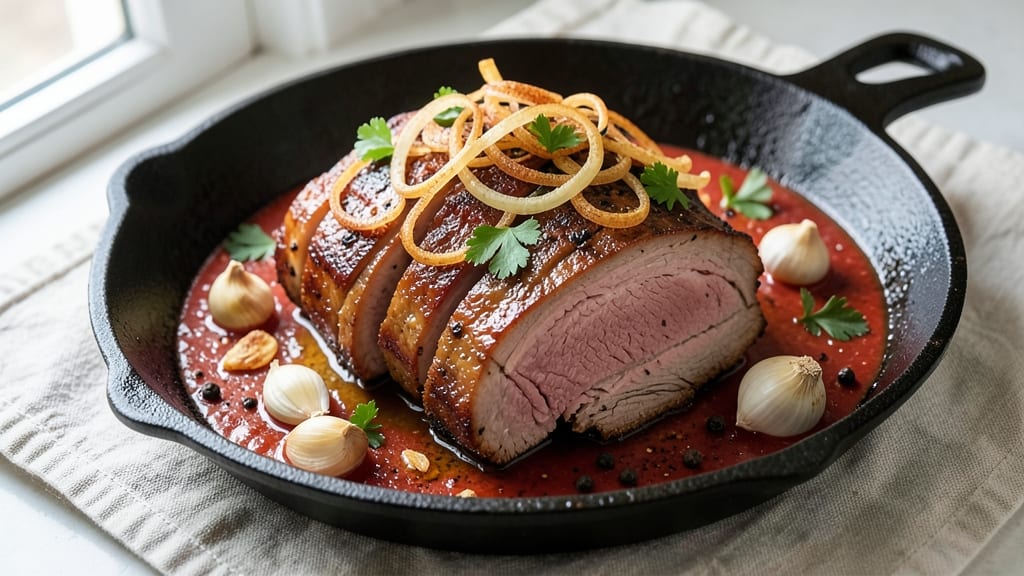
Transforming a tough cut like Boston butt into melt-in-your-mouth perfection requires patience and precision—this slow-cooked pot roast delivers exactly that. The key lies in a carefully balanced rub of smoked paprika, brown sugar, and garlic, which develops deep, caramelized flavors while the meat tenderizes over hours in the oven.
I’ve perfected this method to ensure every bite has that signature smoky richness and irresistible pull-apart texture.
What sets this recipe apart is the combination of traditional braising techniques with modern shortcuts—whether you choose the classic oven method or opt for a pressure cooker to cut time without sacrificing flavor.
The slow cook transforms the meat from chewy to fork-tender, while the aromatic herbs and spices infuse every inch, creating a dish that’s hearty enough for a holiday table but simple enough for a weeknight dinner.
The result is a pot roast so tender it practically falls apart at the touch, bathed in a rich, flavorful broth that’s perfect for serving over creamy mashed potatoes or crusty bread.
The caramelized edges and deep, smoky aroma make this dish a showstopper, proving that slow cooking can yield restaurant-quality results at home with minimal effort.
Pair it with roasted vegetables or a fresh green salad to round out the meal, and you’ll have a comforting, crowd-pleasing dinner that’s sure to become a staple. Let’s get started on creating this timeless classic.
Ingredients for boston butt pot roast
Sixteen ingredients transform tough Boston butt into restaurant-quality pot roast with smoky depth and melt-in-your-mouth tenderness.
| Ingredient | Amount | Notes |
|---|---|---|
| Boston Butt Roast 🥩 | 4 lb | Untrimmed, bone-in preferred |
| Smoked Paprika 🌶️ | 2 tbsp | High-quality for authentic smokiness |
| Light Brown Sugar 🍚 | ½ cup | Packed, not granulated |
| Garlic Cloves 🧄 | 6 cloves | Peeled, smashed for deeper flavor |
| Kosher Salt 🧂 | 1 ½ tbsp | Diamond Crystal preferred |
| Ground Black Pepper 🌶️ | 1 tbsp | Freshly cracked for best flavor |
| Dried Thyme 🌿 | 1 tbsp | Or 1 tbsp fresh thyme leaves |
| Dried Rosemary 🌿 | 1 tbsp | Finely chopped for even distribution |
| Onion Powder 🧅 | 1 tbsp | Not onion salt |
| Beef Broth 💧 | 2 cups | Low-sodium preferred |
| Red Wine 🍷 | 1 cup | Dry, bold variety like Cabernet |
| Olive Oil 🫒 | 2 tbsp | Extra-virgin for richness |
| Fresh Parsley 🌿 | ¼ cup | Chopped, for garnish |
| Carrots 🥕 | 4 whole | Medium-sized, peeled |
| Celery Stalks 🥬 | 3 whole | Trimmed, cut into chunks |
The Boston butt roast is the star—look for a well-marbled piece with a vibrant red color, not gray or yellowed. Whole Foods or your local butcher shop offer the best quality, though most grocery stores carry pre-trimmed roasts. A 4-pound cut serves six generously, but if you're feeding a crowd, go for a 5-6 pound roast—it yields more leftovers, and this dish reheats beautifully. The smoked paprika should be labeled 'smoked' (not sweet) for that authentic barbecue flavor—Penzeys or McCormick are reliable brands. Brown sugar adds caramelization, so don't skip the light variety; Domino or C&H work well. For garlic, peel and smash the cloves with the flat side of your knife—this releases more flavor during cooking.
No smoked paprika? Substitute 1 tbsp of regular paprika plus 1/2 tsp liquid smoke for a similar effect. Running out of red wine? Beef broth with 1 tbsp balsamic vinegar mimics the depth. Fresh thyme unavailable? Dried works at half the amount, but toast it in a dry pan for 30 seconds first to wake up the flavor. The carrots and celery can be swapped for potatoes or mushrooms if you prefer—just adjust cooking time if using denser vegetables. For the brown sugar, if you only have granulated, pack it tightly into the measuring cup to avoid air gaps. The olive oil should be extra-virgin—cheap oil won't add the same richness to the rub.
This roast develops best when prepped a day ahead—the rub can sit on the meat overnight in the fridge, deepening the flavors. Store leftovers in an airtight container for up to 5 days, or freeze portions for 3 months. The broth reduces beautifully, so double the recipe if you want extra for mashed potatoes or gravy. For make-ahead convenience, assemble the roast in a slow cooker, add liquids, and cook on low for 8 hours before finishing in the oven. The caramelized edges are worth the effort—brush with extra olive oil before serving to highlight their depth.
Why You'll Love This Recipe
- Foolproof Prep: I swear by this—just sear the roast, sprinkle the smoked paprika and brown sugar, then let the oven do the work. No fancy techniques, no stress, and honestly? The hardest part is waiting for it to finish.
- Deep, Smoky Magic: That combo of garlic and smoked paprika? It’s what turns a simple roast into something ridiculously good. The brown sugar caramelizes into a sticky, savory crust—like a cross between BBQ and comfort food.
- Leftovers for Days: Between us, this recipe makes enough for tonight’s dinner and tomorrow’s lunch. I’ll be real: my freezer is always stocked with slices for sandwiches or reheated with mashed potatoes—zero guilt, all satisfaction.
- Budget Crowd-Pleaser: A whole Boston butt feeds six for under $20, and it’s the kind of dish where everyone asks for seconds. (Yes, even on a Tuesday night.) Plus, the salt and sugar stretch what little money I spend on meat.
Step-by-step instructions for Boston butt pot roast
Master this slow-cooked technique for melt-in-your-mouth beef with deep smoky flavor and tender vegetables.
Prepare the Boston Butt Roast
Begin by removing the Boston Butt roast from the refrigerator and patting it dry thoroughly with paper towels. This step is crucial for achieving a flavorful crust later. Place the roast in a large roasting pan or Dutch oven and rub it evenly with the 2 tablespoons olive oil to help the seasoning adhere and create a golden-brown exterior.
In a small bowl, combine the 1.5 tablespoons kosher salt, 1 tablespoon ground black pepper, 2 tablespoons smoked paprika, 1 tablespoon dried thyme, 1 tablespoon dried rosemary, 1 tablespoon onion powder, and the 6 cloves smashed garlic. Rub this mixture all over the roast, including the cut surfaces, pressing the spices into the meat. This ensures even distribution and maximum flavor penetration. Let the roast sit at room temperature for 30 minutes before cooking to promote even cooking.
Sear the Roast for Depth of Flavor
Preheat your oven to 325°F. Heat a large oven-safe skillet or Dutch oven over medium-high heat. Place the seasoned Boston Butt roast in the skillet, fat-side down, and sear for 4-5 minutes until a deep golden-brown crust forms. Flip the roast and sear the other side for another 4-5 minutes. This step develops a rich, caramelized crust that adds layers of flavor to the finished dish.
Remove the roast from the skillet and set it aside. In the same skillet, add the 4 whole carrots and 3 whole celery stalks, cut into chunks. Sauté for 3-4 minutes until they begin to soften slightly. This helps build flavor in the cooking liquid. Transfer the vegetables to the roasting pan or Dutch oven with the seared roast.
Slow-Cook Until Tender
Pour the 1 cup red wine into the skillet and scrape up any browned bits from the bottom. Deglaze the skillet and pour the liquid into the roasting pan. Add the 2 cups beef broth and the 0.5 cup light brown sugar to the pan. The sugar will caramelize slightly during cooking, adding a subtle sweetness that balances the smoky and savory flavors.
Place the roast back into the pan, fat-side up, and transfer it to the preheated oven. Cover the pan tightly with a lid or foil to trap steam and moisture. Cook for 3-4 hours until the roast reaches an internal temperature of 200-205°F and is fork-tender. The slow cooking process breaks down the connective tissue, resulting in meat that falls apart easily. Check the roast periodically, adding 1/4 cup water if the liquid reduces too much.
Rest and Garnish
Once the roast reaches the desired internal temperature, remove it from the oven and let it rest for 15-20 minutes. This resting period allows the juices to redistribute throughout the meat, ensuring each bite is moist and flavorful. During this time, skim any excess fat from the cooking liquid if desired.
To serve, use two forks to shred the Boston Butt roast directly in the pan, discarding any large fat pieces. Spoon the roast and vegetables over a serving platter, drizzle with the cooking liquid, and garnish with the 0.25 cup chopped fresh parsley. The finished dish should have a rich, smoky aroma with tender meat and perfectly cooked vegetables. Serve immediately with crusty bread or mashed potatoes to soak up the delicious sauce.
Pro Tips For Making Boston Butt Pot Roast
- SEAR THE FAT FIRST: That thick layer of fat on the Boston butt isn’t just for looks—it’s flavor insurance. Hit the roast with a screaming-hot pan (cast iron if you have it) until the edges are deep golden, then flip to render the fat. I used to skip this, and the final sauce always tasted flat. The fat carries the smoky paprika and caramelized sugar into every bite.
- SMASH THE GARLIC: Don’t just mince those cloves—smash them with the flat side of your knife first. This releases more oils and aroma into the pan before they even hit the heat. I learned this the hard way after serving a pot roast where the garlic was just… there, not working. A quick whack with the knife blade makes all the difference.
- DON’T OVERCROWD THE PAN: If you’re browning the roast in a skillet, resist the urge to add all the garlic and sugar at once. Cook the roast until it’s golden on all sides, then pull it out and let the pan cool for 30 seconds before adding the aromatics. This prevents steaming and guarantees a proper sear. Trust me, your future self will notice the texture difference.
- REST BEFORE SLICING: The roast will be tender, but cutting into it immediately means juices pooling on your plate instead of staying in the meat. Tent it loosely with foil and let it sit for 10 minutes—yes, even if you’re starving. I know, I know, but the first slice will be worth the wait. The meat will hold together, and you won’t end up with a soggy mess.
Creative variations of this dish
Smoky BBQ Twist
Turn this classic pot roast into a Southern-style BBQ masterpiece by swapping the red wine for 1 cup BBQ sauce (I recommend Sweet Baby Ray's Original or Stubb's Original) and adding 1 tbsp apple cider vinegar to the braising liquid.
After the initial sear, brush the roast with ½ cup BBQ sauce during the last 30 minutes of cooking. The result? A sticky, caramelized glaze with deep smoky-sweet flavors that’ll have everyone asking for seconds. 🌶️
Herb-Infused White Wine
For a lighter, more elegant version, replace the red wine with 1 cup dry white wine (like Sauvignon Blanc) and add a bouquet garni—tie together 1 sprig thyme, 1 sprig rosemary, 2 bay leaves, and 1 garlic clove in cheesecloth.
This infuses the broth with bright, herbal notes that pair beautifully with the rich pork. Simmer the bouquet in the liquid for the first 2 hours of cooking, then remove it before serving. ✨
Spicy Cajun Kick
Give your pot roast a Louisiana-inspired heat boost by adding 1 tbsp Cajun seasoning (like Tony Chachere's) to the dry rub and ½ tsp cayenne pepper to the braising liquid.
For extra depth, stir in 1 tbsp hot sauce (such as Crystal or Tabasco) during the last 15 minutes of cooking. Serve with cooling sides like creamy coleslaw or cornbread to balance the spice. 🔥
Asian-Inspired Five-Spice
For a fusion twist, replace the smoked paprika with 1 tbsp Chinese five-spice powder and add 1 tsp grated fresh ginger and 1 tsp grated galangal (or extra ginger if unavailable) to the rub.
Swap the red wine for 1 cup coconut aminos and add 1 star anise pod and 1 cinnamon stick to the braising liquid. The result is a sweet, aromatic, and slightly spicy roast with a unique global flavor profile. 🌏
Slow Cooker Shortcut
Save time without sacrificing flavor by using a slow cooker for the entire process. After searing the roast, transfer it to a 6-quart slow cooker with all the braising ingredients.
Cook on LOW for 8 hours or HIGH for 5-6 hours, then transfer to a 400°F oven for the final 20 minutes to crisp the edges. This method is perfect for busy weeknights but still delivers restaurant-quality tenderness. ⏰
Gluten-Free Adaptation
Make this dish gluten-free friendly by ensuring your beef broth and red wine are certified gluten-free (many brands contain hidden gluten). Use tamari instead of soy sauce if adding any, and check your smoked paprika for gluten cross-contamination.
The natural flavors of the roast shine through, making it a safe and delicious option for gluten-sensitive guests. 💪
Nutrition facts
Frequently asked questions
Why does Boston butt need such a long cooking time?
Boston butt is a tough cut with plenty of connective tissue that breaks down into gelatin during long, slow cooking. The 3-4 hour process at 325°F transforms it into melt-in-your-mouth tenderness. This method mimics traditional pot roast techniques that were designed to tenderize less expensive cuts of meat.
Can I use a pressure cooker instead of the oven?
After searing, transfer the roast to your pressure cooker with all braising ingredients. Cook on high pressure for 60 minutes, then let it naturally release for 15 minutes. This cuts cooking time dramatically while maintaining incredible tenderness. Just be sure to check the internal temperature reaches 200-205°F before serving.
What's the best way to reheat leftovers?
Slice the roast and reheat in a skillet with a splash of beef broth over medium-low heat for 5-7 minutes until warmed through. For oven reheating, cover with foil and bake at 300°F for 20 minutes. Never microwave—it makes the meat rubbery. The broth-based reheating method keeps everything moist and flavorful.
How do I know when the roast is done?
Use a meat thermometer to check the internal temperature—it should read 200-205°F in the thickest part. The meat will be fork-tender and pull apart easily. If you don't have a thermometer, cut into the center: the juices should run clear, and the meat should separate with minimal resistance.
What's the best way to serve this dish?
This rich roast pairs beautifully with creamy mashed potatoes, crusty bread, or buttery egg noodles. For a complete meal, serve with roasted root vegetables (carrots, parsnips) or a fresh green salad. The smoky flavors also complement tangy sides like pickled onions or coleslaw.