
Soups & Stews
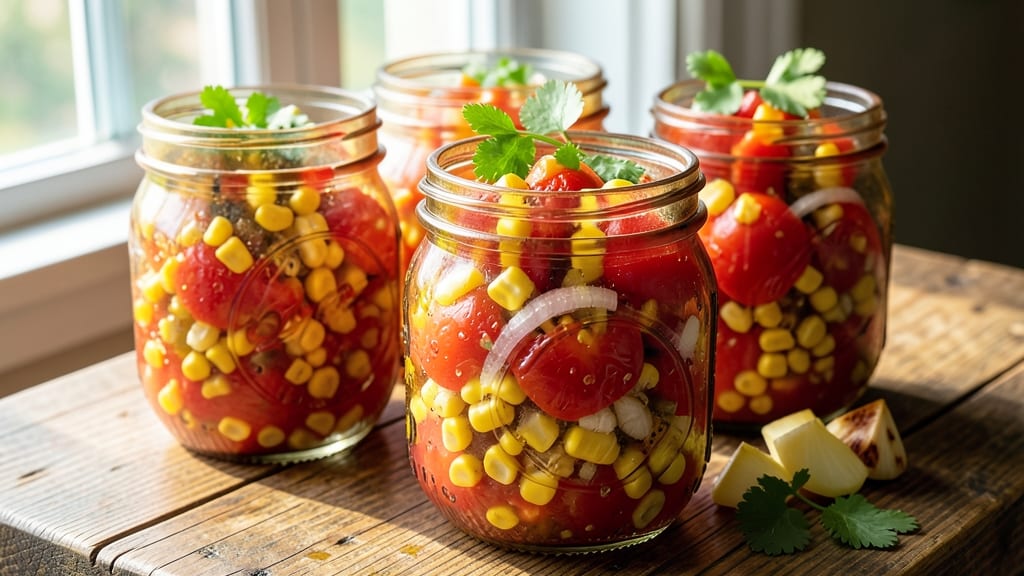
Preserving summer's garden harvest in jars of vibrant corn and tomato salsa is one of the most rewarding canning projects you'll ever tackle. This recipe delivers a bright, tangy condiment with sweet corn kernels and juicy tomatoes, perfectly balanced for safe, long-term storage.
The key lies in proper acidification and processing—critical steps that ensure both flavor and safety.
What makes this salsa stand out is its versatility—use it as a dip, topping for tacos, or mixed into soups and stews throughout the year. We'll walk through precise canning techniques, including sterilizing jars, maintaining proper pH levels, and processing times in a water bath canner.
These steps aren't just about preservation; they're about unlocking a pantry staple that tastes like summer all year long.
The result is a batch of golden-hued salsa with tender corn and tomatoes that retain their natural sweetness, all sealed in jars ready for your pantry. Each bite delivers that fresh garden flavor, while the acidity from vinegar or citrus ensures safety during storage.
This isn't just canning—it's creating a taste of summer that lasts.
With proper equipment and attention to detail, you'll have shelf-stable salsa that keeps for up to a year when stored in a cool, dark place. The beauty of this recipe is its simplicity—just a few key ingredients transformed into a condiment that elevates every meal.
Let's get started on preserving that summer harvest safely and deliciously.
Ingredients for corn and tomato salsa canning
Eight simple ingredients transform into shelf-stable salsa that captures summer's freshness.
| Ingredient | Amount | Notes |
|---|---|---|
| Fresh Tomatoes 🍅 | 4 cups | Roma or vine-ripened, chopped |
| Sweet Corn Kernels 🌽 | 3 cups | Fresh or frozen, thawed |
| Yellow Onion 🧅 | 1 whole | Medium, finely diced |
| Garlic Cloves 🧄 | 6 cloves | Fresh, minced |
| White Vinegar 💧 | ½ cup | White or apple cider |
| Extra-Virgin Olive Oil 🫒 | ¼ cup | For richness |
| Salt 🧂 | 1 ½ tsp | Non-iodized preferred |
| Ground Black Pepper 🌶️ | ½ tsp | Freshly ground |
| Dried Oregano 🍃 | 1 tsp | Mexican preferred |
| Lemon Juice 🍋 | ¼ cup | Freshly squeezed |
| Half-Pint Mason Jars 🥫 | 8 pieces | With lids and rings |
The tomatoes and corn form the salsa's heart—opt for vibrant, ripe produce at your local farmers market for peak flavor. Ball or Kerr brand jars are trusted for canning safety, and always check seals after processing. Fresh garlic and onion add depth, but if using dried, reduce to half the amount. The vinegar isn't just for tang; it's critical for proper acidification during canning—never skip this step for safety. For best results, use tomatoes and corn within 24 hours of harvest to capture peak freshness.
No fresh tomatoes? Canned tomatoes (no salt added) work in a pinch, but drain them well. Swap corn for frozen sweet corn kernels—thaw and drain thoroughly. Short on lemon juice? Lime juice or bottled lemon juice maintains the same acidity. The olive oil adds richness, but avocado oil is a neutral alternative. For extra heat, add 1/2 tsp cayenne pepper or chopped jalapeños. Always taste before canning—adjust salt and acidity as needed to balance flavors while maintaining safety standards.
Sterilize jars and lids in boiling water for 10 minutes before filling. Process sealed jars in a water bath canner for 15 minutes at altitudes below 1,000 feet. Store in a cool, dark pantry where jars will last up to 12 months. Check seals annually—discard any jars that fail the seal test. The salsa thickens slightly after canning, so leave 1/2-inch headspace when filling jars for proper sealing.
Why You'll Love This Recipe
- No-Chop Nightmare: I swear by this recipe because you’re basically just dicing tomatoes and corn—no fancy techniques, no stress. The onions and garlic get a quick sauté, then it’s all about layering flavors in jars. Honestly, my hands stay clean while the taste stays bold.
- Summer in a Jar: That perfect mix of sweet corn, juicy tomatoes, and bright vinegar? It’s like summer vacation every time I open a jar. The acidity from the vinegar cuts through the natural sweetness, and the garlic? Oh, it lingers just enough to make it unforgettable.
- Pantry Powerhouse: This salsa works with everything—tacos, grilled fish, even scrambled eggs. I’ve used it to dress up sandwiches and as a topping for roasted potatoes. Between us, I’ve even drizzled it over ice cream (yes, really) when I’m craving something sweet and tangy.
- Budget-Friendly Pantry Gold: Fresh tomatoes and corn are often cheaper than you’d think, and a few jars of this salsa last me months. No fancy ingredients, just simple, affordable staples that turn into something special. Plus, canning it means I’m always stocked for lazy nights or last-minute guests.
Step-by-step instructions for corn and tomato salsa canning
Here's how to safely preserve this vibrant salsa for up to a year.
Sterilize Jars and Prepare Ingredients
Begin by washing the 8 pieces half-pint mason jars and their lids and rings in hot, soapy water. Place jars in a large pot and cover with water. Bring to a boil for 10 minutes to sterilize completely. Meanwhile, prepare all ingredients by chopping the 4 cups fresh tomatoes into small pieces, dicing the 1 whole yellow onion, and mincing the 6 cloves garlic cloves. Drain and pat dry the 3 cups sweet corn kernels if using frozen. This preparation ensures everything is ready when you begin processing.
After sterilizing, remove the jars using tongs and keep them hot in a 200°F oven while you prepare the salsa. The high heat maintains sterility until you're ready to fill them. I like to work quickly at this stage to prevent contamination—once the jars cool, they're no longer sterile. Keep all ingredients at room temperature before combining to ensure even cooking.
Cook the Salsa Mixture
In a large, heavy-bottomed pot, combine the chopped tomatoes, sweet corn kernels, diced onion, minced garlic, 0.5 cup white vinegar, 0.25 cup extra-virgin olive oil, 1.5 teaspoons salt, 0.5 teaspoon ground black pepper, and 1 teaspoon dried oregano. Bring the mixture to a boil over medium-high heat, then reduce to a simmer and cook for 15 minutes, stirring occasionally. The vinegar and lemon juice will be added later to maintain acidity levels crucial for safe canning.
After simmering, remove the pot from heat and stir in the 0.25 cup lemon juice. This final addition boosts acidity to the required level for safe preservation. Let the mixture cool for 10 minutes while you prepare the jars. The salsa should be hot but not boiling when you fill the jars—this helps maintain the vacuum seal. I check the temperature with a candy thermometer to ensure it's between 180°F and 200°F before proceeding.
Fill and Process the Jars
Using a ladle or large spoon, carefully fill each of the 8 pieces half-pint mason jars with the hot salsa mixture, leaving ½-inch headspace at the top. The headspace is critical—it allows for proper expansion during processing. Use a clean wooden spoon or plastic chopstick to remove any air bubbles trapped in the jars by gently tapping the sides and pushing bubbles to the surface.
Wipe the rims of the jars with a clean, damp cloth to remove any residue that could interfere with sealing. Place a lid on each jar and screw on the ring fingertip-tight—just until it's snug, but don't overtighten. The jars will seal themselves during processing. Place the filled jars back into the pot of boiling water, ensuring they're covered by at least 1 inch of water. This water bath processing method is essential for safe canning.
Process the Jars for Safe Preservation
Bring the water in the pot back to a full rolling boil. Once boiling, process the jars for 35 minutes at 0 elevation (adjust time if you're at a higher altitude—check a canning guide for specific adjustments). The processing time ensures the salsa reaches a temperature that kills bacteria and extends shelf life. I set a timer and avoid opening the lid during processing to maintain the boiling temperature.
After processing, carefully remove the jars using tongs and place them on a clean towel. Let them cool undisturbed for 12-24 hours. You'll hear the lids pop as they seal—this sound indicates a successful vacuum seal. After cooling, check each lid by pressing down in the center. If it doesn't pop back up, the jar didn't seal properly and should be refrigerated and used within a week. Properly sealed jars can be stored in a cool, dark place for up to 1 year.
Pro Tips For Making Corn And Tomato Salsa Canning
- BOIL WATER FASTER: Start your canning jars in a separate pot of boiling water while you prep the salsa—this cuts down on sterilization time by 3-4 minutes. I used to wait until everything was ready, but now I just pop the jars in early and keep them hot until use.
- PEEL TOMATOES IN BATCHES: Drop whole tomatoes into boiling water for 30 seconds, then ice bath—peeling them one by one is a nightmare. Work in groups of 6-8 at a time, and use a paring knife to slice off the skin in one fluid motion (no peeling over a bowl—it’s messy).
- ACIDIFY WITH VINEGAR LAST: Add white vinegar only after everything else is mixed and jars are packed—it reacts with the tomatoes and can thin the salsa if stirred in too early. Measure it precisely (1 tablespoon per pint) and pour it directly over the salsa in the jar.
- USE FROZEN CORN FOR CONVENIENCE: Thaw frozen corn kernels in cold water, drain well, and add them directly to the hot salsa—no need to cook them first. They’ll soften perfectly during processing, and you’ll save 15 minutes of shucking and boiling fresh corn (which also risks uneven texture).
Regional styles of this dish
Southwestern Garden Style
In the Southwest, this salsa becomes a celebration of summer produce with bold flavors. I like adding 1 diced jalapeño and ½ cup chopped cilantro to the basic recipe for extra zing. The heat from the jalapeño balances the sweetness of the corn, while cilantro brightens every bite.
This version works perfectly as a dip for tortilla chips or as a topping for grilled meats. 🌶️
Italian-Inspired Tomato Corn Relish
For an Italian twist, swap the vinegar for ½ cup white wine vinegar and add 1 teaspoon dried basil instead of oregano. I also include ½ cup finely chopped sun-dried tomatoes for deeper flavor.
This version pairs beautifully with crusty bread or as a condiment for pasta dishes. The acidity remains balanced while offering a Mediterranean flair.
Mexican Street Corn Fusion
Transform this salsa into a taste of Mexican street corn by adding 1 teaspoon chili powder and ½ teaspoon smoked paprika to the cooking mixture. After processing, I like to sprinkle each jar with ¼ cup cotija cheese crumbles before sealing.
This version has a smoky depth that works wonderfully as a topping for tacos or grilled corn on the cob.
Spicy Carolina Twist
In the Carolinas, heat takes center stage. I boost the spice by adding 1 tablespoon hot sauce (like Crystal or Tabasco) and 1 teaspoon cayenne pepper to the mixture. The vinegar is reduced to ¼ cup while increasing lemon juice to ⅓ cup to maintain safety.
This fiery version is perfect for seafood dishes or as a bold salsa for shrimp tacos.
Herbed Midwest Classic
For a more subdued, herby profile, I replace the oregano with 1 teaspoon dried thyme and 1 teaspoon dried rosemary. The vinegar is swapped for ½ cup apple cider vinegar to add a subtle sweetness.
This version shines as a topping for grilled chicken or mixed into potato salads for a fresh, tangy twist.
Sweet and Tangy Caribbean Style
In Caribbean-inspired adaptations, I reduce the vinegar to ¼ cup and add 2 tablespoons honey or agave to balance the acidity. Fresh herbs like 1 tablespoon chopped mint or thyme elevate the flavor.
This version works beautifully as a marinade for grilled fish or as a topping for jerk chicken. The sweetness complements tropical flavors perfectly. 🌴
Nutrition facts
Frequently asked questions
Why is vinegar essential in this salsa canning recipe?
Vinegar is critical for maintaining proper acidity levels, which prevents harmful bacteria growth during storage. The 0.5 cup white vinegar and 0.25 cup lemon juice together ensure the salsa has a pH level safe for long-term preservation. Without sufficient acidity, even properly processed jars could spoil over time.
Can I use canned tomatoes instead of fresh?
Yes, but you must drain them thoroughly to avoid excess liquid in the jars. Canned tomatoes work well in a pinch, though fresh tomatoes provide better flavor and texture. If using canned, reduce the vinegar to 0.375 cup since canned tomatoes already contain some acidity. Always check the pH if you're unsure about acid levels.
What should I do if my jars don't seal properly?
If a jar fails to seal (lid pops up when pressed), refrigerate the salsa and use it within 1 week. Proper sealing requires clean rims, correct headspace (½-inch), and proper processing time (35 minutes). Check for residue on jar rims or insufficient processing time if multiple jars fail. Reprocess isn't possible once jars are opened.
How long does this salsa last after opening?
Once opened, refrigerate the salsa and consume within 7 days. The canning process preserves it unopened for up to 1 year in a cool, dark pantry. After opening, the texture may change slightly as it absorbs refrigerator moisture. For longer storage, freeze in airtight containers for up to 3 months.
Can I adjust the spice level in this recipe?
Add ½ teaspoon cayenne pepper or 1 diced jalapeño for heat, or swap oregano for milder herbs like thyme. Just ensure the total acidity remains balanced by adjusting vinegar or lemon juice accordingly. Always maintain proper pH levels for safe canning.