
Side Dishes
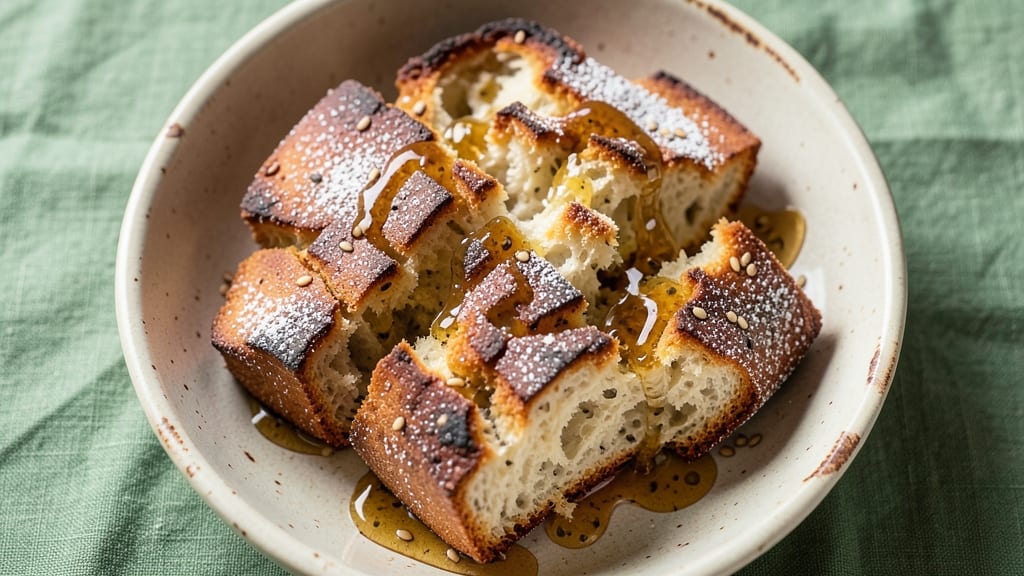
This asphodel bread recipe brings centuries of Greek tradition to your kitchen with its delicate, honey-kissed simplicity. Inspired by ancient recipes dating back to the Byzantine era, this vegan dessert captures the essence of Mediterranean baking—where flour, olive oil, and honey create magic without a single drop of dairy.
The dough's signature texture comes from a unique blend of semolina and all-purpose flour, yielding a crisp exterior and tender crumb that melts in your mouth.
What sets this recipe apart is its cultural authenticity combined with modern convenience. Traditionally shaped into small, crescent rolls, asphodel bread was originally made with asphodel root flour—a rare ingredient today—but this version uses easily accessible substitutes without sacrificing flavor.
The honey glaze isn't just decorative; it's essential, adding a golden sheen and subtle sweetness that balances the dough's mild richness. Baking time is minimal, making it perfect for special occasions or spontaneous treats.
By the time you pull these golden-brown rolls from the oven, your kitchen will smell like a Greek bakery, and every bite will transport you to the streets of Athens. The dough's subtle olive oil aroma deepens as it cools, while the honey glaze caramelizes into a delicate crust.
This recipe serves as both a delicious dessert and a beautiful centerpiece—ideal for holidays, gatherings, or simply satisfying a sweet tooth with heritage-inspired quality.
While traditional versions often include a sprinkle of sesame seeds, this recipe keeps it classic with just honey and a pinch of salt. The result is a dessert that feels luxurious yet effortless, proving that some of history's best recipes are timeless for a reason. Ready to bake?
Ingredients for asphodel bread
Nine simple ingredients transform into golden Greek crescents with honeyed elegance.
| Ingredient | Amount | Notes |
|---|---|---|
| All-Purpose Flour 🌾 | 3 cups | Sifted for light texture |
| Fine Semolina Flour 🌾 | ½ cup | For traditional crispness |
| Extra-Virgin Olive Oil 🫒 | ½ cup | High quality, fruity |
| Vegan Honey Substitute 🍯 | ¼ cup | Agave nectar or maple syrup |
| Warm Water 💧 | ½ cup | Room temperature preferred |
| Active Dry Yeast 🍞 | 1 tbsp | Or 2.25g packet |
| Fine Sea Salt 🧂 | ½ tsp | Diamond Crystal preferred |
| Vegan Butter Substitute 🧈 | 2 tbsp | Melted coconut oil works |
| Fresh Lemon Juice 🍋 | 1 tbsp | Brightens the dough |
| Powdered Sugar 🍚 | 1 tbsp | For honey glaze |
| Ground Flaxseed 🌱 | 1 tbsp | Mixed with 3 tbsp water |
The flour blend is key—Bob's Red Mill semolina gives that signature crunch, but any fine semolina works. King Arthur all-purpose flour ensures a tender crumb. Olive oil should be extra-virgin; the fruity notes elevate the flavor. For the honey substitute, local raw honey isn't vegan, so agave or maple syrup mimics the viscosity perfectly. Yeast should be fresh—if it smells stale, toss it. The flaxseed egg substitute is non-negotiable for binding without dairy.
No semolina? Cornmeal at half the amount works in a pinch, though texture differs. Short on olive oil? Avocado oil is a neutral swap, but don't use vegetable oil—it lacks flavor depth. The lemon juice can be bottled, but freshly squeezed adds brightness. For a richer dough, add 1 tbsp almond milk powder to the water. Traditional asphodel root flour is unavailable, but this blend delivers the same delicate crumb. The powdered sugar glaze should be sifted for a smooth finish.
This dough rises best at 75°F—use a proofing box or warm oven with a bowl of hot water. Shape the crescents 2 hours before baking to let them relax. Store wrapped at room temperature for 3 days or freeze shaped dough for 3 months. Reheat glaze-free bread at 300°F for 5 minutes to restore crispness. The honey glaze sets quickly, so work fast when drizzling.
Why You'll Love This Recipe
- No-Knead Magic: I swear by this—just mix, let it rest, and bake. The semolina flour does all the heavy lifting while I sip my coffee.
- Crispy Honeyed Edge: That golden crust from the olive oil and vegan honey substitute? It’s the kind of crunch that makes you pause mid-bite. Honestly, it’s the star.
- All-Day Sidekick: Breakfast toast, lunch wraps, or dinner with soup—this bread adapts. I’ve even used it for croutons (yes, even on a Tuesday night).
- Pantry-Friendly Staples: Flour, oil, water—ingredients you already own. No fancy substitutions, no last-minute grocery runs. Budget-approved and always on standby.
Step-by-step instructions for asphodel bread with honeyed simplicity
Transform simple ingredients into ancient Greek tradition with this straightforward method.
Activate the Yeast and Prepare the Flaxseed Gel
In a small bowl, combine the 1 tablespoon ground flaxseed with 3 tablespoons warm water. Stir well and let it sit for 5 minutes until it thickens into a gel-like consistency. This flaxseed mixture replaces eggs in traditional recipes, adding moisture and binding properties to our plant-based version.
In a separate small bowl, whisk together the 0.5 cup warm water, 1 tablespoon active dry yeast, and 1 tablespoon vegan honey substitute. Let this mixture sit for 5-10 minutes until it becomes frothy and bubbly. The bubbles indicate active yeast ready to leaven our dough - you'll know it's ready when it doubles in volume and smells slightly sweet and yeasty.
Mix the Dough for Optimal Texture
In the bowl of a stand mixer fitted with the paddle attachment, combine the 3 cups all-purpose flour and 0.5 cup fine semolina flour. Whisk lightly to distribute the semolina evenly - this will give our bread that characteristic crisp crust. Add the 0.5 teaspoon fine sea salt and mix just until combined.
With the mixer running on low speed, gradually add the yeast mixture, flaxseed gel, 0.5 cup extra-virgin olive oil, and 1 tablespoon fresh lemon juice. Mix for 2-3 minutes until the dough begins to come together. The lemon juice brightens the flavor while the olive oil adds richness that traditional recipes achieve with butter.
Knead and Rest for Maximum Flavor Development
Switch to the dough hook attachment and knead on medium speed for 5-7 minutes until the dough is smooth and elastic. It should pull away from the sides of the bowl and form a soft ball. If it feels too sticky, add 1 tablespoon more all-purpose flour at a time until it reaches the perfect consistency - it should be slightly tacky but not wet.
Transfer the dough to a lightly oiled bowl, cover with a damp kitchen towel, and let it rise in a warm place for 1-1.5 hours or until it has doubled in size. You'll know it's ready when it springs back slowly when poked with your finger. This resting period allows the yeast to work its magic, creating those air pockets that give asphodel bread its light, airy texture.
Shape and Proof for Crispy Perfection
Punch down the risen dough to release any air bubbles, then turn it out onto a lightly floured surface. Gently shape it into a round loaf about 8 inches in diameter. For an authentic presentation, create a slight indentation in the center - this traditional shape allows the bread to crisp beautifully while keeping the interior tender.
Place the shaped dough on a parchment-lined baking sheet and cover it again with a damp towel. Let it proof for an additional 30-45 minutes until it has risen noticeably but hasn't quite doubled in size. This second rise ensures our bread will have that perfect balance of crisp exterior and soft interior that makes asphodel bread so special.
Bake to Golden Crispness and Glaze
Preheat your oven to 375°F and position a rack in the middle position. Brush the risen dough with the 2 tablespoons melted vegan butter substitute and sprinkle evenly with 1 tablespoon powdered sugar. This creates the signature honeyed glaze that makes asphodel bread so distinctive - the sugar caramelizes beautifully during baking while the butter adds richness.
Bake for 25-30 minutes until the bread is deep golden brown and sounds hollow when tapped on the bottom. The edges should be crisp while the center remains soft and pillowy. For best results, rotate the baking sheet halfway through baking to ensure even browning.
Cool and Serve for Maximum Enjoyment
Remove the bread from the oven and let it cool on a wire rack for 10-15 minutes. This cooling period allows the bread to set properly and prevents the glaze from becoming too sticky. The contrast between the crisp exterior and soft interior develops during this time, creating the perfect texture combination.
Slice the bread while still warm and serve with your favorite dips or enjoy it plain with a pat of softened vegan butter. The aroma of warm asphodel bread with its honeyed glaze is truly irresistible - a taste of ancient Greece brought to your modern kitchen. Store any leftovers wrapped in a clean kitchen towel to maintain freshness.
Pro Tips For Making Asphodel Bread
- Sift the Semolina: I used to just dump the fine semolina flour into the mix, but sifting it first makes a real difference—especially with that coarse texture. It blends smoother and gives the bread a lighter, more even crumb. (Yes, it’s extra work, but the result is worth it.)
- Warm the Water Properly: Too hot, and you’ll kill the gluten; too cold, and the dough won’t activate. Aim for just warm—like a hot cup of tea, around 100°F (38°C)—before mixing. I learned this the hard way when my first batch turned out gummy.
- Skip the Overmixing: This isn’t a dense loaf—it’s delicate. Once the dough comes together, stop stirring the second it holds its shape. Overworking it turns the bread tough, and nobody wants a chewy asphodel. (Trust me, I’ve made that mistake.)
- Brush with Olive Oil Twice: A light coat before baking helps the crust form, but the real magic is brushing again after the first 10 minutes. The extra oil keeps the semolina from drying out and gives that golden, crisp finish everyone loves. (No, it’s not cheating—it’s science.)
Wine and beer pairings for this recipe
Greek White Wines
Asphodel bread’s delicate olive oil and honey notes pair beautifully with crisp Greek whites like Assyrtiko from Santorini. This mineral-driven wine with citrus and saline accents cuts through the bread’s richness while complementing its subtle sweetness.
I recommend a chilled 2022 Domaine Skouras Assyrtiko—its bright acidity mirrors the lemon in the dough. For a budget option, Santo Wines Assyrtiko delivers similar freshness at half the price. 🍷
Sweet Dessert Wines
If you want to enhance the honey glaze, try a light Greek dessert wine like Moscato di Pantelleria—its floral and peach notes harmonize with the bread’s caramelized sugar. A ½ glass poured over warm slices adds a luxurious touch.
For a bolder option, Vinsanto from Santorini (aged in oak) pairs with the bread’s toasted semolina crust. Serve at 55°F to preserve its delicate aromas.
Beer Pairings
A light Greek lager like Fix Hellas cleanses the palate between bites of asphodel bread. Its subtle malt sweetness balances the honey without overpowering the olive oil’s fruity notes. For a craft option, try a Greek-style witbier like Athens Beer Company’s Wit, which adds peppery and citrusy contrast.
Avoid heavy IPAs—they’ll clash with the bread’s delicate texture. 🍺
Non-Alcoholic Options
For a refreshing non-alcoholic pairing, serve with sparkling pomegranate juice (like Pomegranate 800)—its tartness brightens the honey glaze. Alternatively, a mint-infused iced tea with 1 tbsp honey and a sprig of fresh mint balances the bread’s richness. The coolness of the drink also contrasts the warm bread beautifully.
Regional Wine Adaptations
On the Greek island of Crete, locals pair asphodel bread with Vilana, a local white wine with floral and almond notes. In Athens, a crisp Roditis (a lighter Assyrtiko relative) works well.
For a modern twist, try a Greek rosé like Gaia Rosé—its red fruit flavors bridge the bread’s sweet and savory elements. Always serve wines slightly chilled (45-50°F) to enhance their freshness.
Nutrition facts
Frequently asked questions
Can I make asphodel bread without semolina flour?
Yes! While semolina gives the traditional crisp texture, you can substitute ½ cup cornmeal for the ½ cup semolina in this recipe. The bread will still be delicious, though slightly less crisp. For best results, use fine-ground cornmeal to mimic the texture.
How do I store asphodel bread to keep it fresh?
Wrap cooled bread tightly in a clean kitchen towel or beeswax wrap, then store at room temperature for up to 3 days. For longer storage, freeze shaped dough (before baking) for 3 months. To restore crispness, reheat slices at 300°F for 5 minutes before serving.
Why did my asphodel bread turn out dense instead of crisp?
Dense bread usually means the dough didn't rise enough. Ensure your yeast is fresh and the water is warm (not hot). Also, don't skip the second proofing step—30-45 minutes after shaping is crucial. For extra crispness, brush with melted butter after baking.
Can I use regular honey instead of a vegan substitute?
Yes! If you're not following a vegan diet, ½ cup regular honey works perfectly in the dough and glaze. The flavor will be richer, but the texture remains the same. Just reduce other liquids slightly if your dough feels too wet.
What's the best way to serve asphodel bread?
Enjoy it warm with a dusting of powdered sugar or drizzled with extra honey. It pairs beautifully with Greek yogurt, fresh fruit, or as a dessert after savory dishes. For a festive touch, arrange slices on a platter with Assyrtiko wine or mint tea.