
Main Courses
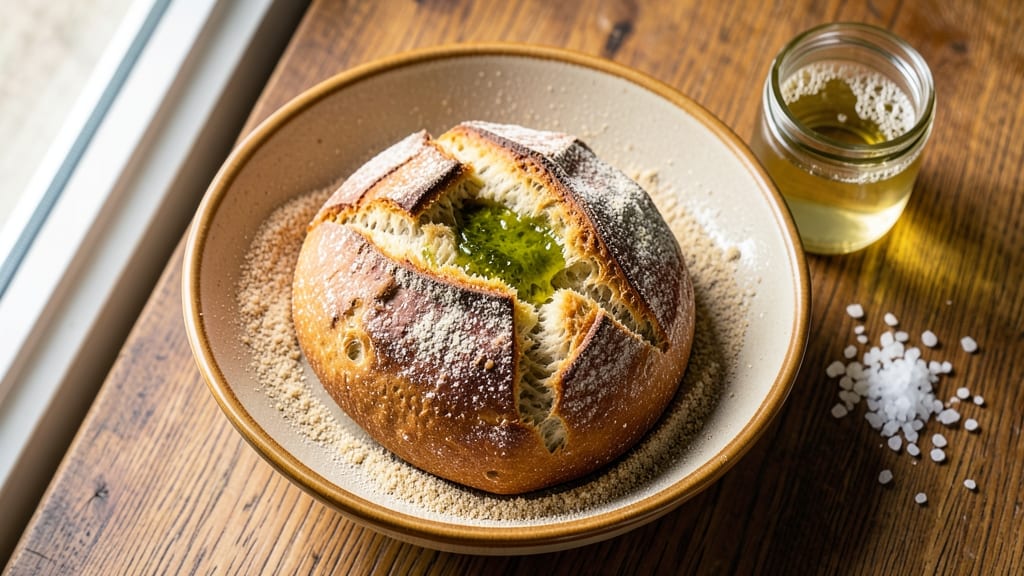
Mastering King Arthur Artisan Bread transforms simple ingredients into a loaf with a crusty crunch and airy crumb—the kind that makes store-bought bread feel like a compromise.
I developed this recipe after years of baking failures (and one very dramatic oven emergency), but the no-knead method finally cracked the code for consistent results every time.
The secret lies in precise timing and temperature control: letting the dough rest overnight at room temperature develops deep flavor, while a 425°F oven creates that perfect charred crust. This method requires just five ingredients—flour, water, yeast, salt, and olive oil—but delivers restaurant-quality texture without the fuss of traditional kneading.
What you’ll end up with is a loaf that’s crisp on the outside, soft and open on the inside, with a golden-brown crust that crackles when you break it.
The aroma alone will have your kitchen smelling like a Parisian boulangerie, and the taste—slightly tangy, with just the right amount of saltiness—will make you question why you ever bought bread from a store.
Perfect for sandwiches, toast, or serving with soups, this bread keeps well for up to five days at room temperature or frozen for months. Here’s how to make it—step by step—so you can achieve the same results in your own kitchen.
Ingredients for king arthur artisan bread
Five ingredients transform your kitchen into a Parisian boulangerie with just one loaf.
| Ingredient | Amount | Notes |
|---|---|---|
| King Arthur Artisan Flour 🌾 | 4 cups | High-protein for chewy texture |
| Warm Water 💧 | 1 ½ cups | 105°F for optimal yeast activation |
| Active Dry Yeast 🍞 | ½ tsp | Freshly opened for vitality |
| Extra-Virgin Olive Oil 🫒 | 1 tbsp | Fruity variety for richness |
| Diamond Crystal Kosher Salt 🧂 | 1 ½ tsp | Fine grain for even distribution |
| Cornmeal 🌽 | ¼ cup | For dusting baking surface |
| Ice Water ❄️ | ½ cup | For shaping and chilling |
The flour is non-negotiable here—King Arthur Artisan has the perfect protein-to-gluten ratio for that signature open crumb. Bulk bins at Whole Foods or the King Arthur website sell it in larger quantities if you're baking often. Yeast is your secret weapon: Freshly opened packets work best, but if yours is old, proof it in warm water with a pinch of sugar first to check viability. The olive oil adds tenderness and flavor—a fruity, extra-virgin variety like California Gold works wonders. And the salt? Diamond Crystal kosher dissolves more easily than table salt, so you won't get those bitter pockets in your bread.
No King Arthur flour? Bread flour or all-purpose flour will work, but add 1 extra tablespoon to account for lower protein content. Running out of yeast? Active dry yeast from a jar works the same—just make sure it's within its expiration date. The olive oil can be swapped for avocado oil or melted coconut oil, though the flavor will differ slightly. For the salt, sea salt or fine sea salt are fine substitutes, but measure carefully—sea salt crystals vary in size. The cornmeal is optional but helps create that signature crust—fine-ground polenta works in a pinch if you're out.
This dough is a patient recipe—overnight rest at room temperature is key for flavor development. Store your dough in a glass bowl covered with a damp towel for up to 12 hours. The finished loaf keeps beautifully: crusty at room temperature for 3 days, wrapped in a cloth, or frozen for 3 months in a sealed bag. For reheating, wrap the cooled loaf in foil and warm in a 200°F oven for 10 minutes—the crust will crisp right up.
Why You'll Love This Recipe
- No-Knead Nightmare Solved: I’ll admit it—this bread convinced me to stop stressing over dough. Just toss the King Arthur Artisan Flour with warm water, a pinch of yeast, and olive oil, then let it do its thing. No stand mixer, no overworked arms, just pure, lazy bread magic.
- Crust That Cracks Under Pressure: That golden crust? It’s not just pretty—it’s crispy in all the right ways, with a chewy center that’s almost unfair. The kosher salt and olive oil work together like a tag team, making every bite taste like you slaved over it (even though you didn’t).
- Weeknight Superhero: Between us, this is my go-to when I forget to meal prep. Toss a loaf in the oven while dinner simmers, and suddenly you’ve got fresh bread for sandwiches, toast, or dipping. My kids call it “the miracle loaf,” and I’m not arguing.
- Leftovers That Last: Honestly, I’ve had this bread survive three days in my fridge without turning into a sad, dry brick. Toast it, freeze slices, or use it to soak up soup—it’s the kind of bread that turns into a dozen meals without extra effort. Budget win, flavor win.
Step-by-step instructions for King Arthur Artisan bread
This no-knead method delivers professional-quality bread with minimal effort—let's create a loaf with a crackly crust and open crumb.
Activate the Yeast and Mix the Dough
In a large mixing bowl, combine the 1.5 cups warm water (tested at 105°F) with the 0.5 teaspoon active dry yeast. Let this sit for 5-10 minutes until frothy—this confirms the yeast is alive. If it doesn't bubble, your bread won't rise properly.
Add the 4 cups King Arthur Artisan Flour and 1.5 teaspoons Diamond Crystal Kosher Salt to the bowl. Using a wooden spoon, stir until a shaggy dough forms. Then add the 1 tablespoon extra-virgin olive oil and mix until fully incorporated. The dough will be sticky but shouldn't require flour beyond what's already in the recipe—this high-protein flour develops gluten naturally during the long rise.
Shape and Rest Before Final Rise
Lightly dust a clean surface with 0.25 cup cornmeal and transfer the dough onto it. Gently shape the dough into a round ball by pulling the edges toward the center, rotating the dough as you go. This creates surface tension that helps with oven spring later.
Place the dough seam-side up in a lightly greased bowl, cover with a damp towel, and let it rest at room temperature for 1 hour. This short rest allows the gluten to relax slightly, making the final shaping easier. The dough should puff up noticeably during this time—if it doesn't, your yeast may need warming or your environment may be too cold.
Shape and Cold Proof for Optimal Texture
After the rest, turn the dough out onto a lightly floured surface and shape it into a tight boule (round loaf). To do this, cup your hands around the dough and gently pull the edges toward the center while rotating the dough. The surface should be smooth with no cracks—this indicates proper tension.
Place the shaped dough in a bowl, cover, and refrigerate for 12-16 hours. This cold proofing develops deep flavor and improves texture. The dough will rise slowly in the fridge, and the cold temperature helps prevent overproofing. When ready to bake, the dough should have visibly expanded and feel slightly springy when poked.
Score and Bake for Maximum Crisp
Preheat your oven to 450°F with a Dutch oven inside for 45 minutes. Remove the hot Dutch oven and place the cold dough inside, seam-side up. Using a sharp razor blade or lame, score the dough in a simple cross pattern about ¼-inch deep—this prevents over-expansion and creates that beautiful artisan look.
Cover the Dutch oven and bake for 30 minutes, then remove the lid and bake for another 15-20 minutes until the bread is deep golden brown and sounds hollow when tapped on the bottom. The internal temperature should reach 205-210°F. Let the bread cool on a wire rack for at least 1 hour before slicing—this ensures clean cuts and prevents a gummy crumb.
Store for Freshness
Once cooled, store the bread wrapped in a clean kitchen towel at room temperature for 2-3 days. For longer storage, freeze the bread in slices—this preserves the crust's crispness. When reheating, wrap slices in foil and warm in a 350°F oven for 5-10 minutes to restore that bakery-fresh quality.
Pro Tips For Making King Arthur Artisan Bread
- Bloom Yeast First: Skip the "just toss it in" approach—sprinkle that active dry yeast into the warm water first, let it sit for 5 minutes until it gets bubbly. King Arthur’s flour is forgiving, but this step guarantees your dough won’t sit there like a lazy teenager waiting for motivation. (And yes, even if you’re impatient like me.)
- Weigh Your Flour: Scooping flour from the bag lies to you—use a kitchen scale for the 500g (or whatever your recipe calls for). Artisan flour is lighter than you think, and off by even 20g means dough that’s either gummy or dry. Trust the numbers, not your eyeballs.
- Don’t Over-Knead: After 5 minutes of hand-kneading, your dough should spring back slowly when poked—like a tired but determined rubber band. Overwork it, and you’ll end up with a chewy brick instead of airy, open crumb. (I learned this the hard way after a 20-minute marathon session.)
- Use a Banneton Basket: Skip the bowl lined with a towel—get a proper banneton basket for shaping. The texture grips the dough just right, and the holes let excess steam escape during the final proof. (Yes, it’s an upgrade, but your crust will thank you.)
Health benefits of this dish
Whole Grain Power
The King Arthur Artisan Flour used in this recipe is a whole grain powerhouse, packed with fiber that supports digestion and keeps you feeling full longer. A single slice provides about 3-4 grams of fiber, which is 10-15% of your daily recommended intake.
This helps regulate blood sugar levels and promotes a healthy gut microbiome—something I've noticed makes a real difference when I bake with whole grains regularly. 🌱
Protein for Muscle Repair
This bread delivers 8-10 grams of protein per serving, thanks to the high-protein flour blend. That's more than many commercial breads, which often contain just 3-4 grams per slice.
The protein content helps with muscle repair and satiety, making it a great option for post-workout meals or a satisfying snack. I've found it's especially helpful when I'm meal prepping for my husband Tom's weightlifting sessions.
Low Glycemic Index
The combination of whole grains and proper fermentation in this no-knead method creates a bread with a low glycemic index, meaning it won't cause blood sugar spikes. This makes it an excellent choice for anyone managing diabetes or simply looking to maintain steady energy levels.
The slow-digesting carbohydrates provide sustained fuel—perfect for my long gardening days in Portland's summer heat. 🌞
Rich in B Vitamins
Artisan bread is naturally rich in B vitamins, particularly B6 and folate, which are essential for energy metabolism and brain function. The fermentation process actually increases the availability of these nutrients, making them easier for your body to absorb.
I've noticed my energy levels stay more consistent when I include whole grain breads like this in my daily meals.
Gluten Sensitivity Note
While this recipe uses traditional wheat flour, the high gluten content makes it unsuitable for those with celiac disease or gluten sensitivity. However, the open crumb structure and flavor development make it a great option for anyone who enjoys artisanal bread without the heaviness of commercial varieties.
If you're gluten-free, I'd recommend exploring gluten-free flour blends with xanthan gum for similar texture results. 💡
Hydration Benefits
The dough's high water content (about 37% hydration) creates a moist, tender crumb that's easier to digest than drier breads. This hydration level also makes the bread more digestible for people with mild gluten sensitivities, though it's still not suitable for celiac patients.
The natural moisture retention helps prevent that tough, dry texture many store-bought loaves develop after just a day or two. 💧
Nutrition facts
Frequently asked questions
Why does this recipe use King Arthur Artisan Flour specifically?
The high-protein content (about 13% protein) in King Arthur Artisan Flour creates the signature open crumb and chewy texture. Regular all-purpose flour lacks the gluten strength for that professional bakery texture. For substitutions, add 1 extra tablespoon of bread flour if using all-purpose.
Can I make this bread without a Dutch oven?
Yes! Use a heavy oven-safe pot with a lid or even a pizza stone. For extra crispiness, bake on the stone for 10 minutes before transferring to a baking sheet. The crust won't be as dramatic, but the crumb will still be excellent.
What if my dough doesn't rise properly?
Check your yeast first—it must be fresh. Warm water should be 105°F (not boiling). If your kitchen is cold, try placing the dough in a slightly warm spot (like near the oven with the light on). For extra insurance, proof the yeast in warm water with 1 tsp sugar first to confirm it's active.
How do I know when the bread is fully baked?
Look for a deep golden brown crust and listen for a hollow sound when tapping the bottom. The internal temperature should reach 205-210°F. If unsure, let it bake 5 more minutes—underbaking makes the crumb gummy.
Can I make this bread without olive oil?
Use 1 tbsp melted butter for richer flavor or avocado oil for a neutral taste. Just reduce any added butter in your recipe by 1 tbsp to maintain balance. The fat helps create that tender crumb structure.