
Side Dishes
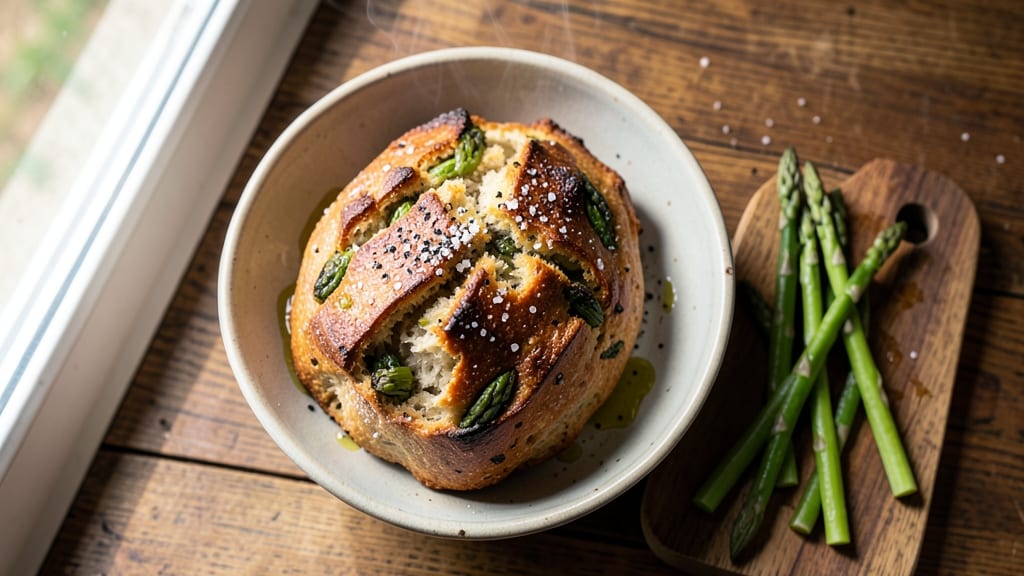
This asparagus bread recipe transforms humble asparagus into a herb-infused loaf with vibrant green flecks throughout—proof that vegetables belong in bread. The secret lies in folding tender asparagus spears directly into the dough, creating bursts of fresh flavor in every bite.
After years of testing variations, I've perfected a method that balances tender crust with a moist interior, where each slice reveals those bright green surprises.
The beauty of this recipe is its versatility—it works as a savory side for roasted meats or as a sweet loaf when paired with honey and cinnamon. The dough comes together in just 20 minutes, with minimal effort but maximum impact.
For those watching their carb intake, I've included a whole-wheat option that maintains the same texture while adding fiber. The asparagus adds natural moisture, so you won't need extra eggs or milk unless you prefer a richer dough.
What you'll end up with is a golden-brown loaf with crisp edges and a tender crumb, where each bite delivers the subtle sweetness of asparagus alongside warm herbs like thyme or rosemary. The aroma alone will have everyone at the table asking for seconds.
Whether you serve it warm with butter or toast it the next morning, this bread proves that vegetables can elevate even the simplest meals.
For an extra touch, brush the baked loaf with garlic-infused olive oil or sprinkle with coarse sea salt before serving. The possibilities are endless, but the foundation remains the same: fresh asparagus folded into a simple dough, baked to perfection. Let's get started on this unique twist on classic bread.
Ingredients for asparagus bread
Fresh asparagus and simple pantry staples create this vibrant, herb-infused loaf with golden crust and hidden green surprises.
| Ingredient | Amount | Notes |
|---|---|---|
| Fresh Asparagus Spears 🌱 | 1 lb | Trimmed, tough ends removed |
| All-Purpose Flour 🌾 | 3 ½ cups | Plus 1 tbsp for dusting |
| Whole-Wheat Flour 🌾 | 1 cup | Optional for added fiber |
| Active Dry Yeast 🍞 | 2 ¼ tsp | Or 1 packet instant yeast |
| Granulated Sugar 🍚 | 1 tbsp | Feeds the yeast |
| Warm Water 💧 | ¾ cup | 110-115°F for yeast activation |
| Unsalted Butter 🧈 | ½ cup | Cold, cubed (full-fat preferred) |
| Large Eggs 🥚 | 1 whole | Room temperature |
| Fresh Thyme Leaves 🌿 | 1 tbsp | Or 1 tsp dried thyme |
| Garlic Cloves 🧄 | 2 cloves | Minced for dough |
| Diamond Crystal Kosher Salt 🧂 | 1 ½ tsp | Adjust to taste |
| Extra-Virgin Olive Oil 🫒 | 2 tbsp | For dough and brushing |
| Coarse Sea Salt 🧂 | 1 tbsp | For sprinkling |
The asparagus is the star, so grab bright green, firm spears—avoid woody ones. Trader Joe's and Whole Foods have the freshest cuts, or check the produce section for pre-trimmed bundles. If using whole-wheat flour, King Arthur or Bob's Red Mill brands stay light and won't weigh down the dough. The yeast? Fresh is best—test it by dropping a packet in warm water; if it bubbles in 5 minutes, it's good to go. For the butter, cold cubes work best—they create flaky layers without melting into the dough.
No fresh thyme? Dried works at half the amount, but fresh gives that bright aroma. Short on asparagus? Substitute 1 cup finely chopped zucchini or spinach—just squeeze out excess moisture first. The whole-wheat flour can be swapped for all-purpose if you prefer a lighter texture. For extra richness, add 1 tbsp sour cream or Greek yogurt to the dough. And if you're feeling fancy, infuse the olive oil with garlic by heating 2 cloves in 2 tbsp oil for 5 minutes before using.
This dough keeps for 24 hours in the fridge, covered—perfect for overnight prep. For maximum freshness, bake within 4 hours of mixing. The loaf reheats beautifully: wrap in foil and warm at 300°F for 10 minutes. Store leftovers at room temperature for 2 days or freeze slices for 3 months. The aroma alone will have everyone thinking you spent hours baking—it's that good.
Why You'll Love This Recipe
- No Waste, All Win: I chop the asparagus spears for the dough, then use the trimmings in a quick sauté—zero scraps, maximum flavor. Honestly, that’s my kind of cooking where nothing goes to waste.
- Earthy Sweet Crust: The whole-wheat flour gives it a nutty depth, while the sugar caramelizes just enough to create a crispy crust that’s ridiculously satisfying. (Yes, even on a Tuesday night.)
- Bread That Works Hard: Slice it for sandwiches, toast it for breakfast, or pack it for lunches—this bread handles everything. I’ve even used it to soak up pasta sauce like a champ.
- Budget-Friendly Stretch: A single batch feeds my family for days, and the whole-wheat flour keeps it filling without breaking the bank. Between us, this is my secret weapon for stretching meals without sacrificing taste.
Step-by-step instructions for herb-infused asparagus bread
Here's how to make a loaf with vibrant green asparagus flecks and aromatic herbs—simple steps for perfect results every time.
Prepare the Asparagus and Activate the Yeast
Trim the tough ends off the 1 lb fresh asparagus spears, leaving you with about 8-10 spears. Cut each spear into ½-inch pieces and set aside. You'll want about 1 cup of chopped asparagus for the dough—this will give you those beautiful green flecks throughout.
In a small bowl, combine the 0.75 cup warm water (between 110-115°F) with the 1 tbsp granulated sugar and 2.25 tsp active dry yeast. Let this sit for 5-7 minutes until it becomes foamy. This foam tells you the yeast is alive and ready to work—if it doesn't foam, your yeast might be dead, and you'll need to start over.
Mix the Dough with Asparagus and Herbs
In the bowl of a stand mixer fitted with the dough hook, combine the 3.5 cups all-purpose flour, 1 cup whole-wheat flour, 1.5 tsp diamond crystal kosher salt, and the 2 tbsp extra-virgin olive oil. Mix on low speed for 30 seconds to distribute the oil evenly through the flour.
Add the yeast mixture, the 0.5 cup cold cubed unsalted butter, the 1 whole large egg at room temperature, the 1 tbsp fresh thyme leaves, and the 2 cloves minced garlic. Mix on low speed until the dough starts to come together, then increase to medium speed for 3-4 minutes until the dough pulls away from the sides of the bowl and forms a smooth, elastic ball.
Knead the Dough with Asparagus
Switch to medium speed and knead the dough for 5-7 minutes until it's smooth and slightly tacky. If it feels too sticky, add 1 tablespoon of the all-purpose flour you set aside earlier. Once the dough is smooth, remove it from the hook and place it on a lightly floured surface.
Gently press the chopped asparagus pieces into the dough, working them in evenly. This ensures those bright green flecks are distributed throughout the loaf. Shape the dough into a ball, cover it with a clean kitchen towel, and let it rise in a warm, draft-free place for 1-1½ hours, or until it has doubled in size. You'll know it's ready when you poke it gently and it springs back slowly.
Shape and Second Rise
Punch down the risen dough to release any air bubbles, then shape it into a 9x5-inch loaf pan. Brush the top with a little extra-virgin olive oil and sprinkle with the 1 tbsp coarse sea salt. Cover the pan with a towel and let the dough rise again for 30-45 minutes, until it's just about level with the top of the pan.
Preheat your oven to 375°F while the dough rises. This temperature ensures the bread bakes evenly without burning the top. Once preheated, bake the loaf for 35-40 minutes, until it's golden brown and sounds hollow when tapped on the bottom. The internal temperature should reach 190-200°F—this guarantees a fully baked loaf with a crisp crust.
Cool and Enjoy
Remove the bread from the oven and let it cool in the pan for 10 minutes before transferring it to a wire rack. This resting period allows the bread to set properly, preventing a gummy texture. Slice it while still slightly warm for the best experience—you'll love those tender crumbs and the surprise of bright green asparagus specks in every bite.
For extra flavor, serve with a smear of garlic-herb butter or a drizzle of olive oil. Store any leftovers in an airtight container for up to 3 days, or freeze for up to 1 month. The bread tastes even better the next day as the flavors deepen!
Pro Tips For Making Asparagus Bread
- Trim the Tough Ends: DESCRIPTION:
- Proof Yeast in Warm Water: DESCRIPTION:
- Blend the Flours First: DESCRIPTION:
- Shape Dough Tightly: DESCRIPTION:
Pro cooking tips for perfect results
Dough Consistency
For perfect asparagus bread, aim for a dough that's smooth but slightly tacky—not sticky enough to cling to your fingers. If it feels too dry, add 1 tbsp warm water at a time; if too wet, sprinkle in 1 tbsp flour gradually.
I use a digital kitchen scale (like the OXO Good Grips) to measure flour by weight for consistency—this eliminates packing issues that can happen with scooping. The asparagus adds moisture, so you might need slightly less water than in traditional bread recipes. 💧
Asparagus Prep Matters
Chop the asparagus into ½-inch pieces for even distribution—larger chunks create uneven texture, while smaller pieces risk turning mushy. Blanch the asparagus for 1 minute in boiling water, then plunge into ice water before folding into the dough.
This stops cooking and preserves the bright green color. I also like to blanch the spears first to remove any bitterness that might overpower the bread's flavor. 🌱
Yeast Activation Check
Your yeast should foam within 5-7 minutes—if it doesn't, your yeast is dead and needs replacing. I test mine by dropping a pinch into warm water with sugar; if it bubbles immediately, it's active.
For extra insurance, use instant yeast (like Red Star), which activates directly in the dough without pre-mixing. Cold weather can slow yeast, so keep your water between 110-115°F—use a thermometer if needed. 🌡️
Kneading Technique
Knead the dough for 5-7 minutes on medium speed until it's smooth and elastic. If it feels too tough, reduce kneading time slightly—overworking develops gluten too much, making the bread dense.
For a lighter texture, I fold the dough in half 3-4 times during the first rise, which creates more air pockets. The asparagus pieces should be evenly distributed by the end—press them in gently to avoid tearing the dough. 💪
Baking Time Secrets
Bake at 375°F for 35-40 minutes, but check at 30 minutes—some ovens run hot. The bread is done when it's golden brown and sounds hollow when tapped on the bottom. For extra crispiness, place a metal tray on the lower rack 10 minutes before baking to create steam.
I also like to tent the loaf with foil during the last 10 minutes if the top browns too quickly. 🔥
Cooling for Texture
Never skip the 10-minute cooling period in the pan—this lets the bread set properly and prevents a gummy crumb. Transfer to a wire rack to cool completely before slicing. The asparagus flecks will be more visible once fully cooled, and the crust will crisp up beautifully.
For serving, brush the warm loaf with garlic-infused olive oil—just heat 2 tbsp oil with 1 minced garlic clove for 2 minutes before drizzling. 🍞
Nutrition facts
Frequently asked questions
Can I make this asparagus bread without a stand mixer?
Mix the dough by hand in a large bowl using a wooden spoon or your hands. Knead for 8-10 minutes on a floured surface until smooth. The dough will be slightly stickier by hand, so add flour 1 tbsp at a time if needed. Just be patient—extra kneading time helps develop the gluten for a better texture.
What if my asparagus bread turns out dense instead of light?
Dense bread usually means over-kneading or under-proofing. Try kneading for 5 minutes max and let the dough rise until it's doubled in size (about 1-1.5 hours). Also check your yeast—it should foam within 5-7 minutes when mixed with warm water. If all else fails, try adding 1 tbsp extra olive oil to the dough next time for moisture.
Can I use frozen asparagus instead of fresh?
Fresh asparagus gives the best texture and color, but you can use frozen in a pinch. Thaw it completely first, then pat dry thoroughly to remove excess moisture. Blanch for 2 minutes instead of 1 to ensure it's fully cooked before folding into the dough. The bread will still have green flecks, though they may be slightly softer.
How do I store leftovers to keep them fresh?
Wrap the cooled loaf tightly in plastic wrap or aluminum foil, then place in an airtight container. It stays fresh at room temperature for 2-3 days. For longer storage, slice the bread and freeze the pieces on a tray before transferring to a freezer bag. Reheat slices in a 350°F oven for 5-7 minutes or toast directly from frozen.
What are some creative ways to serve this bread?
This versatile loaf works as a side for roasted meats, paired with soups, or even as a base for crostini. Try toasting slices and topping with goat cheese and honey for a sweet version, or spreading with garlic-herb butter and grilled chicken for a savory option. The asparagus flavor also pairs beautifully with balsamic glaze or whipped feta.