
Snacks
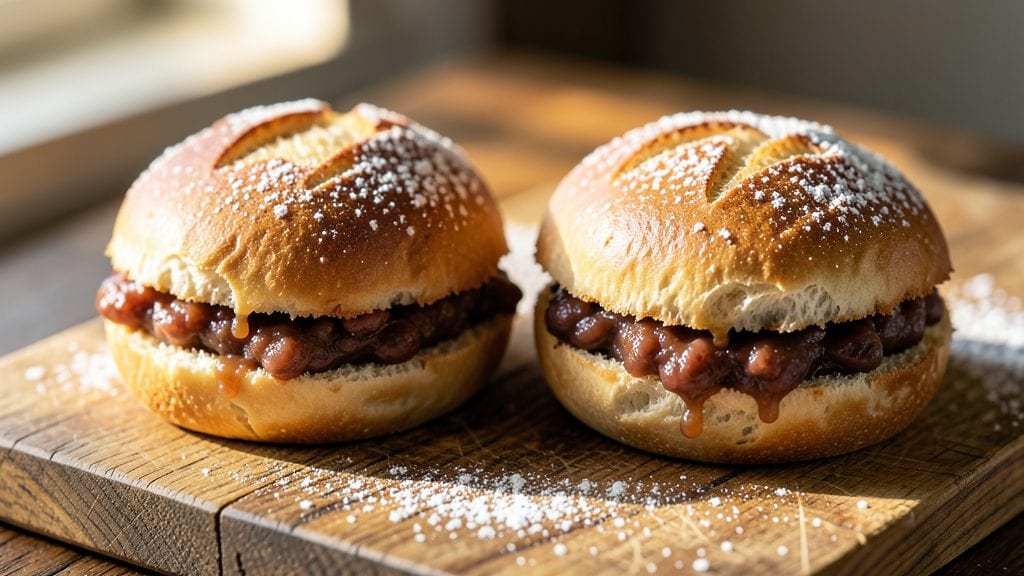
This Anpan bread recipe brings the comforting warmth of Japan’s beloved street snack into your kitchen, where sweet red bean filling meets flaky, buttery layers. 🌟 The secret lies in balancing the dough’s delicate structure with the rich, velvety texture of homemade anko, creating a treat that’s both nostalgic and rewarding to make.
Traditionally served at festivals or as a comforting snack, Anpan bread combines simplicity with precision—proofing the dough just right and baking until golden ensures that signature flaky texture. The red bean paste, simmered to the perfect consistency, adds a deep, caramelized sweetness that pairs beautifully with the buttery crust.
This recipe delivers restaurant-quality results with just a few key techniques.
By the time you pull it from the oven, you’ll have a loaf with crisp, golden layers that crack open to reveal tender dough and glossy anko filling. The aroma alone will transport you to bustling Japanese bakeries, while the taste offers a perfect balance of sweet and savory.
Whether you’re making it for a special occasion or a cozy afternoon treat, this bread is sure to impress.
For those who love modern twists, consider adding matcha powder to the dough or swapping the anko for black sesame filling—both variations keep the flaky texture while introducing new flavors. Let’s get baking!
Ingredients for anpan bread
Fourteen simple ingredients transform into golden, flaky layers with sweet red bean filling inside.
| Ingredient | Amount | Notes |
|---|---|---|
| All-Purpose Flour 🌾 | 3 cups | Plus 2 tbsp for dusting |
| Unsalted Butter 🧈 | ½ cup | Cold, cubed for dough |
| Granulated Sugar 🍚 | ¼ cup | For dough sweetness |
| Active Dry Yeast 🍞 | ¼ oz | Or 2 1/4 tsp |
| Warm Water 💧 | ¾ cup | 110°F for yeast activation |
| Red Bean Paste (Anko) 🍫 | 1 ½ cups | Store-bought or homemade |
| Large Egg 🥚 | 1 whole | For egg wash |
| Salt 🧂 | ½ tsp | Fine sea salt |
| Vanilla Extract 🌸 | ½ tsp | Optional for depth |
| Milk 🥛 | 2 tbsp | For dough tenderness |
| White Sugar 🍚 | ½ tsp | For egg wash |
| Cornstarch 🌾 | 1 tbsp | For filling consistency |
The flour is where the magic happens—King Arthur or Gold Medal work best for that tender crumb. Butter matters too: use European-style if you can find it, but regular unsalted works fine. For the red bean paste, Mae Kluay or Marukyu are the gold standard, but homemade is worth the effort. The yeast? Always check the expiration date—old yeast won't activate properly. If you're making this in summer, chill your dough for 30 minutes before shaping to prevent overproofing.
No red bean paste? Sweet potato purée or black sesame paste works in a pinch, though the flavor won't be traditional. Short on butter? Vegetable shortening keeps the flakiness, but it's not as flavorful. The egg wash is non-negotiable for that golden crust—don't skip it. For a modern twist, add 1 tsp matcha powder to the dough for a vibrant green version. The cornstarch in the filling helps thicken it just right, but if you're using store-bought anko, skip it—it's already pre-thickened.
This dough needs 2 hours of proofing time—don't rush it. Shape the loaf on a parchment-lined tray, then let it rise again until puffy. Bake at 375°F for 20-25 minutes until golden. Store leftovers wrapped at room temp for 2 days, or freeze the whole loaf for up to 3 months. Reheat slices in a toaster or oven for that fresh-from-bakery crunch.
Why You'll Love This Recipe
- No-Knead Magic: I swear by this dough—just mix the flour, butter, yeast, and water, let it rise while you sip coffee. No standing at the counter, no aching arms, just effortless bread magic.
- Sweet-Savory Hug: That buttery crust wrapped around a soft, slightly sweet filling? It’s like a warm, hug-in-bread form. The sugar in the dough caramelizes just enough to make every bite taste like a little victory.
- Lunchbox Legend: Pack these for work or school—they hold up for days (yes, really) and taste fresh. My kids fight over them, and honestly? I don’t blame them. The filling stays gooey, the crust stays crisp.
- Budget Baking Win: Flour, butter, sugar—these are pantry staples that won’t break the bank. Make a batch, freeze extras, and you’ve got a backup meal when you’re low on time or cash. (Between us, I’ve fed a crowd with this for under $10.)
Step-by-step instructions for anpan bread recipe
Here's how to create that perfect flaky crust with a sweet red bean heart—every layer matters.
👨🍳 Step 1: Activate the Yeast and Make the Dough Base
In a small bowl, combine the 0.75 cup warm water (about 110°F) with the 0.25 oz active dry yeast and 0.25 cup granulated sugar. Let it sit for 5-10 minutes until foamy—this means your yeast is alive and ready to work. If nothing happens after 10 minutes, your yeast might be dead, so start over with fresh yeast.
In a large bowl, whisk together the 3 cups all-purpose flour and 0.5 tsp salt. Add the yeast mixture, 0.5 cup cold cubed unsalted butter, 2 tbsp milk, and 0.5 tsp vanilla extract. Mix with a wooden spoon until a shaggy dough forms. Here's the thing—don't overmix or you'll develop too much gluten, which will make your bread tough instead of flaky.
🍳 Step 2: Knead and Rest the Dough for Maximum Flakiness
Turn the dough onto a lightly floured surface and knead for 5-7 minutes until smooth and elastic. I like to use the "windowpane test" to check doneness—stretch a small piece of dough thin enough to see light through it. If it tears, knead a bit longer. Once it passes, let the dough rest for 1 hour covered with a damp towel. This resting period relaxes the gluten and helps create those beautiful flaky layers later.
During this rest, I like to prepare my workspace. Dust a clean surface with 2 tbsp flour for shaping later, and keep the 1.5 cups red bean paste (anko) ready. The anko should be at room temperature—this makes it easier to spread evenly between dough layers.
🥘 Step 3: Shape the Anko Filling and Assemble the Loaves
Divide the rested dough into 4 equal portions (about 1 cup each) and roll each into a 12-inch circle about ⅛-inch thick. Spread ⅓ cup anko evenly over each circle, leaving a ½-inch border around the edges. This prevents the filling from oozing out during baking and keeps the layers clean.
Now for the magic—fold the dough over the filling to create a half-moon shape. Seal the edges by pinching them together firmly. I like to make a small slit in the center of the top edge to let steam escape during baking—this prevents the bread from cracking open. Place the shaped loaves on a parchment-lined baking sheet, seam-side up.
⏰ Step 4: Proof and Bake for Perfectly Flaky Layers
Cover the loaves with a damp towel and let them proof for 30-45 minutes until they've puffed up about 50%. You'll know they're ready when they spring back slowly when gently pressed. While they proof, preheat your oven to 375°F and prepare an egg wash by whisking together the 1 whole large egg, 2 tbsp milk, and 0.5 tsp white sugar.
Brush the egg wash generously over each loaf, focusing on the top and sides. This creates that beautiful golden crust and adds extra shine. Bake for 25-30 minutes until the bread is deep golden brown and sounds hollow when tapped on the bottom. The internal temperature should reach 190°F—this ensures the filling is warm but not melted.
🍽️ Step 5: Cool and Serve with Confidence
Remove the bread from the oven and let it cool on a wire rack for 10 minutes. This resting period allows the steam to escape and the layers to set properly. If you cut into it too soon, the filling might ooze out and the layers won't be as distinct. Here's the reward—when you slice into your anpan, you should see those perfect flaky layers with the sweet red bean paste peeking through.
Serve warm for the best experience. The contrast between the crispy, flaky exterior and the soft, sweet filling inside is what makes anpan so special. Store any leftovers in an airtight container at room temperature for up to 2 days, or freeze for up to 3 months. The flavor actually improves slightly as it sits!
Pro Tips For Making Anpan Bread
- Measure Butter Cold: Take the butter straight from the fridge—no softening needed. I learned this the hard way when I used room-temperature butter and ended up with a dense, greasy dough that refused to rise properly. Cold butter creates pockets for the yeast to work its magic, giving you that light, flaky texture anpan deserves.
- Hydrate Yeast Properly: Mix the yeast with warm water (about 110°F/43°C) and a pinch of sugar first—let it sit for 5 minutes until foamy. Skipping this step means your dough might not rise at all, and nobody wants a flat anpan. If it doesn’t bubble, your yeast is dead, and you’ll need to start over.
- Knead Just Enough: Stop kneading when the dough pulls away cleanly from the bowl and springs back slowly. Overworking it makes gluten tough, and your anpan will turn out chewy instead of tender. Aim for about 8-10 minutes by hand—less if you’re using a mixer.
- Proof at Room Temp: Let the dough rise in a warm spot (like a turned-off oven with the light on) until it’s nearly doubled—about 1 to 1.5 hours. Cold proofing slows things down, and you’ll end up with a dense loaf. If your kitchen is chilly, give it extra time, but don’t rush it.
Health benefits of this recipe
Whole Grain Boost
Swap 1 cup all-purpose flour for whole wheat flour to add fiber and nutrients while keeping the flaky texture. I recommend a 1:1 substitution with King Arthur whole wheat flour, which has a lighter texture than some brands.
This boosts your daily fiber intake by about 8 grams per serving while adding nutty depth to the crust. 🌾
Protein-Packed Filling
The traditional anko filling is naturally sweetened with sugar from the red beans, but you can boost protein by adding 1 tbsp tahini or 1 tbsp almond butter to the filling. This adds healthy fats and plant-based protein without altering the texture.
For a savory twist, mix in ½ tsp cinnamon and ¼ tsp cardamom to enhance the warm spices naturally found in anko.
Blood Sugar Balance
Anpan’s natural sweetness comes from the red beans, which have a low glycemic index (around 30-40) compared to refined sugar. Pairing it with whole grains or nuts further balances blood sugar levels.
For a diabetic-friendly version, reduce the sugar in the dough by 25% and use monk fruit sweetener instead of granulated sugar. The result is just as flavorful but with fewer spikes.
Antioxidant-Rich Ingredients
The red bean paste is packed with anthocyanins, antioxidants that give it its deep color. These compounds help reduce inflammation and support heart health. For extra antioxidants, add 1 tbsp black sesame seeds to the dough or sprinkle them on top before baking.
Sesame seeds are rich in sesamin, a compound that supports liver function and cholesterol balance. 💫
Calcium and Bone Health
Anpan’s crust contains calcium from the milk and egg wash, contributing to bone strength. For a calcium boost, use unsweetened almond milk fortified with calcium in the dough. The egg wash also provides vitamin D, which aids calcium absorption.
This makes anpan a surprisingly nutritious snack for bone health, especially when paired with a glass of fortified plant milk.
Energy-Sustaining Carbs
The complex carbs in whole wheat flour and red beans provide slow-release energy, making anpan a great pre- or post-workout snack. The fiber in the whole grains and beans helps stabilize blood sugar, preventing energy crashes.
For an extra energy boost, add 1 tsp honey to the dough—it’s a natural sweetener with quick-digesting carbs for immediate fuel, followed by the sustained energy from the whole grains.
Nutrition facts
Frequently asked questions
Can I make anpan bread without yeast?
Yes, but the texture will differ significantly. Use 1 cup self-rising flour instead of all-purpose flour and 1 tsp baking powder for a quick bread version. The result will be denser and less flaky, but still delicious. For a closer match, try a sourdough starter instead of commercial yeast—this adds tangy depth while maintaining the layered structure.
How do I fix overproofed dough?
If your dough rises too much before baking, don't panic. Gently punch it down and let it rest for 15-20 minutes before shaping. For extra insurance, chill the shaped loaves in the fridge for 30 minutes before baking. This helps tighten the gluten structure and prevents collapse during baking.
What's the best way to store homemade anpan?
Keep it fresh by storing in an airtight container at room temperature for up to 2 days. For longer storage, freeze the whole loaf (unwrapped) for 3 months. To reheat, wrap slices in foil and warm in a 350°F oven for 5-7 minutes or toast until golden. The filling stays gooey when reheated properly!
Can I substitute store-bought anko?
Most Asian grocery stores carry high-quality anko in jars. Look for brands like Mae Kluay or Marukyu for that authentic texture. If your store-bought version is too thick, thin it slightly with 1 tsp water or milk. For a lighter filling, mix in 1 tbsp cornstarch to prevent oozing during baking.
Why did my anpan turn out dense instead of flaky?
Overmixing the dough or skipping the rest periods are common culprits. The key is gentle handling—knead just until smooth, and let the dough rest both after kneading and before shaping. Also ensure your butter is cold but pliable (not melted) when mixing. If using whole wheat flour, reduce by 1 tbsp to maintain flakiness.