
Side Dishes
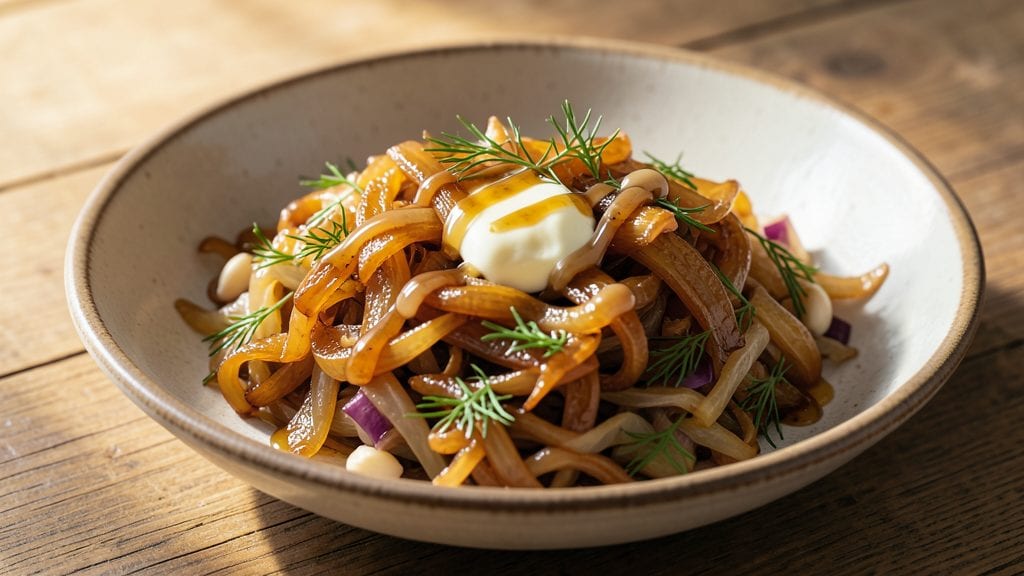
This sweet sauerkraut recipe transforms tangy fermented cabbage into a caramelized, honey-glazed side dish that balances rich sweetness with just enough tang. The key lies in slow-cooking sauerkraut with onions until it develops that perfect jammy texture—think of it as a cross between sauerkraut and caramelized onions, but better.
I developed this recipe after realizing how versatile sweet sauerkraut could be beyond just pairing with sausages.
The process is straightforward but requires patience—simmering the sauerkraut with onions, honey, and spices until the liquid reduces into a glossy glaze that coats every bite. This method preserves the sauerkraut's natural crunch while infusing it with deep caramelized flavors.
The result is a dish that's tangy-sweet, slightly sticky, and packed with umami that elevates any main course.
By the time you're done, you'll have a side dish that's as impressive as it is delicious—ideal for serving alongside roasted meats, grilled fish, or even as a topping for sandwiches.
The caramelized onions add depth, while the honey balances the tang, creating a harmony of flavors that's impossible to resist. This recipe is a game-changer for anyone looking to repurpose sauerkraut into something special.
Ready in about 45 minutes, this dish requires minimal effort but delivers maximum flavor. The best part? It keeps well in the fridge for up to a week, making it perfect for meal prep.
Whether you're hosting a dinner party or just craving something different, this sweet sauerkraut will steal the show.
Ingredients for sweet sauerkraut
Honey, onions, and fermented cabbage—this trio creates a tangy-sweet masterpiece that steals the show.
| Ingredient | Amount | Notes |
|---|---|---|
| Sauerkraut 🥬 | 3 cups | Drained and rinsed if too acidic |
| Yellow Onions 🧅 | 1 ½ lb | Thinly sliced for even caramelization |
| Local Honey 🍯 | ½ cup | Wildflower or clover preferred |
| Apple Cider Vinegar 🍏 | 2 tbsp | Balances sweetness and tang |
| Unsalted Butter 🧈 | 2 tbsp | Full-fat for rich caramelization |
| Garlic Cloves 🧄 | 3 cloves | Minced for aromatic depth |
| Bay Leaves 🍃 | 2 whole | Fresh for optimal flavor |
| Ground Black Pepper 🌶️ | ½ tsp | Freshly cracked for heat |
| Diamond Crystal Kosher Salt 🧂 | 1 tsp | Adjusts final seasoning |
| Fresh Thyme Leaves 🌿 | 1 tbsp | Chopped for herbal brightness |
| Balsamic Vinegar 🍷 | 1 tbsp | Finishing touch for depth |
The onions are the backbone here—yellow or red work best, with sweet varieties like Vidalia adding extra caramelization. Whole Foods or local farmers' markets often carry the sweetest onions, but the regular grocery store stuff works too if you slice them thin. For the sauerkraut, look for brands like Bubbapalooza or Homemade—they've got the perfect tang without being overpowering. The honey should be local and raw if possible (I grab mine from Whole Foods or my local farmers' market), but any quality honey will do—just avoid that cheap grocery store stuff that tastes like corn syrup.
No honey? Maple syrup works in a pinch, though it'll give a slightly different depth. The balsamic vinegar can be swapped for red wine vinegar at half the amount if you're out. Fresh thyme is ideal, but dried thyme at one-third the quantity works if you're in a hurry. For the onions, if you can't find sweet varieties, regular yellow onions sliced extra thin will still caramelize beautifully—just give them a few extra minutes. The butter is non-negotiable though—full-fat is essential for that rich, glossy finish you're going for.
This keeps beautifully in the fridge for up to one week, though it tastes even better the next day as the flavors meld. I like to store it in a glass jar with a tight lid—the onions and sauerkraut release more flavor over time. For meal prep, portion it into small containers so you can grab just what you need. It reheats wonderfully too—just warm it gently on the stove with a splash of water to keep it from drying out. Freezes for up to 3 months if you want to make a big batch ahead of time.
Why You'll Love This Recipe
- Pantry Magic: I swear by this one—no fresh herbs, no fancy prep. Just sauerkraut, onions caramelized in butter until golden, and a drizzle of honey that turns everything ridiculously good. Honestly, I’ve made it with whatever was in my fridge, and it never lets me down.
- Sweet-Tart Balance: That first bite? The tangy crunch of sauerkraut meets the deep caramel from onions, then boom—honey and vinegar cut through the richness like a bright, zesty hug. It’s the kind of flavor that makes you pause mid-bite, like, “Wait, why haven’t I done this sooner?”
- Weeknight to Holiday: Slather it on grilled sausages for a quick dinner, mix it into mashed potatoes for a tangy twist, or serve it as a side at your next potluck—no one will guess it’s this easy. Between us, my in-laws now ask for it at Thanksgiving. (Yes, even on a Tuesday night.)
- Leftovers That Don’t Suck: Make a big batch, and it actually improves over time. The flavors meld, the onions get even sweeter, and it keeps for days in the fridge. I’ve reheated this stuff cold straight from the jar, and it’s still spot-on. Budget-friendly? Absolutely. Waste-free? Even better.
Step-by-step instructions for honey-glazed sweet sauerkraut
Transform tangy sauerkraut into a luscious, caramelized masterpiece with this sweet-savory balance—perfect for sandwiches or sides.
Caramelize the Onions to Golden Perfection
In a large, heavy-bottomed skillet, melt the 2 tablespoons unsalted butter over medium-low heat. Add the 1.5 pounds thinly sliced yellow onions and cook, stirring occasionally, for 25-30 minutes. The onions should transform from pale to deep amber, releasing their natural sweetness and developing that irresistible caramelized aroma.
Here's the thing—patience is key. If you rush this step, the onions will burn before they caramelize. You'll know they're ready when they're soft, glossy, and have a rich, molasses-like consistency. Stir in the 2 whole bay leaves and 3 minced garlic cloves during the last 5 minutes of cooking to infuse their flavors into the onions.
Balance Sweetness with Tangy Vinegar
Once the onions are perfectly caramelized, remove the skillet from heat and let it cool slightly. Stir in the 2 tablespoons apple cider vinegar and 0.5 teaspoon ground black pepper, allowing the vinegar to mingle with the onions and deepen their complexity. This step is crucial—it cuts through the sweetness and prepares the onions for the honey glaze.
Return the skillet to low heat and add the 0.5 cup local honey, stirring constantly. Watch as the honey begins to dissolve and coat the onions evenly. You'll notice the mixture thicken slightly as the honey integrates with the caramelized onions. This is where the magic happens—the sweet and savory flavors begin to meld into something truly extraordinary.
Incorporate the Sauerkraut and Simmer
Drain and rinse the 3 cups sauerkraut if it's too acidic, then add it to the skillet with the caramelized onions. Stir gently to combine, ensuring the sauerkraut is evenly coated in the honey-glazed mixture. Add the 1 teaspoon diamond crystal kosher salt and 1 tablespoon chopped fresh thyme leaves, then return the skillet to low heat. Let the mixture simmer for 10-12 minutes, stirring occasionally, until the sauerkraut is heated through and the flavors have fully melded.
Real talk: This is the moment that matters. The sauerkraut should soften slightly but retain its crunch, while the onions and honey create a glossy, sticky glaze. If the mixture seems too thick, add 1-2 tablespoons water to loosen it to your desired consistency. The goal is a harmonious balance of textures and flavors—sweet, tangy, and slightly crunchy.
Finish with Balsamic Vinegar for Depth
Once the sauerkraut is heated through, remove the skillet from heat and stir in the 1 tablespoon balsamic vinegar. This final touch adds a sophisticated depth and a subtle tang that ties all the flavors together. Taste and adjust the seasoning if needed—you might want to add a pinch more salt or a splash of apple cider vinegar for brightness.
Let the sweet sauerkraut rest for 5 minutes before serving. This brief resting period allows the flavors to settle and ensures that each bite is perfectly balanced. Serve warm over toasted bread, alongside roasted meats, or as a tangy topping for grilled cheese. The contrast of sweet, tangy, and savory will leave everyone asking for seconds!
Pro Tips For Making Sweet Sauerkraut
- RINSE FIRST, THEN DRAIN: That tangy brine? It’s not the enemy here. Give your sauerkraut a quick rinse under cold water to mellow the sharpness, then drain it thoroughly—I mean, let it sit in a colander for 2-3 minutes, not just a quick shake. Wet sauerkraut steams instead of caramelizing, and nobody wants sad, limp cabbage.
- CARAMELIZE ONIONS LOW: High heat turns onions bitter fast. After the initial sear, crank the heat down to medium-low and walk away for 15 minutes. You’re not racing—let those onions turn deep amber, not burnt. I learned this the hard way when my kitchen smelled like regret.
- USE THICK HONEY: Store-bought honey? Strain it first—sediment makes the sauce grainy. And for God’s sake, don’t skimp: 2-3 tablespoons per pound of sauerkraut. Thin honey just tastes like syrup on top of cabbage. Trust me, your taste buds will notice.
- DEGLAZE WITH VINEGAR: After cooking the onions, splash in 1-2 tablespoons of apple cider vinegar before adding the sauerkraut. It lifts the browned bits off the pan, giving you a glossy, flavor-packed base. Skip this, and you’re basically eating dry cabbage with butter. Not a vibe.
Essential equipment for this dish
Heavy-Bottomed Skillet
The All-Clad Stainless Steel 10-inch skillet is my go-to for this recipe—its thick base distributes heat evenly, preventing hot spots that could burn your onions or sauerkraut. I’ve also used a Lodge cast iron skillet with great results, especially if you want to build residual heat for serving.
Avoid thin, flimsy pans—they’ll cause uneven cooking and make caramelization nearly impossible. 🔥
High-Quality Honey
Invest in raw, local honey for the best flavor—brands like Whole Foods Market’s local selection or Green Mountain Honey make all the difference. The higher the quality, the more depth your sweet sauerkraut will have.
If you’re using store-bought honey, look for 100% pure labels—avoid anything with added corn syrup or fillers. A small honey dipper (like the Oxo Good Grips) makes measuring and drizzling easier.
Precision Tools
A microplane or mandoline is essential for slicing onions uniformly—Mincing onions into paper-thin slices ensures even caramelization. I use a Julienne peeler for quick, consistent cuts. For measuring liquids, a liquid measuring cup with a pour spout (like Pyrex) prevents spills when adding vinegar or honey.
A small whisk helps stir the honey into the onions smoothly without splattering.
Temperature Control
Use a digital thermometer (like the Thermoworks Thermapen) to monitor your skillet’s heat—aim for medium-low (275-300°F) for caramelizing onions. A silicon spatula (such as OXO Good Grips) prevents scratching your skillet while scraping up stuck-on bits.
If you don’t have a thermometer, the back of your hand should feel warm but not hot when hovering over the pan.
Storage Containers
For leftovers, transfer the sweet sauerkraut to glass jars with airtight lids—Le Parfait jars are my favorite for their wide mouths and durability. Mason jars work too, but ensure they’re sterilized to prevent spoilage.
If prepping ahead, portion into small ramekins or silicone molds for easy reheating. A lidded stainless steel container (like Cambro) is ideal for batch cooking and serving at gatherings.
Nutrition facts
Frequently asked questions
Why does my sweet sauerkraut turn out too tangy?
If your dish tastes overly sour, it’s likely from the sauerkraut’s natural acidity. Drain and rinse the sauerkraut well before cooking, then balance the flavor by adding 1-2 extra tablespoons of honey or a splash of apple cider vinegar during the simmering step. Cooking with onions and butter also helps mellow the tang.
Can I make this recipe with store-bought sauerkraut?
Just check the label for added preservatives or excessive salt. Brands like Bubbapalooza or Homemade are ideal, but any quality sauerkraut works. If it’s too acidic, rinse it before using. For a smoother texture, drain it thoroughly to remove excess liquid.
How can I make this dish less sweet?
Reduce the honey to 2-3 tablespoons and add 1 extra tablespoon of apple cider vinegar during the simmer. You can also increase the caramelized onions to 2 pounds for deeper savory notes. Taste as you go—adding a pinch of salt or a squeeze of lemon juice can help balance the sweetness too.
What’s the best way to reheat leftovers?
Gently warm in a skillet over low heat with 1 tablespoon water to prevent drying. For microwave reheating, cover with a damp paper towel and heat in 20-second bursts
Can I substitute maple syrup for honey?
Yes, but expect a slightly different flavor profile. Use 1:1 ratio of maple syrup for honey, but reduce the cooking time by 2-3 minutes since it caramelizes faster. For extra depth, add ½ teaspoon of cinnamon to complement the maple syrup’s earthy notes.