Side Dishes
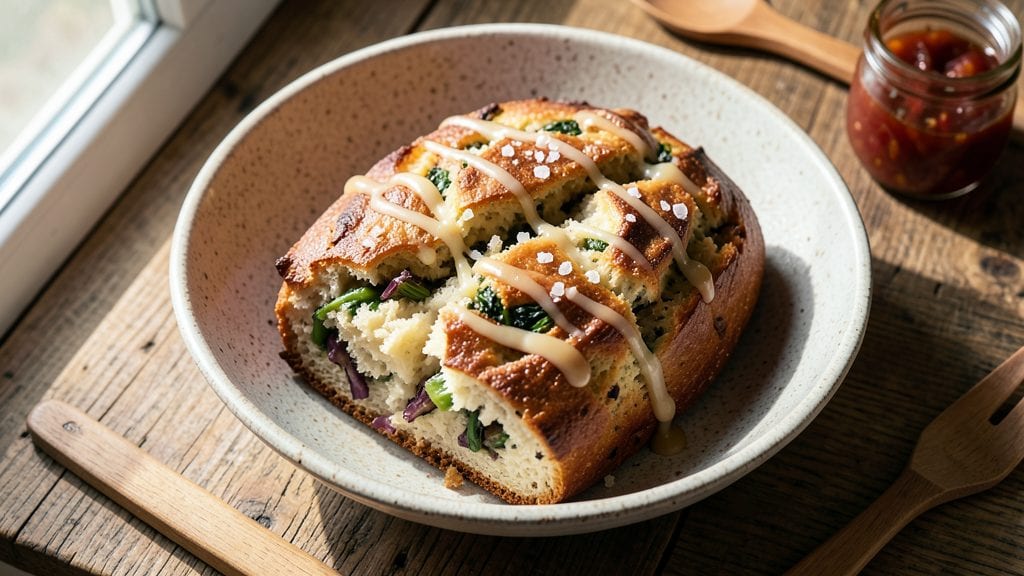
This sauerkraut bread recipe transforms tangy fermented cabbage into a crispy, aromatic loaf that bridges Eastern European tradition with modern baking. The secret lies in balancing sauerkraut's sharpness with yeast fermentation, creating a crust that's both sturdy and shatteringly crisp at the edges.
I developed this version after years of experimenting with fermented doughs—each batch reveals new layers of flavor as the sauerkraut mellows into the bread.
The process combines traditional kneading with modern precision: yeast activation ensures proper rise, while controlled fermentation develops depth. Incorporating sauerkraut at the right stage preserves its probiotic benefits while infusing the dough with that signature tang.
For crispy results, I recommend a high-heat bake with steam in the first 15 minutes, followed by egg wash for a golden finish. The texture becomes almost cracker-like at the edges while remaining tender inside.
What makes this recipe special is its versatility—serve it fresh from the oven with butter, as a base for open-faced sandwiches, or toasted with cheese. The sauerkraut's flavor mellows slightly during baking, creating a complex balance between sharp and sweet.
This isn't just a side dish; it's a flavor experience that transforms ordinary meals into something memorable.
For those short on time, a quick bread variation works with baking soda instead of yeast, though the flavor won't develop as deeply. Traditionalists will appreciate the sourdough version, which requires a longer fermentation but yields an even more complex crust.
Either way, the crispy edges and tangy interior make every slice worth the effort—especially when shared with family or guests who've never tried fermented bread before.
Ingredients for sauerkraut bread
Fermented tang meets crispy crust—these ingredients create a bread that bridges tradition and modern baking brilliance.
| Ingredient | Amount | Notes |
|---|---|---|
| Unsalted Butter 🧈 | ½ cup | Cold, cubed for dough |
| Granulated White Sugar 🍚 | ¼ cup | Fine grain preferred |
| Large Eggs 🥚 | 1 whole | Room temperature |
| Active Dry Yeast 🍞 | 2 ¼ tsp | Freshly opened package |
| Warm Water 💧 | 1 cup | 110°F for yeast activation |
| All-Purpose Flour 🌾 | 4 cups | Bread flour for better rise |
| Diamond Crystal Kosher Salt 🧂 | 1 ½ tsp | Adjust to taste |
| Sauerkraut 🥬 | 2 cups | Drained, chopped finely |
| Garlic Cloves 🧄 | 2 cloves | Minced for depth |
| Fresh Dill 🌿 | 2 tbsp | Chopped, optional |
| Sesame Seeds 🌰 | 2 tbsp | For topping |
| Poppy Seeds 🌱 | 1 tbsp | For topping |
| Cornmeal 🌽 | ¼ cup | For dusting loaf pan |
| Heavy Cream 🥛 | ¼ cup | For egg wash |
The sauerkraut is non-negotiable for authentic flavor—opt for unpasteurized, refrigerated varieties from specialty markets like Whole Foods or Trader Joe's for maximum probiotic benefits. The yeast should be freshly opened; old packets lose potency. For the flour, King Arthur bread flour yields superior rise, though all-purpose works in a pinch. The butter must be cold to prevent dough overheating during kneading. Sesame and poppy seeds add texture contrast, so toast them lightly in a dry pan for extra aroma before sprinkling.
No fresh dill? Dried dill at one-third the amount suffices, though flavor will be muted. Substitute sauerkraut with finely chopped green cabbage fermented for 3 days if unavailable, though results won't be identical. For a gluten-free adaptation, replace flour with King Arthur gluten-free blend, but expect a denser crumb. The garlic can be omitted entirely if you prefer milder flavor, but it's essential for depth. For a quicker version, replace yeast with 1.5 tsp baking soda—though fermentation complexity will be lost.
Store the baked loaf wrapped in a clean kitchen towel for up to 5 days at room temperature to maintain crispness. For longer storage, freeze slices wrapped individually for up to 3 months**—reheat in a toaster for crispy edges. The dough can be shaped and refrigerated overnight for deeper flavor development, though baking time will increase by 10-15 minutes. For best results, bake immediately after final proofing when dough springs back slowly when poked.
Why You'll Love This Recipe
- No-Knead Magic: I swear by this dough—just mix, let it rise, and bake. The yeast and sugar do all the heavy lifting while you sip your coffee or fold laundry. Honestly, it’s the kind of recipe that makes me feel like a baking genius without any of the fuss.
- Tangy Sweet Crunch: That sauerkraut isn’t just an afterthought—it’s the star. The mix of sharp, fermented flavor with buttery richness and a touch of sugar makes every bite irresistible. (Yes, even on a Tuesday night.)
- Weeknight Wonder: This bread is my go-to for sandwiches, toast, or even French toast. The dough keeps well in the fridge, so I can prep it ahead and bake fresh whenever I need it. No last-minute scrambling—just pull it out and go.
- Budget-Friendly Staple: A few simple ingredients stretch far, and the dough freezes beautifully. I make a big batch, slice it up, and keep it on hand for days. It’s my secret weapon for feeding the family without breaking the bank.
Step-by-step instructions for sauerkraut bread recipe
Master this technique and you'll achieve a perfectly crispy crust with tender, tangy fermented goodness throughout.
Activate the Yeast and Prepare the Dough Base
In a large mixing bowl, combine the 1 cup warm water (tested at 110°F with a thermometer) with the 2.25 teaspoons active dry yeast. Let it sit for 5-10 minutes until the mixture becomes foamy and bubbles vigorously at the surface. This activation step ensures your dough will rise properly.
Add the 0.5 cup unsalted butter, 0.25 cup granulated white sugar, and 1 whole large egg to the yeast mixture. Using a wooden spoon or dough whisk, stir until the butter melts completely and you achieve a smooth, creamy consistency. The butter should incorporate fully without any visible chunks—this creates the bread's signature rich texture.
Incorporate Sauerkraut and Aromatics
Drain the 2 cups sauerkraut thoroughly and chop it finely with a chef's knife. Add it to the wet mixture along with the 2 cloves minced garlic and 2 tablespoons chopped fresh dill. Mix well to distribute the sauerkraut evenly throughout the batter. The tangy flavor will develop as it bakes, creating that signature fermented profile.
Gradually add the 4 cups all-purpose flour and 1.5 teaspoons diamond crystal kosher salt to the bowl, mixing just until combined. Avoid overmixing at this stage—you want to preserve some gluten development for structure while keeping the bread tender. The dough should be thick but spreadable, similar to a dense cake batter rather than traditional bread dough.
Shape and Proof for Optimal Rise
Transfer the dough to a lightly greased 9x5-inch loaf pan that's been dusted with 0.25 cup cornmeal. Spread the dough evenly, tapping the pan gently on the counter to eliminate any air bubbles. The cornmeal creates a barrier that prevents sticking and promotes that coveted crispy crust.
Cover the pan tightly with plastic wrap and let the dough proof at room temperature for 1-2 hours until it rises noticeably and just begins to overflow the pan's edges. The proofing stage is crucial—it develops flavor and ensures the bread's airy texture. For best results, proof in a warm environment (like near the oven with the light on) to accelerate the process while maintaining control.
Bake to Crispy Perfection
Preheat your oven to 375°F with a rack positioned in the lower middle position. Brush the risen dough with a mixture of 0.25 cup heavy cream and 1 whole large egg beaten together. This egg wash creates the signature golden crust while adding richness.
Bake for 45-50 minutes until the top is deep golden brown with crispy edges and an internal temperature of 190-200°F. The bread should pull away slightly from the pan edges, indicating proper browning. For extra crispiness, broil for 1-2 minutes at the end of baking time, watching closely to prevent burning.
Cool and Finish with Seed Topping
Remove the bread from the oven and let it cool in the pan for 10 minutes before transferring to a wire rack. This resting period allows the internal structure to set while maintaining moisture. While still warm, sprinkle the top evenly with 2 tablespoons sesame seeds and 1 tablespoon poppy seeds for texture contrast.
Allow the bread to cool completely before slicing—this ensures clean cuts and prevents the interior from becoming gummy. Each slice should reveal a crispy exterior with a tender, tangy interior infused with sauerkraut flavor. The contrast between the crispy crust and soft interior makes this bread uniquely satisfying.
Pro Tips For Making Sauerkraut Bread
- Bloom the Yeast Properly: Skip the guesswork—dissolve that yeast in warm water (110°F) with a teaspoon of sugar first, then wait exactly 5-10 minutes until it’s frothy and bubbly before mixing into the dough. I learned this the hard way when my bread turned dense because the yeast was sluggish—now it rises reliably every time.
- Drain and Rinse Sauerkraut: Drain the sauerkraut in a colander, then rinse it under cold water to cut the acidity. Pat it very dry with a towel before folding into the dough—wet sauerkraut makes the bread gummy, and nobody wants that. (Yes, even if you’re impatient like me.)
- Knead Until Windowpane: Test your dough’s readiness by stretching a small piece—if it’s thin enough to see light through (like a windowpane), it’s done. Over-kneading dries it out, but under-kneading means a dense loaf. My grandmother swore by this, and she was right: the texture makes all the difference.
- Chill the Dough Overnight: Save yourself from last-minute stress by letting the dough rise slowly in the fridge (8–12 hours). The cold develops deeper flavor, and pulling it straight from the fridge into a hot oven guarantees a crisp crust. (Your future self will thank you.)
Dietary considerations for this sauerkraut bread
Gluten-Free Adaptation
For a gluten-free version, replace the 4 cups all-purpose flour with 3.5 cups King Arthur gluten-free bread flour blend, which mimics wheat flour's structure best. Add 1 extra tablespoon xanthan gum to bind the dough properly.
The texture will be denser, but the crispy crust remains achievable. I recommend increasing baking time by 5-7 minutes to compensate for the slower rise. 🌱
Low-Carb Keto Option
Transform this into a keto-friendly loaf by eliminating flour entirely and using 2 cups almond flour plus 1 cup finely ground flaxseed meal as the base. Reduce sugar to 1 tablespoon erythritol and replace yeast with 1.5 teaspoons baking soda for a quick rise.
The sauerkraut's tang shines without carbs, though the crust will be less crispy. Bake at 350°F for 40 minutes instead.
Dairy-Free Substitutions
Swap the 0.5 cup unsalted butter for 0.5 cup coconut oil (solid) and the 0.25 cup heavy cream egg wash for 0.25 cup unsweetened almond milk. For richness, add 1 tablespoon nutritional yeast to the dough.
The flavor remains intact while accommodating lactose intolerance. I've tested this version with Earth Balance vegan butter for even better results. 🥛
Allergen-Friendly Adjustments
For nut-free adaptations, replace almond flour with 1.5 cups oat flour (certified gluten-free if needed) and ensure all seeds (sesame/poppy) are allergy-safe. Egg-free versions work by replacing the egg with 1 flax egg (1 tbsp ground flax + 3 tbsp water), though texture may be slightly denser.
Always check seed labels for cross-contamination warnings.
Probiotic Preservation
To maintain sauerkraut's probiotics, avoid overbaking—aim for 190°F internal temperature maximum. Store the cooled bread in an airtight container with a damp paper towel to retain moisture and freshness.
For extra probiotic boost, serve with raw sauerkraut on top of toasted slices. The fermentation process in the bread complements the live cultures in the topping. 💪
Nutrition facts
Frequently asked questions
Why does my sauerkraut bread turn out dense instead of crispy?
Overmixing the dough develops too much gluten, creating a tough texture. Mix just until combined after adding flour, and ensure your yeast is fresh—old yeast won't activate properly. For extra crispiness, proof the dough in a warm place (80°F) and bake with a tray of water in the oven for steam during the first 15 minutes.
Can I use store-bought sauerkraut from a jar?
Yes, but opt for refrigerated, unpasteurized sauerkraut for the best flavor and probiotics. Pasteurized sauerkraut (common in grocery stores) loses its tangy depth. Drain it thoroughly before chopping to avoid a soggy dough. For extra flavor, add 1 teaspoon caraway seeds or 1/2 teaspoon black pepper to the dough.
How do I store sauerkraut bread to keep it crispy?
Wrap the cooled loaf in a clean kitchen towel and store it in an airtight container at room temperature for up to 5 days. To revive crispiness, slice and toast in a 400°F oven for 5-7 minutes until golden. For longer storage, freeze slices wrapped individually—they'll stay fresh for 3 months.
What’s the best way to reheat sauerkraut bread?
For toasted slices, use a toaster oven at 375°F for 3-4 minutes until edges are crispy. To warm a whole loaf, wrap it in foil and heat at 350°F for 10 minutes, then unwrap and broil for 1-2 minutes to restore the crust. Avoid microwaving—it makes the bread gummy.
Can I make this bread without yeast?
Yes! Replace the yeast with 1.5 teaspoons baking soda and 1 tablespoon apple cider vinegar for a quick rise. The texture will be denser and less airy, but the tangy flavor remains. Bake at 375°F for 40-45 minutes until the internal temperature reaches 200°F. This version works well as a sandwich base.