
Snacks
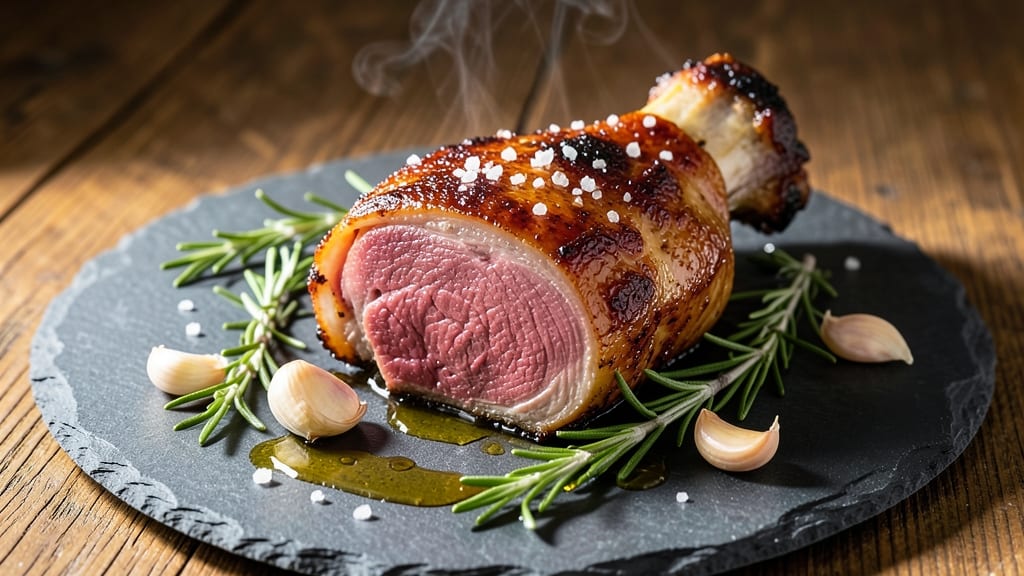
This roasted leg of lamb bone-in recipe transforms tough cuts into melt-in-your-mouth perfection through slow roasting and precise technique. The bone-in method infuses the meat with deep, savory flavor while creating a tender texture that falls apart at the touch.
After years of perfecting this method, I’ve developed a foolproof approach that delivers restaurant-quality results at home.
The secret lies in the slow roast—starting at a lower temperature to render fat and collagen before finishing with a high-heat sear for a caramelized crust.
A simple dry rub of garlic, rosemary, and black pepper enhances the natural richness of the lamb, while resting the meat ensures juicy slices every time. This isn’t just a recipe; it’s a technique that elevates a classic dish.
By the time you serve it, your lamb will be fall-off-tender, with a golden crust and aromas that fill your kitchen. Pair it with roasted root vegetables or a bright mint sauce to balance the richness, and you’ll have a centerpiece dish that impresses even the most discerning guests.
The bone-in method isn’t just traditional—it’s essential for maximum flavor and texture.
Ready in about 3 hours (including resting time), this recipe is ideal for special occasions or when you want to cook like a professional. The slow roast ensures even cooking, while the bone adds depth that store-bought cuts simply can’t match. Let’s get started—your taste buds will thank you.
Ingredients for roasted leg of lamb bone in
Four pounds of lamb, a handful of herbs, and time on your side. That's all you need for restaurant-quality lamb at home.
| Ingredient | Amount | Notes |
|---|---|---|
| Bone-in Leg of Lamb 🐑 | 4 lb | French cut preferred, fat cap intact |
| Kosher Salt 🧂 | 1 ½ tbsp | Diamond Crystal preferred, coarse grain |
| Freshly Ground Black Pepper 🌶️ | 1 tbsp | Freshly cracked for maximum aroma |
| Fresh Rosemary 🍃 | ¼ cup | Stems removed, leaves finely chopped |
| Garlic Cloves 🧄 | 8 cloves | Peeled, smashed but not minced |
| Extra-Virgin Olive Oil 🫒 | 2 tbsp | High-quality, fruity variety |
| Unsalted Butter 🧈 | ½ cup | Cold, cubed for basting |
| Fresh Thyme 🌿 | ¼ cup | Leaves only, stems discarded |
| Yellow Onion 🧅 | 1 whole | Peeled, quartered, skin on |
| Carrots 🥕 | 4 whole | Baby carrots or 2-inch chunks |
| Fresh Parsley 🌿 | ⅛ cup | Chopped, for garnish |
The lamb cut matters most here. French-cut bone-in leg (with the fat cap) is ideal—ask your butcher for it if your store doesn't carry it. Costco or Whole Foods usually have it prepped perfectly, but if you're buying a whole leg, trim excess fat to about 1/4-inch thickness. The fat renders during roasting, creating flavorful drippings. Fresh rosemary and thyme should smell vibrant—if they're wilted or smell musty, skip them. For garlic, peel and smash the cloves—this releases more flavor than mincing. The onion and carrots don't need peeling; their skins add color and sweetness to the pan drippings.
No fresh rosemary? Dried at one-third the amount works, but fresh is worth hunting down. Short on thyme? Fresh oregano or marjoram substitute beautifully. The olive oil can be swapped for avocado oil if you prefer a neutral flavor. For the butter, ghee works too—it has a higher smoke point. If you're making this ahead, prep all aromatics (chop herbs, peel garlic) the night before. The lamb itself? Buy it the day you plan to cook—bone-in cuts keep best for 3-4 days in the fridge, wrapped tightly in parchment.
This lamb tastes even better the next day—plan ahead! Store leftovers in the fridge for up to 5 days, tightly wrapped with any pan juices. For longer storage, freeze portions for up to 3 months. I like to portion it into individual servings before freezing—just thaw overnight in the fridge. The bone adds incredible depth, but if you prefer boneless, use lamb shoulder instead—it'll need an extra 30 minutes in the oven. The crust is everything, so don't rush the final sear. Use a meat thermometer—145°F internal temp is perfect for medium-rare.
Why You'll Love This Recipe
- Hands-Off Roast: I swear by this method—just season the lamb, pop it in the oven, and walk away. No basting, no fussing, just that perfect crust from the rosemary and garlic cloves doing all the work while you sip wine (or coffee, no judgment).
- Crispy-Creamy Magic: The bone-in cut gives you a juicy center and that unfairly good crispy edge—like a caramelized hug. Between us, the rosemary and garlic turn this into the kind of dish that makes people ask, "What’s in this?" (It’s basically just salt, pepper, and love.)
- Weeknight to Weekend: Same recipe for Tuesday dinners or Sunday suppers—just adjust the roasting time. Leftovers? Even better. Shred it for sandwiches, slice it for salads, or just reheat a portion for lazy days. (Yes, even on a Tuesday night.)
- Budget-Friendly Feast: A whole leg of lamb sounds fancy, but it stretches further than you’d think. The bone adds richness without extra cost, and the simple seasoning means you’re not blowing cash on gourmet rubs. My secret weapon for feeding a crowd without stress.
Step-by-step instructions for roasted leg of lamb bone in recipe
Here's the foolproof method for achieving that legendary fall-off-the-bone tenderness with a crispy, golden crust.
Prepare the Lamb for Maximum Flavor and Tenderness
Remove the bone-in leg of lamb from the refrigerator and let it sit at room temperature for 30 minutes. This ensures even cooking throughout. Pat the lamb dry with paper towels—this critical step prevents steam from forming under the skin, which is essential for that perfect crispy crust. I can't stress this enough: moisture is the enemy of crispy skin.
In a small bowl, combine the 1.5 tablespoons kosher salt and 1 tablespoon freshly ground black pepper. Generously rub this mixture all over the lamb, including inside the cavity if your cut has one. The coarse grain of Diamond Crystal salt helps create that beautiful crust. Let the lamb rest uncovered on a wire rack for 1 hour in the refrigerator. This dry-brining process works magic for both flavor and texture.
Create the Herb Butter Rub and Prep Vegetables
In a food processor, finely pulse the 0.25 cup fresh rosemary and 0.25 cup fresh thyme leaves until you have a coarse herb paste. Add the 8 peeled garlic cloves (smashed but not minced) and pulse just until combined. Transfer this herb mixture to a bowl and cut in the 0.5 cup cold unsalted butter using a fork until it forms a crumbly paste. This herb butter will be our flavor bomb.
While the lamb rests, prepare the vegetables. Peel and quarter the 1 whole yellow onion, leaving the skin on for color. Cut the 4 whole carrots into 2-inch chunks. These will roast alongside the lamb, absorbing all those incredible flavors. Toss them lightly with 2 tablespoons extra-virgin olive oil and a pinch of salt.
Roast the Lamb Low and Slow for Perfect Tenderness
Preheat your oven to 325°F—this lower temperature is key for that melt-in-your-mouth tenderness. Place the lamb fat-side up on a rack in a roasting pan. Arrange the prepared vegetables around the lamb. The fat will render down and baste the meat as it roasts, creating incredible flavor and moisture.
Roast uncovered for 2 hours. Here's where patience pays off—this slow cooking breaks down the connective tissue, transforming tough muscle into tender perfection. After 2 hours, increase the oven temperature to 425°F and continue roasting for another 20-30 minutes until the internal temperature reaches 145°F (measured with a meat thermometer in the thickest part of the leg). You'll know it's ready when the crust is deep golden brown and the juices run clear.
Rest and Baste for Maximum Juiciness
Remove the lamb from the oven and transfer it to a cutting board. Let it rest for 20-30 minutes before carving—this is absolutely crucial. During this time, tent loosely with foil to keep warm. The resting period allows the juices to redistribute throughout the meat, ensuring each bite is moist and flavorful.
While the lamb rests, make a quick pan sauce. Place the roasting pan on the stovetop over medium heat and add the herb butter mixture. Let it melt and bubble for 2-3 minutes, then whisk in any accumulated juices from the pan. This sauce will add another layer of richness to your lamb.
Carve and Serve with Confidence
Using a sharp carving knife, slice the lamb against the grain into ½-inch thick slices. The grain runs lengthwise along the leg, so you'll want to cut perpendicular to that direction. This against-the-grain technique ensures each bite is tender and easy to chew.
Arrange the sliced lamb on a platter, drizzle with the herb butter sauce, and garnish with the 0.125 cup chopped fresh parsley. Serve immediately with the roasted vegetables. Each bite should deliver that perfect balance of crispy exterior, tender meat, and herb-infused richness. This is the kind of dish that makes people ask for seconds before they've even finished their first plate.
Pro Tips For Making Roasted Leg Of Lamb Bone In
- Salt the Lamb First: Tuck those garlic cloves and rosemary into the lamb after you’ve salted it—don’t let them block the salt from doing its job. I learned this the hard way when my lamb tasted bland because the herbs shielded the seasoning. Just a few hours of dry salting (yes, even if you’re impatient like me) makes the crust crisp and the meat juicy.
- Start Hot, Then Slow: Blast that bone-in leg at 450°F (230°C) for the first 20 minutes to sear the outside—this locks in flavor. Then drop to 325°F (160°C) and let it cook low and slow. After burning three batches, I finally figured out that rushing the high heat just dries out the meat before the center gets tender.
- Don’t Skip the Bone Prep: Pat the bone dry with paper towels before roasting—wet spots won’t crisp up, and you’ll end up with soggy rosemary and garlic. I skip this when I’m lazy, but the dish is noticeably better when I don’t. A quick wipe-down also helps the seasoning stick where it matters.
- Rest It Properly: Give it a solid 15-20 minutes under foil after pulling it from the oven—this keeps the juices from pooling on the cutting board. I was skeptical until I tried it: the meat stays moist, and slicing is way easier. (Your future self will thank you.)
Troubleshooting great roasted leg of lamb bone in
Uneven Cooking
If your lamb has cold spots or overcooked edges, the issue is likely uneven heat distribution. Always place your lamb fat-side up on a wire rack in a roasting pan—this prevents steam buildup and allows air to circulate evenly.
I’ve found that French-cut legs (with the bone) cook more evenly than other cuts, but if your piece is irregular, trim excess fat to a ¼-inch thickness before seasoning.
A meat thermometer is non-negotiable here—insert it into the thickest part of the leg, avoiding the bone, to check for 145°F internal temperature. 🌡️
Dry or Tough Meat
Overcooking is the #1 cause of dry lamb. The 325°F low-and-slow phase is critical—don’t rush it! If your lamb turns out tough, it’s likely because you skipped this step or didn’t rest it long enough. After roasting, always rest the lamb for 20-30 minutes before slicing.
The juices need time to redistribute, or they’ll pool out when you cut into it. For extra insurance, baste the lamb every 30 minutes with its own rendered fat during the final 425°F sear to lock in moisture.
Pale or Bland Crust
A pale crust means your lamb didn’t get enough time at high heat, or it was steamed instead of seared. The final 20-30 minutes at 425°F are where the Maillard reaction happens—this is what creates that golden, flavorful crust.
If your oven runs hot, reduce the temp to 400°F and add 5-10 extra minutes. Pat the lamb completely dry before seasoning—even a little moisture will prevent browning. For extra crispiness, broil the lamb for 2-3 minutes at the very end, watching closely to avoid burning.
Fat Not Rendering Properly
If the fat cap isn’t melting and basting the lamb, your oven isn’t hot enough or the lamb is too cold when it goes in. Let the lamb sit at room temperature for 30 minutes before roasting—this ensures even cooking.
If the fat is still solid after 2 hours, increase the oven temp to 350°F for the first hour to help it render. The fat should pool in the roasting pan and baste the lamb naturally.
If it’s not happening, baste manually with the rendered fat every 30 minutes during the final sear.
Bone Detaching or Breaking
A loose or broken bone usually means the lamb wasn’t cooked gently enough. Bone-in cuts need slow, even heat to prevent the bone from detaching. If your bone comes loose during cooking, it’s likely because the lamb was moved or the oven temp fluctuated.
To prevent this, use a sturdy roasting rack and avoid opening the oven door frequently. If the bone does detach, don’t panic—simply reposition the lamb so the bone is supported by the rack.
For extra stability, truss the lamb with kitchen twine before roasting, securing it loosely around the leg without squeezing too tightly.
Nutrition facts
Frequently asked questions
Why does the bone-in method make lamb more flavorful?
The bone acts like a natural basting tool as it roasts, collecting juices and infusing them back into the meat. This creates a deeper, richer flavor profile compared to boneless cuts. The bone also adds structural integrity, helping the meat stay moist during long cooking times. Plus, the marrow inside the bone adds a subtle, luxurious depth to every bite.
Can I use a different cut of lamb for this recipe?
While a French-cut bone-in leg is ideal, you can adapt this method for other cuts like lamb shoulder or shank. Bone-in shoulder will need an extra 30-45 minutes at 325°F to tenderize fully. For shank, braise instead of roast to avoid toughness. Always use a meat thermometer to check for 145°F internal temp—the bone affects cooking times.
How do I know when the lamb is fully rested?
A properly rested lamb will have juices that run clear when you pierce it with a knife. The meat should also feel slightly springy to the touch. If you're unsure, wait the full 30 minutes—this is non-negotiable for juicy slices. The resting period is when the magic happens, redistributing those precious juices throughout the meat.
What are the best sides to serve with this lamb?
Classic pairings include roasted root vegetables (carrots, parsnips, beets), creamy mashed potatoes, or a fresh mint sauce to cut the richness. For a lighter option, try a bright citrus salad with arugula and shaved fennel. The herb butter sauce from the recipe also makes a delicious drizzle over roasted potatoes or crusty bread.
Can I make this recipe ahead of time?
The lamb actually tastes better the next day. Cook it completely, then refrigerate wrapped tightly in parchment paper with any pan juices. Reheat gently in a 325°F oven for 15-20 minutes until warmed through. For leftovers, slice and reheat portions separately to maintain tenderness. This dish reheats beautifully, making it perfect for meal prep.