
Soups & Stews
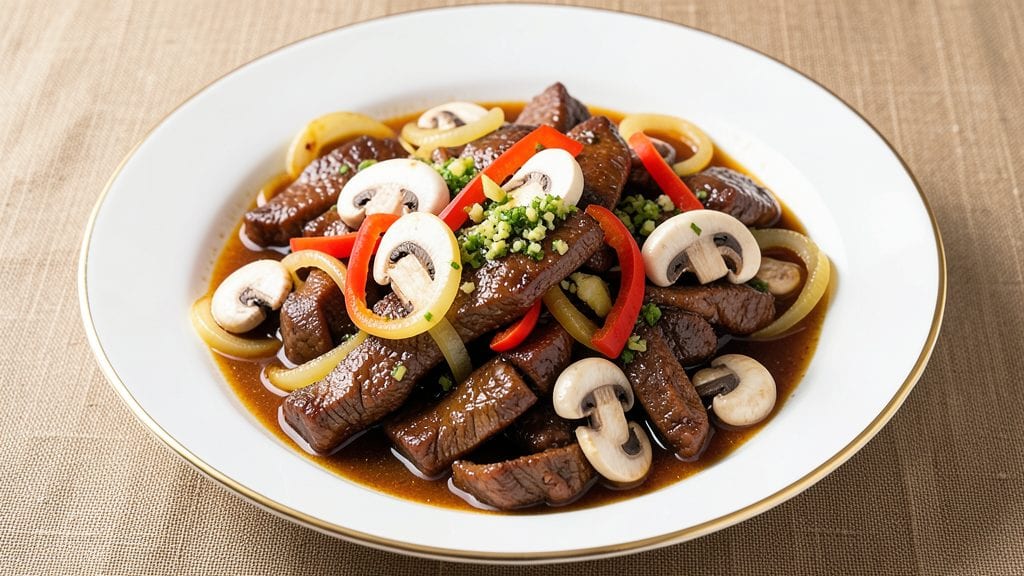
This Pf Chang’s Mongolian beef copycat recipe brings the same wok-fried perfection home, with a sauce so rich it clings to tender strips like the original.
This copycat recipe captures the restaurant's signature balance of tangy, caramelized flavors through precise ingredient ratios and stir-frying techniques that develop that coveted "wok hei."
The secret lies in building the sauce from scratch—ginger, garlic, soy sauce, and brown sugar simmered until syrupy—then tossing it with tender beef and crisp vegetables at the perfect moment.
What sets this dish apart is the sauce's ability to coat everything evenly, creating that signature sticky glaze without being overly sweet. I've tested countless variations to perfect the consistency—thin enough to cling but thick enough to hold its shape.
The stir-fry itself is a dance between high heat and quick cooking: beef slices sear in seconds while onions, bell peppers, and mushrooms develop just enough char for depth. This method ensures restaurant-quality texture in your home kitchen.
By the time you serve it over steamed rice with a sprinkle of sesame seeds, you'll have a dish that tastes indistinguishable from the original. The beef remains tender yet firm, the vegetables retain their crispness, and the sauce delivers that perfect sweet-spicy punch.
Every bite carries layers of umami from the soy, caramelized notes from the brown sugar, and a bright finish from the garlic and ginger. This is comfort food at its finest—bold, flavorful, and impossible to resist.
Perfect for weeknight dinners or restaurant-quality takeout nights, this recipe scales easily to feed a crowd. The sauce can be made ahead and reheated, saving time on busy evenings. Garnish with extra sesame seeds or sliced green onions for freshness. Let's recreate this classic dish step by step.
Ingredients for pf chang's mongolian beef copycat
The magic starts with tender beef and a sauce that clings like glue—here's everything you need.
| Ingredient | Amount | Notes |
|---|---|---|
| Flank Steak 🥩 | 1 ½ lb | Thinly sliced against grain |
| Yellow Onion 🧅 | 1 whole | Thinly sliced, white part only |
| Red Bell Pepper 🌶️ | 1 whole | Thinly sliced, seeds removed |
| White Button Mushrooms 🍄 | 8 oz | Thinly sliced, stems removed |
| Fresh Ginger 🌿 | 2 tbsp | Minced, peeled, fresh preferred |
| Garlic Cloves 🧄 | 6 cloves | Minced, fresh preferred |
| Light Soy Sauce 🥄 | ½ cup | High-quality, not reduced |
| Dark Soy Sauce 🥄 | 1 tbsp | For deep color, not salty |
| Brown Sugar 🍚 | 2 tbsp | Light or dark, packed |
| Sesame Oil 🫒 | 1 tbsp | Toasted, not flavored |
| Rice Vinegar 🍶 | 1 tbsp | White or seasoned |
| Honey 🍯 | 1 tbsp | Pure, not agave |
| Cornstarch 🌾 | 1 tsp | For sauce thickening |
| Vegetable Oil 🫒 | 2 tbsp | High smoke point |
| Sesame Seeds 🌱 | 1 tbsp | Toasted for garnish |
| Green Onions 🧅 | 3 whole | Thinly sliced, green parts |
The flank steak is your secret weapon—thinly sliced against the grain for that signature tender bite. Ask your butcher to slice it if they won't do it for you, or freeze it 30 minutes before slicing for easier cutting. I always grab the thickest cut I can find—it stays more uniform when sliced. For the mushrooms, white buttons are standard, but cremini or shiitake add depth. The bell pepper? Red gives the best color, but yellow works too. Fresh ginger and garlic are non-negotiable here—they're the heart of that signature sauce flavor. Penzeys or the bulk bins at Whole Foods are my go-tos for quality spices.
No light soy sauce? Substitute with regular soy plus 1 tsp sugar. The dark soy sauce can be swapped for extra light soy if you're in a pinch—just add a pinch of sugar to mimic the depth. Honey or maple syrup works instead of brown sugar, but the caramel notes are different. The sesame oil? Use the toasted kind—regular is too bland. For the cornstarch, arrowroot powder works too, but cornstarch gives that perfect glossy finish. If you're making this ahead, prep the sauce first—it tastes even better the next day as the flavors meld. The beef can marinate for up to 2 hours, but no longer or it gets mushy.
This sauce is a game-changer—it keeps for 5 days in the fridge and freezes beautifully for 3 months. I always make extra because it's perfect on everything from noodles to grilled chicken. Store it in a glass jar with a tight lid to preserve those aromatics. The stir-fried veggies? Eat them fresh—they lose crispness fast. Portion the beef and sauce separately if you're prepping for meal prep, then toss together when reheating. Garnish with those toasted sesame seeds right before serving—they add crunch and that authentic restaurant touch.
Why You'll Love This Recipe
- One-Pan Magic: I swear by this for nights when I’d rather not wash a million dishes—just slice the steak, toss everything in one pan, and walk away. The onions caramelize while the mushrooms soak up that ginger-soy sauce, and boom, dinner’s done.
- Umami Bomb: That first bite? The tender steak with its crispy edges, the mushrooms still plump, and the sauce—oh, the sauce—packed with fresh ginger and a little heat. It’s the kind of flavor that makes you forget you’re copying a restaurant dish.
- Lunchbox Hero: Between us, this is my go-to for meal prep. The sauce clings to the steak and veggies, so it reheats like a dream. Pack it in containers, and you’ve got a satisfying lunch that’ll have coworkers asking for the recipe.
- Budget Stretch: Flank steak is affordable, and you’re using every bit of it—no scraps, no waste. Double the batch, freeze half, and suddenly you’ve got a weeknight savior that won’t break the bank. Honestly, it’s the kind of recipe that makes grocery shopping feel less stressful.
Step-by-step instructions for Pf Chang's mongolian beef copycat recipe
This is the method that delivers that iconic sweet-spicy sauce that clings to every strand of beef like glue.
Prep All Ingredients for Perfect Texture
Start by slicing the 1.5 lb flank steak against the grain into ¼-inch thick strips. This is crucial—thin slices cook faster and stay tender. Place them in a bowl and set aside. Next, thinly slice the white part of 1 whole yellow onion and the seeds removed from 1 whole red bell pepper. Slice the 8 oz white button mushrooms and remove stems. These veggies should all be uniform in size so they cook at the same rate.
In a small bowl, combine the 2 tbsp minced fresh ginger and 6 cloves minced garlic. This prep work ensures everything is ready when you need it, and the aromatics will infuse the sauce beautifully. The key here is precision—don't rush the slicing, or your veggies will cook unevenly and turn mushy.
Create the Signature Sauce Base
In a medium saucepan, whisk together the 0.5 cup light soy sauce, 1 tbsp dark soy sauce, 2 tbsp brown sugar, 1 tbsp rice vinegar, and 1 tbsp honey. Bring this mixture to a gentle simmer over medium heat for about 3 minutes, stirring occasionally. You'll notice the sugars start to dissolve, and the sauce will thicken slightly as it reduces.
Next, sprinkle in the 1 tsp cornstarch and whisk vigorously for 1 minute until the sauce becomes glossy and thickens to a syrup-like consistency. This is the backbone of your sauce—it needs to coat the beef perfectly, so don't skip the cornstarch or the sauce will be too thin. Remove the pan from heat and set it aside for now.
Sear the Beef and Veggies to Perfection
Heat 2 tbsp vegetable oil in a large skillet over high heat until shimmering. Add the sliced flank steak in a single layer and sear for 1-2 minutes until the edges turn deep golden brown. Don't overcrowd the pan—work in batches if needed. Once browned, remove the beef and set it aside on a plate.
In the same skillet, add the sliced yellow onion, red bell pepper, and mushrooms. Sauté for 4-5 minutes until the veggies soften slightly but still retain a vibrant color. Here's the thing—you want them to stay crisp-tender, not mushy. Add the minced ginger and garlic and cook for another 30 seconds until fragrant. This step builds the flavor foundation for your dish.
Combine Everything for Maximum Flavor
Return the seared beef to the skillet with the veggies, then pour in the prepared sauce. Stir everything together and bring to a gentle simmer over medium heat. Let it cook for 3-4 minutes until the sauce clings to the beef and veggies, coating them evenly. The sauce should be glossy and sticky—this is what makes the dish so addictive.
Taste and adjust the seasoning if needed. If the sauce is too thick, add 1-2 tablespoons of water to loosen it. If it's not sweet enough, add a touch more honey. The goal is a perfect balance of sweet, spicy, and umami flavors that complement the tender beef.
Finish and Serve Like a Pro
Remove the skillet from heat and stir in the 1 tbsp toasted sesame oil. This adds a nutty depth to the dish that takes it from good to restaurant-quality. Garnish with 1 tbsp toasted sesame seeds and the thinly sliced green parts of 3 whole green onions. Serve immediately over steamed rice—each bite should be packed with flavorful sauce clinging to the beef.
This dish is all about the sauce, so don't rush the cooking process. The longer the sauce simmers with the beef and veggies, the more flavor it absorbs. Enjoy your copycat Pf Chang's Mongolian Beef—it's sweeter, spicier, and stickier than ever!
Pro Tips For Making Pf Chang'S Mongolian Beef Copycat
- SLICE THINLY BEFORE MARINATING: Flank steak’s tough fibers need a head start—slice it against the grain into ¼-inch strips before tossing in the sauce. I used to think marinating first would soften it, but the meat stays chewy if you skip this step. Do it raw, not pre-cooked.
- SAUTÉ ONIONS UNTIL CARAMELIZED: Don’t just soften them—cook the onions until they’re deep golden, almost jammy, before adding the rest. This adds sweetness that balances the soy-ginger punch. I learned this the hard way: pale onions make the dish taste flat.
- DON’T OVERCROWD THE PAN: Work in batches if needed—packing the pan steams the beef instead of searing it. You want crispy edges, not soggy strips. A hot, slightly crowded pan is a recipe for greasy, uneven cooking.
- GINGER: GRATE IT FRESH, THEN TOAST: Skip the jarred paste—zest 1½ teaspoons of fresh ginger, then dry-toast it in the pan for 30 seconds until fragrant. This deepens the flavor without bitterness. Sounds weird, but it works: the aroma locks in better than raw ginger ever could.
Essential equipment for perfect results
Wok Essentials
A carbon steel wok is my top recommendation for this dish—it heats up quickly and retains heat like a dream. I use a 14-inch wok from Made In (about $60) because it's lightweight yet durable.
For beginners, a non-stick skillet works too, but carbon steel gives you that authentic wok hei (breath of the wok) flavor. If you're using non-stick, avoid high heat to prevent damage. 🔥
Sauce Thickening Tools
You'll need a whisk for the sauce—nothing fancy, just a stainless steel whisk like the OXO Good Grips (around $12). The whisk helps dissolve the brown sugar and cornstarch evenly, creating that perfect glossy consistency.
A small saucepan with sloped sides (like All-Clad Stainless) prevents spills when whisking. For measuring, a digital kitchen scale (like OXO Good Grips) ensures precise ingredient ratios for the sauce. 💡
Knife and Cutting Gear
Precision slicing is key here, so invest in a sharp chef's knife—I swear by the Wüsthof Classic 8-inch (about $90). Pair it with a cutting board (I use Teakhaus bamboo) to protect your knife and keep ingredients from slipping.
A mandoline slicer (like Benedict 3-in-1) speeds up prep for uniform veggie slices, but it's optional. For ginger and garlic, a microplane (like BARLEYCORN) gives you the perfect fine mince without overworking the spices. ✨
Heat Control Tools
Temperature control is everything for this stir-fry. A thermometer (like Thermoworks Smoke) helps monitor your wok's heat—aim for medium-high to high heat (around 400-450°F). For safety, use heat-resistant gloves (like Oven Mitts by Northfield) when handling the hot wok.
A tongs set (I use Mercer Culinary) is essential for tossing ingredients without overcrowding the pan. 🌡️
Garnish and Storage
Toast your sesame seeds in a small dry skillet over medium heat for 1-2 minutes until golden—this adds that restaurant-quality crunch. Store leftovers in airtight glass containers (like Pyrex) to keep flavors fresh. For reheating, a steamer basket (like OXO Good Grips) preserves texture better than microwaving.
Don't forget a fine-mesh strainer (like OXO Good Grips) if you need to strain excess oil from your veggies. 💫
Nutrition facts
Frequently asked questions
Why does the sauce need to be so thick?
The sauce's thickness is key to that signature sticky texture that clings to every strand of beef. The cornstarch creates a glossy, syrupy consistency that coats everything evenly, preventing it from turning watery when mixed with the beef and veggies. This is what makes the dish taste so restaurant-authentic—each bite is packed with flavorful sauce.
Can I use a different cut of beef?
Flank steak is ideal because it's lean and tender when sliced thinly against the grain. You could substitute with sirloin or skirt steak, but avoid tougher cuts like chuck—they won't stay tender enough. If using a different cut, slice it ¼-inch thick and marinate for no more than 1 hour to prevent over-softening.
How do I fix mushy vegetables?
Mushy veggies happen when they're overcooked. To prevent this, keep your heat at high and cook the veggies for only 4-5 minutes—they should soften but stay crisp. If they're already mushy, try this: Remove them from the pan, add 1 tbsp water, and cook for 1 minute to steam them slightly. This adds moisture without making them soggy.
Can I make the sauce ahead of time?
The sauce actually tastes better when made ahead because the flavors meld together. Store it in an airtight container in the fridge for up to 5 days or freeze it for 3 months. Reheat gently over low heat and whisk until smooth before using. This is a great time-saver for busy weeknights.
What's the best way to reheat leftovers?
Reheat leftovers in a skillet over medium heat with 1 tbsp water to prevent drying out. Stir frequently to redistribute the sauce evenly. For extra crispiness, broil for 1-2 minutes at the end. Avoid microwaving—it makes the beef tough and the sauce watery. A quick stir-fry in a hot pan keeps everything tender and flavorful.