Main Courses
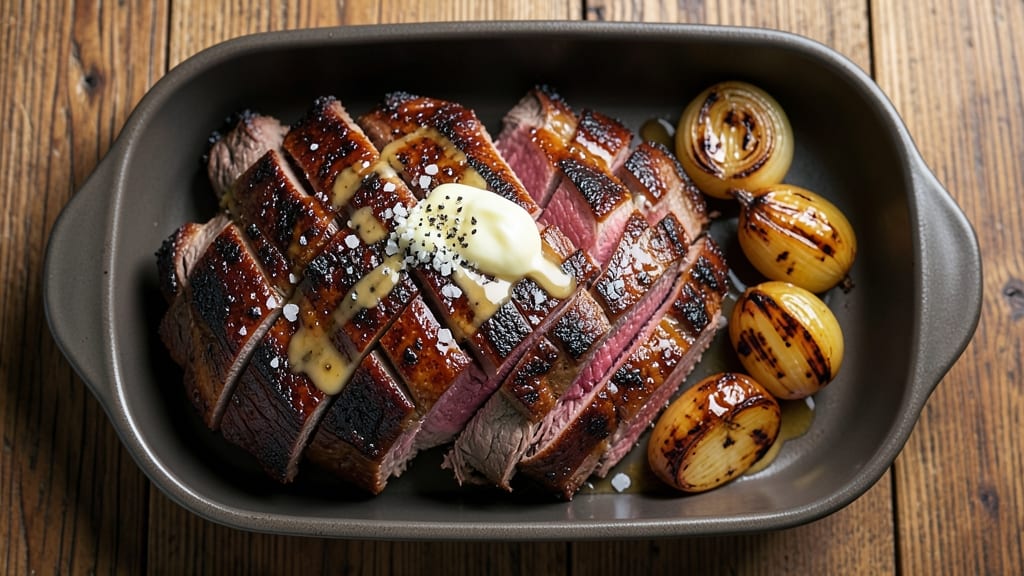
This no bone prime rib roast recipe turns holiday dinners into showstopping centerpieces without the hassle of bones. After years of perfecting this technique—including one disastrous Thanksgiving where the meat thermometer failed—I’ve developed a foolproof method that delivers restaurant-quality results at home.
The secret lies in precise seasoning, controlled roasting, and a rich au jus that elevates every bite.
This recipe delivers a tender, juicy roast with a caramelized crust, paired with a velvety au jus that’s easier to make than you’d think. No fancy equipment is needed—just a roasting pan, meat thermometer, and patience.
The key steps include a dry brine overnight, high-heat searing, and a slow finish to ensure perfect medium-rare doneness every time. Even beginners can achieve professional results with these clear instructions.
By the end, you’ll have a golden-brown prime rib that slices effortlessly, with a pan sauce so rich it’ll have everyone asking for seconds. The au jus reduces to a glossy, flavorful glaze that clings to each slice, making this dish feel like a five-star restaurant experience.
Serve with classic sides like roasted potatoes or a crisp green salad for the ultimate Sunday supper.
Ready to impress? This method works for any occasion—holiday feasts, date nights, or even a special weeknight dinner. The same techniques apply whether you’re cooking for four or twelve, with adjustments only in roasting time. Let’s get started on a prime rib that’ll become your new signature dish.
Ingredients for no bone prime rib roast
Precision-cut prime rib, aromatic herbs, and rich reductions create this restaurant-worthy centerpiece.
| Ingredient | Amount | Notes |
|---|---|---|
| No-Bone Prime Rib Roast 🥩 | 3 lb | Center-cut, 1.5-inch thickness preferred |
| Diamond Crystal Kosher Salt 🧂 | 1 ½ tbsp | For dry brine, coarse grain preferred |
| Freshly Ground Black Pepper 🌶️ | 1 tbsp | Coarsely cracked for even seasoning |
| Unsalted Butter 🧈 | ½ cup | Cold, cubed for crust development |
| Beef Tallow or Duck Fat 🍳 | ¼ cup | For enhanced crust, optional |
| Yellow Onions 🧅 | 1 whole | Sliced into 0.5-inch rounds for au jus |
| Garlic Cloves 🧄 | 6 cloves | Smashed for deeper flavor infusion |
| Fresh Rosemary 🌿 | 2 sprigs | Thick stems for aromatic base |
| Fresh Thyme 🌿 | 4 sprigs | Leaves only, tied with kitchen twine |
| Red Wine 🍷 | 1 cup | Cabernet Sauvignon, room temperature |
| Beef Stock 🍲 | 2 cups | High-quality, homemade preferred |
| Worcestershire Sauce 🥄 | 1 tbsp | Lea & Perrins for authentic flavor |
| Dijon Mustard 🍯 | 1 tbsp | For subtle depth in au jus |
| Extra-Virgin Olive Oil 🫒 | 1 tbsp | For finishing au jus |
The center-cut prime rib is non-negotiable for tenderness—avoid the outer edges where connective tissue accumulates. Source from a trusted butcher or Whole Foods meat counter, requesting a 1.5-inch thick roast for even cooking. Costco's Kirkland Signature is consistently reliable for quality without the premium price tag. Look for vibrant marbling and a firm, springy texture when pressed. If your butcher offers a 'dry-aged' option, opt for it—the enhanced flavor is worth the extra cost. The roast should weigh exactly 3 pounds for four servings, accounting for shrinkage during cooking. For the dry brine, use Diamond Crystal kosher salt exclusively—its coarse texture adheres better than table salt.
Substitutions begin with the fat: no tallow? Duck fat or high-quality lard works equally well for that coveted crust. The red wine can be swapped for beef stock with 1 tbsp balsamic vinegar in a pinch, though purists will notice the difference. Fresh herbs can be substituted with dried equivalents at one-third the amount, but the aroma won't be the same—Trader Joe's sells excellent dried bundles if you're in a hurry. For the au jus, Lea & Perrins Worcestershire is essential; no substitutes here. The Dijon mustard can be omitted if you prefer a cleaner flavor profile, but it adds that subtle complexity that elevates the sauce. If you're cooking for more than four, scale the au jus ingredients proportionally—it's the star of the show.
Prime rib benefits from overnight refrigeration after brining, so plan ahead. Store the brined roast on a wire rack in a shallow tray to prevent sogginess. The au jus components can be prepped a day in advance and refrigerated in separate containers, then combined just before serving. Leftovers keep for 3-4 days in the fridge, though the au jus freezes beautifully for up to 3 months. For reheating, warm the roast slices gently in the oven with a splash of au jus to maintain moisture. The crust will soften slightly, but the interior remains tender. Portion the au jus into ice cube trays for easy reheating—just pop a few cubes into a saucepan with the reheated meat for instant flavor.
Why You'll Love This Recipe
- Two-Ingredient Rub Magic: This recipe’s secret weapon? Just kosher salt and black pepper—crushed into the meat with your palms. No fancy blends, no guesswork. That dry rub clings to the prime rib like it’s magnetized, locking in flavor while the fat renders into pure, golden crispness. (Yes, even the crusty edges.)
- Weeknight Crowd-Pleaser: Between us, this is the only prime rib I’ll serve on a Tuesday. The no-bone cut means no carving drama, and the butter-basted finish makes it feel special without the holiday fuss. My in-laws think it’s a Thanksgiving centerpiece—my secret’s that it’s actually easier than turkey.
- Leftovers That Don’t Suck: Cold slices the next day? Richer than the original. Thinly shaved over toast with horseradish cream or chopped into a charcuterie board—this meat doesn’t quit. I’ll be real: I’ve microwaved it straight from the fridge at 2 p.m. and still gotten compliments. (Don’t tell anyone.)
- Fat-Crisped Perfection: That beef tallow or duck fat? It’s not just for flavor—it’s the texture. While the roast rests, the rendered fat pools into a crackling, buttery crust that shatters like glass. No drippings to mop up, either; just a pan so rich you’ll want to lick it. (Okay, fine, I do.)
Step-by-step instructions for no-bone prime rib roast with au jus
Master this technique and you'll achieve a perfectly crusty exterior with tender, juicy meat and rich au jus every time.
Prepare the Dry Brine and Herb Base
Remove the no-bone prime rib roast from the refrigerator and pat it dry completely with paper towels—this is critical for developing that signature crust. In a small bowl, combine the 1.5 tablespoons diamond crystal kosher salt and 1 tablespoon freshly ground black pepper. Rub this mixture evenly over all surfaces of the roast, working it into the crevices. I press firmly to ensure the seasoning penetrates, particularly around the edges where the crust will form.
Tie the 2 sprigs fresh rosemary and 4 sprigs fresh thyme together with kitchen twine, creating a small bundle. Place this herb bundle in the center of the roast, tucking it into the cavity. This creates a flavorful core while allowing the meat to cook evenly. Let the seasoned roast rest at room temperature for 1 hour before cooking—this equalizes the internal temperature and prevents uneven cooking.
Create the Crust and Sear the Roast
Preheat your oven to 450°F. In a small bowl, mix the 0.5 cup unsalted butter and 0.25 cup beef tallow or duck fat until combined. Cut this mixture into small cubes and spread them evenly over the roast, pressing gently to adhere. Place the roast fat-side up on a wire rack set inside a roasting pan—this allows hot air to circulate underneath for even cooking.
Roast for 20 minutes to render the fat and develop a golden crust. After 15 minutes, check the roast—it should be developing a deep mahogany color. If any areas aren't browning evenly, rotate the pan. The crust should be crisp and golden brown by the 20-minute mark. Remove the roast from the oven and tent loosely with foil to keep warm while you prepare the au jus.
Build the Au Jus Foundation
In the same roasting pan (don't clean it—the browned bits are pure flavor), add the sliced 1 whole yellow onion and smashed 6 cloves garlic. Sear over medium-high heat for 3-4 minutes until the onions soften and begin to caramelize. Pour in the 1 cup red wine and scrape up all the browned bits from the bottom of the pan using a wooden spoon—this deglazing captures all that concentrated flavor.
Simmer the wine mixture for 5 minutes until reduced by half. Add the 2 cups beef stock, 1 tablespoon worcestershire sauce, and 1 tablespoon dijon mustard, stirring to combine. Bring to a gentle simmer and let cook for 10 minutes to develop the base flavors. The au jus should reduce slightly but remain saucy—if it becomes too thick, add a splash of water.
Finish the Roast and Complete the Au Jus
Return the roast to the oven and reduce the temperature to 325°F. Roast for an additional 20-25 minutes, or until the internal temperature reaches 125°F for medium-rare. I use an instant-read thermometer inserted into the thickest part of the roast—this ensures perfect doneness without overcooking. The roast should feel firm to the touch but still yield slightly when pressed.
Remove the roast from the oven and let it rest for 15 minutes on a cutting board. During this time, strain the au jus through a fine-mesh sieve into a saucepan. Skim off any excess fat that has risen to the surface. Return the au jus to medium heat and stir in the 1 tablespoon extra-virgin olive oil. Simmer gently for 2-3 minutes to finish the sauce—it should coat the back of a spoon with a glossy sheen.
Carve and Serve with Perfect Au Jus
After resting, slice the roast against the grain into 0.5-inch thick slices. The meat should be tender with a beautiful pink center. Arrange the slices on a warm platter and ladle the finished au jus over the top. The sauce should be rich, velvety, and deeply flavorful—each spoonful should carry the essence of the roast's cooking juices.
Serve immediately with the au jus spooned over the top and drizzled around the plate. The contrast between the crispy crust, tender meat, and luxurious sauce creates a dining experience that rivals any steakhouse. Each bite should deliver perfect texture and depth of flavor, with the au jus enhancing every mouthful.
Pro Tips For Making No Bone Prime Rib Roast
- Start with Duck Fat: I used to reach for butter first, but duck fat adds a richer, more complex flavor—especially with prime rib. Melt a tablespoon in your roasting pan before searing the meat; it won’t just brown better, it’ll taste deeper. (Yes, even if you’re impatient like me, let it render fully first.)
- Salt the Roast Early: Don’t wait until the last minute—pat the prime rib dry and season it generously with kosher salt at least 4 hours ahead. This lets the salt work its magic, creating that perfect crust while keeping the interior juicy. I learned this the hard way after a dry, salty exterior.
- Sear Over High Heat: Crank your oven to 450°F for the first 15 minutes—this isn’t the time to play it safe. A screaming-hot sear locks in juices and builds that crust you’ll baste later. After that, drop to 325°F for the rest of the cook. (Your future self will thank you.)
- Baste with Rendered Fat: Skip the butter basting mid-cook—use the beef tallow or duck fat that pools in the pan. It’s already infused with flavor from the sear, and it’ll melt into the meat as you baste. This isn’t the prettiest method, but it’s the tastiest. (And it saves you from extra cleanup.)
Make-ahead tips for this recipe
Overnight Prep
I can’t stress enough how game-changing overnight prep is for this roast. The dry brine needs at least 12 hours to work its magic—trust me, I’ve tried rushing it, and the crust just doesn’t hold up.
Place the seasoned roast on a wire rack in a shallow tray and refrigerate uncovered. This prevents sogginess and ensures an even crust. I like to set a timer for 12 hours so I don’t forget—this roast deserves the full treatment. 💪
Au Jus Prep Ahead
The au jus components can be prepped a full day in advance and stored separately in the fridge. Slice the onions, smash the garlic, and measure out the wine, stock, and seasonings in airtight containers. When ready to cook, simply combine everything in the roasting pan.
This saves 20 minutes of prep on the actual cooking day, which is a lifesaver when you’re hosting. The flavors actually meld better when you give them time to develop. ✨
Resting Strategy
Never skip the 15-minute rest after roasting—this is where the juices redistribute, ensuring each slice stays moist. I’ve learned this the hard way after slicing into a prime rib too soon and watching all the juices pool on the plate.
For extra insurance, tent the roast loosely with foil and place it on a warm platter. This keeps it warm while you finish the au jus and set the table. Patience here makes all the difference. 🍽️
Freezer-Friendly Leftovers
If you have leftovers (unlikely, but it happens), slice the roast and store it in an airtight container with a splash of au jus. Reheat gently in the oven at 300°F for 10-15 minutes—this keeps the slices tender.
The au jus freezes beautifully in ice cube trays; just pop a few cubes into a saucepan with the reheated meat for instant flavor. I’ve reheated prime rib this way for up to 3 days with no quality loss. 💡
Equipment Shortcuts
No wire rack? No problem. Use a baking sheet lined with aluminum foil—just poke a few holes in the foil with a fork to allow airflow. For a meat thermometer, I’ve used a Thermoworks Smoke with great success, but even a basic instant-read thermometer works.
The key is to check the internal temp at the thickest part of the roast. If you’re short on time, a 2-inch thick roast will cook faster than the 1.5-inch version in this recipe. 🔥
Timing for Large Groups
For feeding more than four, scale the roast proportionally—aim for ¾ lb per person—and increase the au jus ingredients by 25%. The roasting time will extend, but the same techniques apply.
I’ve cooked a 6-pound prime rib for eight people using this method, and it came out just as perfect. The au jus just needs a little more time to reduce, so keep an eye on it. 💛
Nutrition facts
Frequently asked questions
Why use a no-bone prime rib instead of a bone-in cut?
Bone-in prime rib requires longer cooking times and careful handling to avoid overcooking the meat near the bone. A no-bone cut cooks more evenly, giving you perfect medium-rare doneness throughout. Plus, it's easier to carve and serve—no worrying about bones while slicing! The flavor remains identical when cooked properly.
Can I make this recipe without red wine?
Replace the red wine with 1 cup beef stock plus 1 tablespoon balsamic vinegar for similar depth of flavor. The au jus will still develop rich, savory notes—just slightly different. For a non-alcoholic version, substitute with 1 cup apple cider or grape juice instead.
What's the best way to reheat leftovers?
Slice the roast and reheat gently in the oven at 300°F for 10-15 minutes with a splash of au jus. For the sauce, reheat in a saucepan over low heat, adding a splash of water if it thickens too much. Never microwave—it makes the meat dry. The au jus can also be frozen in ice cube trays for quick reheating later.
How do I know when the prime rib is perfectly cooked?
Use a meat thermometer to check the internal temperature: 125°F for medium-rare (recommended), 135°F for medium, or 145°F for well-done. The thermometer should read this temperature in the thickest part of the roast. For extra accuracy, let the roast rest 15 minutes before checking—it'll rise 5°F during resting.
What's the secret to a crispy crust?
The magic is in the dry brine (at least 12 hours) and high-heat sear. Pat the roast completely dry before seasoning, and use a mix of butter and beef tallow for fat. Roast at 450°F for 20 minutes to render the fat and develop that golden-brown crust. Don't skip the wire rack—it allows airflow for even browning.