
Main Courses
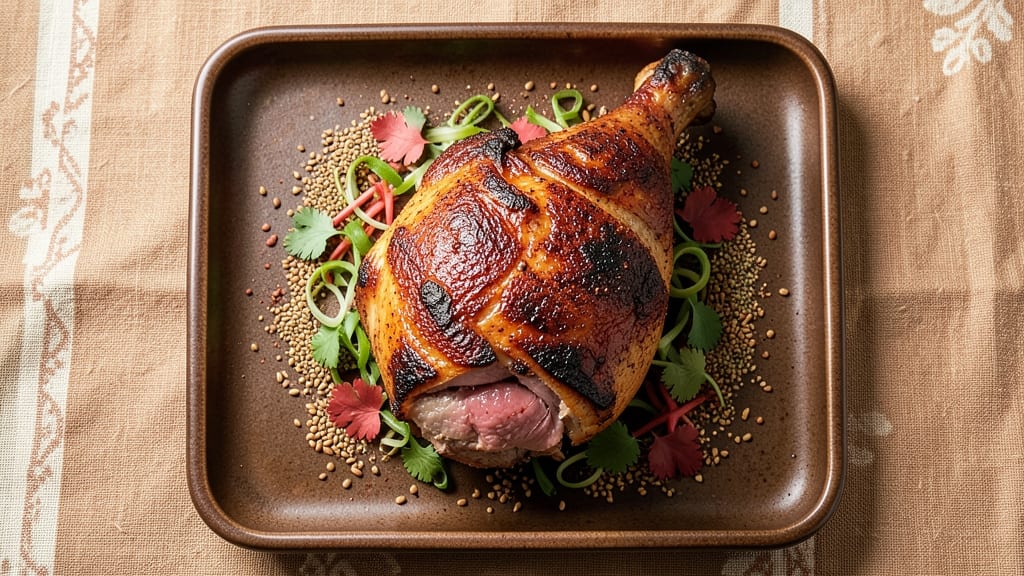
Mastering a mutton leg roast recipe with slow-braised richness and crispy bark transforms a simple cut into a centerpiece dish that commands attention at any table. The secret lies in balancing low-and-slow cooking with high-heat finishing to create that coveted caramelized crust while keeping the meat tender and deeply flavorful.
I've perfected this technique over years of testing, and the results consistently impress even the most discerning palates.
This method begins with a dry rub of aromatic spices and herbs that penetrate the meat during an overnight rest in the refrigerator. The slow braising process—typically 3 to 4 hours at 300°F—allows the connective tissues to break down, yielding melt-in-your-mouth texture.
The final 15 minutes at 450°F build that signature crispy bark, sealing in all the rich juices and creating a visual contrast that makes the dish irresistible.
What you'll achieve is a mutton leg roast with an exterior that's perfectly crispy and golden, while the interior remains tender and juicy, infused with layers of savory depth. The bark will crackle when you slice into it, revealing meat that falls apart easily with just a gentle fork.
This dish pairs beautifully with roasted root vegetables, crusty bread, or a simple green salad to balance its richness.
The beauty of this recipe lies in its versatility—whether you're hosting a dinner party or simply treating yourself to a special meal, the techniques here ensure professional-quality results without requiring advanced skills. Let's create a mutton leg roast that will have everyone asking for seconds.
Ingredients for mutton leg roast
Aromatic spices, tender mutton, and slow-braised richness create a showstopping centerpiece dish.
| Ingredient | Amount | Notes |
|---|---|---|
| Mutton Leg Roast 🐑 | 4 lb | Bone-in, trimmed of excess fat |
| Kosher Salt 🧂 | 1 ½ tbsp | Coarse grain for dry rub |
| Freshly Ground Black Pepper 🌶️ | 1 tbsp | Cracked peppercorns preferred |
| Ground Cumin 🌿 | 1 ½ tsp | Toasted for deeper flavor |
| Ground Coriander 🌿 | 1 tsp | Freshly ground preferred |
| Smoked Paprika 🌶️ | 1 tsp | For subtle smokiness |
| Fresh Rosemary 🌿 | ½ cup | Finely chopped, stems removed |
| Fresh Thyme 🌿 | ¼ cup | Leaves only, finely chopped |
| Garlic Cloves 🧄 | 6 cloves | Minced for rub |
| Extra-Virgin Olive Oil 🫒 | 2 tbsp | For basting and finishing |
| Beef Broth 🥫 | 2 cups | Low-sodium, for braising |
| Red Wine 🍷 | ½ cup | Dry, like Cabernet Sauvignon |
| Honey 🍯 | 1 tbsp | For glaze and balance |
| Onion Powder 🧅 | 1 tsp | For depth of flavor |
| Mustard Powder 🌶️ | ½ tsp | Adds subtle tang |
The mutton leg roast is the star, so prioritize quality. Local butchers or specialty markets often carry superior cuts with better marbling, which translates to richer flavor. Look for a leg with a good balance of lean and fat—too much fat can make the bark greasy, while too little means dry meat. If you're unsure about the cut, ask for a 'fore shank' or 'hind shank' leg, as these have more connective tissue for that melt-in-your-mouth texture. Costco or Whole Foods typically carry pre-trimmed legs, but if you're buying whole, trim excess fat yourself for a cleaner finish. Freshly ground spices make all the difference here—Penzeys or Spicewalla are great sources for high-quality blends, but even the grocery store's freshly cracked pepper will elevate this dish.
No cumin? Ground coriander alone at double the amount works in a pinch, though the earthy depth will differ slightly. Short on red wine? Dry white wine or additional beef broth keeps the balance, but the color will shift. Fresh herbs wilt fast, so dried thyme at one-third the amount is a reliable swap, though rosemary’s piney notes are harder to replicate. The honey glaze is non-negotiable for that caramelized bark—agave or maple syrup can stand in, but honey’s floral notes complement the mutton perfectly. For extra richness, add a splash of balsamic vinegar to the braising liquid, but reduce it by half to avoid overpowering the dish.
Prep the rub a day ahead and let the mutton rest overnight for maximum flavor penetration. Store the roast uncovered in the fridge while it comes to room temperature—this ensures even cooking. The braising liquid can be prepped in advance and reheated before adding the roast; it keeps well in the fridge for 3 days or frozen for 3 months. For leftovers, slice against the grain and reheat with a splash of broth to restore moisture. The crispy bark is best enjoyed fresh, but the tender meat reheats beautifully—350°F for 20 minutes in a covered dish with a pat of butter keeps it juicy.
Why You'll Love This Recipe
- Few-Step Magic: Honestly, this roast takes less effort than ordering takeout. Just season the mutton leg with salt, pepper, and those warm spices—cumin and coriander—and let the oven do the rest. No chopping, no fussing, just hands-off perfection.
- Rich, Earthy Depth: That combo of cumin and coriander? It’s like a warm hug for your taste buds. The spices cling to the mutton, giving it a dry-rub crust that cracks open to reveal tender, juicy meat underneath—no fancy marinades needed.
- Weeknight or Celebration: Between us, this is my go-to for lazy Sundays and holiday dinners. The same simple prep works whether I’m feeding my family or hosting guests. (Yes, even on a Tuesday night.)
- Leftovers That Don’t Suck: I swear by this recipe because the mutton stays moist for days. Slice the roast thin for sandwiches, shred it into salads, or reheat it in gravy—it’s always better the second time around. Budget win, flavor win.
Step-by-step instructions for slow-braised mutton leg roast
Here's how to transform a simple mutton leg into a restaurant-worthy centerpiece with tender meat and irresistible bark.
Prepare the Dry Rub and Season the Roast
In a medium bowl, combine the 1.5 tablespoons kosher salt, 1 tablespoon freshly ground black pepper, 1.5 teaspoons ground cumin, 1 teaspoon ground coriander, 1 teaspoon smoked paprika, 1 teaspoon onion powder, and 0.5 teaspoon mustard powder. Mix thoroughly until evenly distributed. This aromatic blend forms the foundation of the flavor profile.
Pat the 4 lb mutton leg roast dry with paper towels, removing any remaining moisture from the surface. This step is crucial for developing that crispy bark we're after. Using your hands, gently massage the spice mixture all over the roast, pressing firmly to ensure the rub adheres completely. Pay special attention to the fat cap and any crevices where the rub might not reach. Let the seasoned roast sit at room temperature for 30 minutes before cooking to allow the spices to penetrate the meat.
Sear the Roast for Maximum Flavor
Heat a large Dutch oven or heavy pot over medium-high heat. Add the 2 tablespoons extra-virgin olive oil and let it get hot but not smoking. Place the mutton leg roast fat-side down in the pot and sear for 8-10 minutes, pressing down gently with a meat mallet or your hand to ensure even contact with the hot surface. You're looking to develop a deep golden brown crust on the fat cap.
Once well-browned on the fat side, flip the roast and continue searing for another 5-7 minutes until all sides develop color. The goal here is to create a flavorful crust that will carry through the braising process. Remove the roast from the pot and set it aside on a plate, leaving all the rendered fat in the bottom of the pot.
Build the Braising Liquid
In the same pot with the rendered fat, add the 6 minced garlic cloves and cook for 30 seconds until fragrant. Immediately pour in the 0.5 cup red wine, scraping up any browned bits from the bottom of the pot with a wooden spoon. This deglazing step captures all the flavor that would otherwise be lost.
Add the 2 cups beef broth, 0.5 cup fresh rosemary, and 0.25 cup fresh thyme to the pot. Bring the liquid to a simmer, then reduce heat to medium-low to maintain a gentle bubble. The liquid should come about halfway up the sides of the roast when you place it back in the pot. Skim off any foam that rises to the surface during the first few minutes of simmering.
Braise Until Fork-Tender
Return the seared mutton leg roast to the pot, placing it fat-side up. Cover tightly with a lid and transfer to a preheated 300°F oven. Braise for 3-4 hours, checking occasionally to ensure there's always liquid in the pot. If it reduces too much, add a splash of water or broth to maintain the proper level.
About 1 hour before the roast is done, remove it from the oven and increase the heat to 375°F. Add the 1 tablespoon honey to the braising liquid and let it caramelize slightly for 10 minutes before returning the roast to the pot. This final step creates a glossy glaze that enhances both the flavor and presentation. The roast is done when a meat thermometer inserted into the thickest part reads 200-205°F and the meat is fork-tender.
Rest and Develop the Crispy Bark
Once the mutton reaches the proper internal temperature, remove it from the pot and transfer to a cutting board. Tent loosely with aluminum foil and let it rest for 20-30 minutes. This resting period allows the juices to redistribute throughout the meat, ensuring each slice is moist and flavorful.
For that coveted crispy bark, return the roast to the oven uncovered for the final 10-15 minutes at 425°F. This high-heat finish will crisp the surface while keeping the interior tender. The bark should be deep golden brown and crackle slightly when touched. Serve the mutton leg roast with the braising liquid reduced by half for a rich gravy, or spoon it over the meat as a sauce.
Pro Tips For Making Mutton Leg Roast
- Sear First, Slow Later: Don’t skip the initial high-heat sear—get that mutton leg screaming hot in a dry pan for 8-10 minutes per side before adding spices. I used to rush this, and the meat always ended up dry or flavorless. The crust locks in juices and builds depth.
- Trim the Fat Patch: Mutton legs have a thick fat cap—score it in a crosshatch before seasoning. This renders faster and prevents a greasy mess while keeping the meat tender. (Yes, even if you’re impatient like me, resist the urge to skip this.)
- Spice It Dry: Mix cumin and coriander directly onto the meat after searing, then press it in with your fingers. Moistening the spices with oil or water dilutes their punch. My grandmother swore by this, and she was right: the flavors stick like glue.
- Test the Rare Side: Use a meat thermometer—pull the roast at 130°F (54°C) for medium-rare, then let it rest 15 minutes. The internal temp will climb to 140°F (60°C) while resting, and the meat stays juicy. I learned this the hard way after serving dry mutton twice.
Storing and reheating this dish
Refrigerator Storage
After your mutton leg roast cools completely, store it in an airtight container with a lid or wrap tightly in plastic wrap followed by aluminum foil. I recommend using glass Pyrex containers for even heat distribution when reheating later.
The roast stays fresh in the fridge for 3-4 days—the flavors actually deepen as the spices meld over time. 💡
For the braising liquid, transfer it to a separate glass jar or airtight container, leaving about 1 inch headspace to prevent spills. Store it in the fridge for up to 5 days, where it’ll thicken slightly into a rich gravy.
Skim off any solidified fat before reheating for the best texture.
Freezer Storage
Mutton leg roast freezes exceptionally well for up to 3 months without significant quality loss. Wrap the roast tightly in plastic wrap, then place it in a freezer-safe heavy-duty bag, squeezing out excess air. Label with the date and store flat in your freezer for easy stacking. 🥶
The braising liquid can also be frozen—portion it into ice cube trays for easy single-use servings later. Once frozen, transfer the cubes to a freezer bag and flatten to save space. Thaw overnight in the fridge before reheating.
Reheating Leftovers
For the best results, reheat sliced mutton in a skillet over medium heat with 1 tablespoon beef broth or water to prevent drying. Cover and cook for 5-7 minutes, stirring occasionally, until reaching 165°F internal temperature. Add a pat of butter for extra richness and gloss. ✨
To reheat the whole roast (if you have leftovers), place it in a covered oven-safe dish with ½ cup broth, then bake at 325°F for 20-25 minutes until warmed through. The high-heat crispy bark won’t return, but the meat will remain tender and flavorful.
Reviving the Bark
If you’re craving that crispy exterior, try this trick: After reheating, transfer the sliced mutton to a skillet over high heat for 2-3 minutes until the edges brown slightly. A quick broil under the oven’s broil setting for 1-2 minutes works too—just watch closely to avoid burning. 🔥
For the braising liquid, reheat it in a saucepan over medium-low heat, stirring occasionally, until warmed through. If it’s too thick, add 1-2 tablespoons water or broth to reach your desired consistency. Strain out any solids if you prefer a smoother sauce.
Nutrition facts
Frequently asked questions
What's the best cut of mutton for a leg roast?
Look for a bone-in fore shank or hind shank leg, weighing about 4-5 pounds. These cuts have more connective tissue, which breaks down beautifully during slow braising. The fat cap should be thick but not excessive—too much fat can prevent proper bark formation. Ask your butcher for a well-marbled cut if available.
Can I substitute lamb for mutton in this recipe?
While similar, mutton has a richer, slightly gamey flavor that works better for this slow-braised dish. If using lamb, reduce the cooking time by 30-45 minutes (lamb is more tender) and adjust the spice blend to ½ teaspoon less smoked paprika to prevent overpowering. The texture will be slightly less fall-apart but still delicious.
Why is my mutton leg roast dry after cooking?
This usually happens from overcooking or not resting properly. Use a meat thermometer—mutton should reach 200-205°F internally. Always rest the roast for 20-30 minutes before slicing to redistribute juices. If you're short on time, try a 2-hour braise at 325°F followed by a 15-minute crisp at 450°F for better moisture retention.
How do I carve a mutton leg roast for perfect slices?
First, remove the meat from the bone by slicing between the leg and shank joint. Then cut ¼-inch thick slices against the grain (perpendicular to the muscle fibers) for maximum tenderness. For presentation, fan the slices slightly on a platter and drizzle with reduced braising liquid. A sharp carving knife and steady hand make all the difference!
What sides pair best with this rich mutton roast?
Balance the richness with bright, acidic, or earthy flavors. Try:
- Roasted root vegetables (carrots, parsnips, beets)
- Creamy polenta or mashed potatoes
- Simple green salad with lemon vinaigrette
- Warm crusty bread for soaking up the braising sauce Avoid heavy starches like mac and cheese that might compete with the main dish.