
Side Dishes
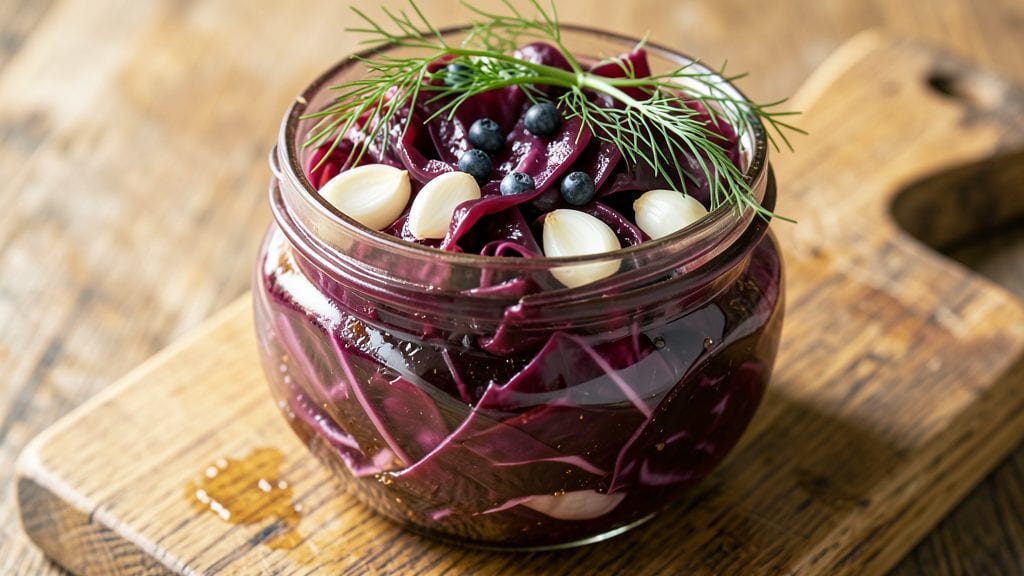
This lacto-fermented red cabbage recipe transforms this humble vegetable into a probiotic powerhouse with tangy, complex flavors—no special equipment needed beyond a bowl and some patience. ✨ The process is simple but precise: salt, time, and proper conditions create that signature crunch and tang, packed with gut-friendly bacteria that store-bought versions lack.
This method uses a precise salt-to-cabbage ratio (2.5% by weight) to encourage beneficial bacteria while keeping the texture crisp. You'll need just 7 days at room temperature for full fermentation, with daily checks to ensure proper anaerobic conditions.
The result? A vibrant, crunchy side dish that's as nutritious as it is delicious.
What makes this recipe stand out is its versatility—use it as a standalone side, in sandwiches, or as a topping for roasted meats. The fermentation process enhances natural sweetness while developing deep, tangy notes that balance rich dishes beautifully. Safety is built in through proper salt levels and weight monitoring.
Once fermented, your cabbage will keep for months in the refrigerator, making it perfect for meal prep. We'll cover storage tips, troubleshooting common issues, and flavor variations like adding garlic or caraway seeds. Let's get started with this probiotic-packed recipe that's easier than you think.
Ingredients for lacto fermented red cabbage
Seven days of patience yields a probiotic-rich cabbage side with vibrant crunch and complex tang.
| Ingredient | Amount | Notes |
|---|---|---|
| Red Cabbage 🥬 | 1 ½ lb | Shredded, outer leaves removed |
| Non-Iodized Sea Salt 🧂 | 0.04 lb | Diamond Crystal preferred |
| Filtered Water 💧 | 1 cup | Chlorine-free preferred |
| Fresh Dill 🌿 | ¼ cup | Chopped, stems removed |
| Garlic Cloves 🧄 | 4 cloves | Peeled, thinly sliced |
| Juniper Berries 🌲 | ½ tsp | Crushed lightly |
| Black Peppercorns 🌶️ | ½ tsp | Crushed lightly |
| Caraway Seeds 🌾 | ½ tsp | Toasted for depth |
| Apple Cider Vinegar 🍏 | 1 tbsp | Raw, unfiltered preferred |
| Organic Mustard Seeds 🌱 | ½ tsp | Lightly toasted |
| Bay Leaves 🍃 | 1 whole | Fresh preferred |
The red cabbage should be firm and vibrant—avoid any with yellowing leaves or soft spots. Local farmers markets often carry fresher heads than grocery stores, especially in late summer and fall. For the salt, Diamond Crystal kosher salt is ideal due to its fine grain, which dissolves evenly and maintains proper fermentation conditions. If using iodized salt, reduce by 20% to prevent off-flavors. The filtered water must be chlorine-free—boil and cool tap water if necessary. For an authentic touch, source juniper berries and caraway seeds from specialty spice shops like Penzeys or bulk bins at natural food markets.
No fresh dill? Dried dill at one-third the amount works, but fresh imparts superior aroma. Substitute fennel seeds for caraway if unavailable, though the flavor profile shifts slightly. For a milder ferment, reduce salt to 2% by weight (0.03 lb per 1.5 lb cabbage). The apple cider vinegar acts as a natural preservative—ensure it's raw and unfiltered for maximum probiotic benefits. If you prefer a sweeter ferment, add 1 tbsp maple syrup to the brine. For those avoiding mustard seeds, 1 tsp ground coriander provides a similar earthy note without the sharpness.
Store the fermented cabbage in an airtight glass container submerged under its brine, leaving 1-inch headspace. It will keep for 3-6 months in the refrigerator, developing deeper flavor over time. For best texture, consume within 6 weeks. If mold appears on the surface, simply skim it off—the fermentation beneath remains safe. Portion into smaller containers for easy meal prep, or freeze for up to 3 months in airtight bags. The flavor improves with age, making it perfect for holiday meal prep.
Why You'll Love This Recipe
- No-Chop Hassle: I swear by this method—just quarter the cabbage, no julienne or shredding. The thick wedges stay crisp while fermenting, and honestly? That’s half the battle won before you even add the salt.
- Tangy Crunch Bomb: The garlic and dill turn this into something ridiculously good—bright, herby, with just enough funk to make it unforgettable. That first bite? Pure satisfaction after a week in the jar.
- Effortless Side Dish: Slap it on sandwiches, toss it in grain bowls, or serve it chilled with roasted meats. Between us, it’s the one thing I always keep stocked for lazy nights and last-minute gatherings.
- Zero-Waste Pantry Hero: A single head lasts weeks, and the cost? Pennies. No fancy ingredients, no food waste—just pure, probiotic-packed flavor that gets better over time. My budget and my gut thank me every time.
Step-by-step instructions for lacto-fermented red cabbage
Precision timing and technique create probiotic-rich crunch—here's how to perfect it.
👨🍳 Step 1: Prepare the Cabbage and Salt Mixture
Begin by removing the outer leaves from the 1.5 lb red cabbage and quarter it lengthwise. Using a sharp knife, slice each quarter into thin strips—about ¼-inch wide. Place the shredded cabbage in a large mixing bowl and sprinkle evenly with the 0.0375 lb non-iodized sea salt. Massage the salt into the cabbage with your hands for 5-7 minutes until it releases about ½ cup liquid and becomes pliable. This step is critical for proper fermentation—you'll know it's ready when the cabbage feels tender and slightly sticky.
While massaging, work in batches if needed to ensure even distribution of salt. The goal is to create an anaerobic environment for beneficial bacteria to thrive. If you're using Diamond Crystal salt (which is finer), you may need to massage slightly longer as it dissolves more quickly than kosher salt. This preparation phase typically yields about 1 cup of liquid, which is perfect for our fermentation process.
🍳 Step 2: Toast and Layer the Aromatics
In a dry skillet over medium heat, toast the 0.5 tsp caraway seeds and 0.5 tsp organic mustard seeds for 1-2 minutes until fragrant and lightly golden. Immediately transfer to a small bowl to cool. In the same skillet, lightly crush the 0.5 tsp juniper berries and 0.5 tsp black peppercorns with the back of a spoon—just enough to break them open without pulverizing completely. Set aside.
Add the 4 peeled, thinly sliced garlic cloves and 1 whole bay leaf to the skillet and toast for 30 seconds until the garlic turns golden around the edges. Remove from heat and let cool for 2 minutes. Chop the 0.25 cup fresh dill, removing stems first. This aromatic blend will infuse your fermented cabbage with complex, earthy depth that pairs beautifully with the tangy fermentation flavors.
🥘 Step 3: Assemble and Pack the Fermentation Jar
Transfer the salted cabbage to a 1-quart fermentation jar, pressing down gently to remove air pockets. Create a layer by sprinkling half of the toasted spices, half the chopped dill, and half of the 1 tbsp apple cider vinegar over the cabbage. Repeat with the remaining ingredients, finishing with the vinegar. The vinegar helps lower the pH slightly, creating a more acidic environment that preserves color and flavor while still allowing beneficial bacteria to proliferate.
Pack the cabbage firmly but not too tightly—you want some space at the top for liquid expansion. The cabbage should be submerged under its own juices by at least 1 inch. If needed, add a small fermentation weight or a clean cabbage leaf to keep everything submerged. Leave about 1 inch of headspace at the top of the jar to prevent overflow during fermentation.
⏰ Step 4: Ferment at Room Temperature
Cover the jar loosely with a lid or fermentation lid (if using) and let it ferment at room temperature (68-72°F) for 5-7 days. Check daily for bubbles and liquid expansion—this indicates active fermentation. You'll notice the cabbage softening slightly and developing a pleasant, tangy aroma within the first 24 hours. The ideal fermentation temperature range is crucial; temperatures below 65°F slow fermentation, while above 75°F can produce off-flavors.
After 3 days, taste a small piece—it should be tangy but still crisp. If you prefer a milder flavor, ferment for 5 days. For a more intensely sour profile, extend to 7 days. The cabbage is ready when it reaches your desired level of tanginess and maintains its crisp texture. During this time, you may see some liquid overflow, so it's best to place the jar on a tray or in a bowl to catch any spills.
🔪 Step 5: Store and Enjoy
Once fermented to your liking, transfer the cabbage to clean airtight jars, leaving ½-inch headspace. Press the cabbage down gently to remove any remaining air bubbles. Store in the refrigerator where it will continue fermenting slowly, developing deeper flavor over time. The cabbage will keep for 6-12 months in the fridge, with flavor intensifying as it ages. For best results, consume within 3 months for peak freshness and crunch.
When serving, scoop directly from the jar—no reheating needed. This fermented cabbage makes an excellent side dish for roasted meats, pairs beautifully with hearty soups, or serves as a probiotic-rich topping for sandwiches. The complex spice blend creates a unique flavor profile that sets it apart from traditional sauerkraut. Remember, the longer it ferments, the more tangy and complex the flavor becomes—so don't be afraid to experiment with different fermentation times to suit your taste preferences.
Pro Tips For Making Lacto Fermented Red Cabbage
- Shred Cabbage Thin: DESCRIPTION: I learned this the hard way—thick shreds ferment unevenly, leaving you with a mushy center and crispy edges. Aim for strips about 1/8-inch thick; a mandoline makes this faster, but a sharp knife works if you take your time.
- Salt Before Packing: DESCRIPTION: Don’t just sprinkle salt on top—massage it into the cabbage leaves like you’re kneading dough. This ensures every layer gets the right brine exposure, and the garlic/dill won’t sink to the bottom like lazy sediment.
- Use Filtered Water Only: DESCRIPTION: Chlorine in tap water kills the good bacteria that ferment the cabbage. If filtered water isn’t an option, let tap water sit uncovered for 24 hours to off-gas the chlorine—yes, it’s annoying, but your ferment will thank you.
- Press Harder Than You Think: DESCRIPTION: The first day, your jar might look half-full after packing. That’s normal—cabbage releases water as it ferments. Press down until liquid covers everything by day 2, or you’ll end up with a dry, sad top layer. (Your future self will thank you.)
Health benefits of lacto fermented red cabbage
Gut Health Boost
This fermented red cabbage is a probiotic powerhouse, teeming with lactic acid bacteria that support digestive health and gut microbiome balance. Just 1 cup provides 10-100 billion CFU (colony-forming units), comparable to high-quality probiotic supplements.
Regular consumption helps maintain healthy gut flora, which is linked to improved immunity and reduced inflammation. 💪
Vitamin C Preservation
Unlike fresh cabbage that loses nutrients over time, fermentation preserves and enhances vitamin C content. A 1-cup serving delivers 50% of your daily needs, supporting collagen production and immune function. The fermentation process also increases bioavailability, meaning your body absorbs more of this essential nutrient than from raw cabbage.
Antioxidant Powerhouse
Fermented red cabbage contains anthocyanins (the pigments that give it its vibrant color) which act as potent antioxidants. These compounds help combat oxidative stress and may reduce the risk of chronic diseases. The fermentation process actually increases antioxidant levels by breaking down cell walls and making nutrients more accessible.
Digestive Aid
The natural enzymes and fiber in fermented cabbage act as a gentle digestive aid, promoting regularity and reducing bloating. The prebiotic fibers feed beneficial gut bacteria, creating a synergistic effect with the probiotics.
I've noticed my digestion improves significantly when I include fermented foods like this in my meals several times a week.
Low-Calorie Nutrition
With only 50 calories per cup, this fermented cabbage provides high nutritional value with minimal calories. It's an excellent choice for weight management while still delivering essential vitamins, minerals, and probiotics. The fiber content also helps you feel full longer, making it a great addition to balanced meals.
Blood Sugar Support
Studies suggest fermented vegetables like this cabbage may help stabilize blood sugar levels due to their low glycemic index and beneficial bacteria. The probiotics may also improve insulin sensitivity over time.
This makes it an excellent choice for those managing blood sugar or at risk for type 2 diabetes when included as part of a balanced diet.
Nutrition facts
Frequently asked questions
Can I use green cabbage instead of red?
Technically yes, but the flavor and color will differ significantly. Red cabbage's natural sugars create deeper fermentation flavors, while green cabbage produces a milder, paler result. For best results, stick with red cabbage—it's worth the difference in flavor complexity. If you must use green, add an extra 1 tsp of caraway seeds to boost flavor depth.
How do I know when my fermented cabbage is ready?
Your cabbage is ready when it's tangy but still crisp (after 5-7 days). Look for these signs: bubbles in the liquid, a pleasant sour aroma, and cabbage pieces that float slightly. Taste-test after 3 days—if it's too mild, ferment 2 more days. Over-fermenting beyond 7 days can make it too soft and sour.
What should I do if mold appears on top?
Mold on the surface is normal and harmless if the cabbage stays submerged. Simply skim it off daily with a clean spoon—never stir the jar. The fermentation below remains safe as long as the cabbage stays under liquid. If mold reaches the cabbage, discard that batch. Always use 1-inch headspace to prevent mold growth.
Can I make this recipe without a fermentation weight?
Yes! Use a clean cabbage leaf as a natural weight. Place it on top of the cabbage strips, then press down gently to keep everything submerged. Alternatively, use a small plate or glass that fits inside your jar. Just ensure the cabbage stays fully submerged under its brine—this prevents mold and ensures proper fermentation.
How can I adjust the spice level for sensitive stomachs?
For milder flavor, reduce the caraway and mustard seeds to ¼ tsp each and omit the juniper berries. You can also ferment for only 4-5 days instead of 7. The garlic and dill can stay—these add flavor without heat. For extra mildness, rinse the fermented cabbage briefly before serving to remove some of the tangy brine.