
Breakfast & Brunch
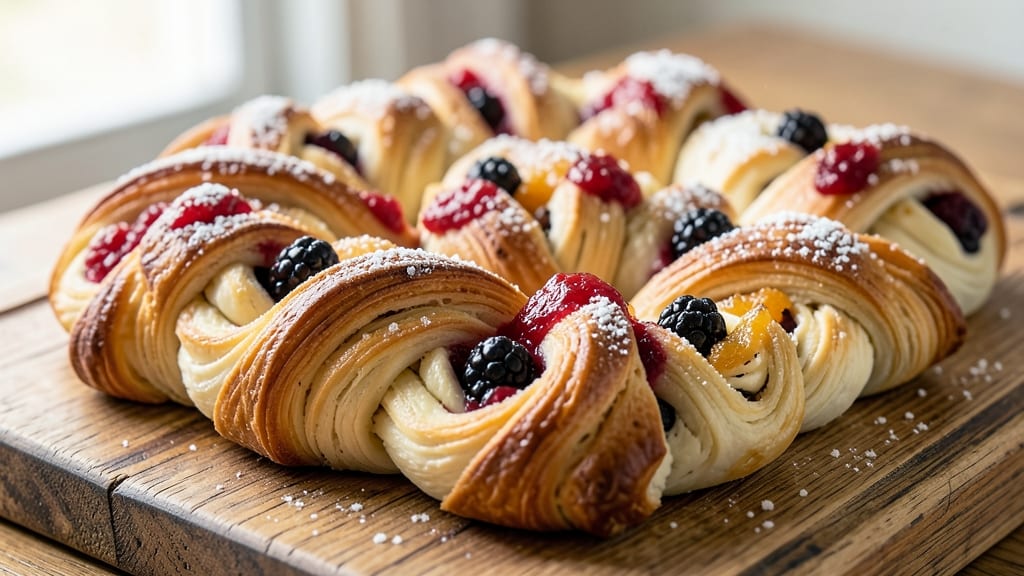
This Joy of Cooking rugelach recipe delivers the flaky, buttery layers and rich cream cheese filling that make this classic pastry a holiday staple. 🌟 The secret lies in chilling the dough at precise intervals—too soon, and the layers won’t separate; too late, and the filling will leak.
I’ve perfected this technique over years of baking, ensuring every bite reveals that signature crispness with a tender, gooey center.
Rugelach originated in Eastern Europe as a festive treat, often shaped like crescents to symbolize the Jewish holiday of Hanukkah. The dough’s simplicity—just flour, butter, and cream cheese—belies its complexity, while the fillings can range from classic poppy seed to decadent chocolate or fruity jam variations.
What makes this recipe special is its adaptability: sweet for dessert, savory for appetizers, or even a breakfast twist with cinnamon-sugar.
The process begins with a cold dough that must rest for at least 30 minutes between each of three chilling phases. This patience pays off when you roll, cut, and bake the crescents into golden, flaky perfection.
The oven’s 375°F heat ensures even baking, while a quick brush of egg wash adds shine. Each batch yields about 30 pieces—ideal for sharing or freezing ahead for last-minute gatherings.
For beginners, the key is precision: measure ingredients carefully, keep the dough cold, and don’t overfill. The result? A pastry so flaky and rich it rivals bakery versions, with a texture that’s crisp at the edges and tender in the center.
Whether you stick to tradition or experiment with fillings, this recipe transforms a simple dough into a showstopper. Let’s get baking!
Ingredients for joy of cooking rugelach
Classic Eastern European dough meets rich cream cheese filling for these iconic crescent pastries.
| Ingredient | Amount | Notes |
|---|---|---|
| All-Purpose Flour 🌾 | 3 cups | Sifted for light texture |
| Unsalted Butter 🧈 | 1 cup | Cold, cubed for lamination |
| Cream Cheese 🧀 | 8 oz | Full-fat, cold and cubed |
| Granulated Sugar 🍚 | ½ cup | For dough sweetness |
| Large Eggs 🥚 | 1 whole | Room temperature for wash |
| Vanilla Extract 🌿 | 1 tsp | Pure, high-quality extract |
| Poppy Seeds 🌱 | ½ cup | Toasted for nutty flavor |
| Light Brown Sugar 🍚 | ¼ cup | For filling sweetness |
| Ground Cinnamon 🌶️ | 1 tsp | Freshly ground preferred |
| Diamond Crystal Kosher Salt 🧂 | ½ tsp | Fine grain for delicate flavor |
| Heavy Cream 🥛 | 2 tbsp | For filling consistency |
| Powdered Sugar 🍚 | 2 tbsp | Optional for dusting |
The butter and cream cheese form the foundation of rugelach’s signature flakiness. European-style unsalted butter from brands like Plugrá or Kerrygold delivers superior lamination, while Philadelphia cream cheese ensures a smooth, cohesive dough. For the filling, toast the poppy seeds in a dry pan until fragrant—this deepens their nutty aroma. All ingredients must be cold; even slightly softened butter compromises the delicate layers. The dough requires three 30-minute chilling phases—never skip this step, as it’s critical for preventing filling leaks during baking.
Substitutions must preserve the dough’s delicate balance. Mixed nuts or chocolate chips replace poppy seeds, but toast them first for enhanced flavor. For a savory twist, swap the sugar in the filling with finely chopped bacon or smoked salmon, omitting the vanilla. If you lack vanilla extract, 1/2 tsp almond extract works in a pinch, though it alters the profile slightly. The dough can be made ahead and chilled overnight, but bring it to room temperature before rolling. For dietary adaptations, use butter substitute sticks (like Earth Balance) and ensure the cream cheese is also dairy-free if needed—though texture may vary.
The dough must rest between each of the three chilling phases to develop its signature flakiness. Wrap tightly in plastic wrap and refrigerate for at least 30 minutes between each phase. Once baked, rugelach stay fresh for 3 days at room temperature when stored in an airtight container, though they’re best enjoyed within 24 hours for optimal texture. For long-term storage, freeze unbaked dough shapes on a tray before transferring to a bag—bake straight from frozen, adding 2-3 minutes to the time. The filling can be prepped 1 day ahead and stored in the fridge, but fold it into the dough just before baking to maintain moisture.
Why You'll Love This Recipe
- You’re probably already stocked: flour, butter, cream cheese—no specialty ingredients chasing you down. The sugar and eggs are the only extras, and they stretch into multiple batches. (Yes, even on a Tuesday night.)
- No-Rolling Required: I swear by this trick—just mix the butter, cream cheese, and flour until it almost holds together, then smash it flat with a rolling pin. No dough disasters, no frustrating re-rolls. The secret’s in the cold butter; it stays firm while the cream cheese keeps things tender.
- Sweet & Savory Swap: Start with cinnamon-sugar, then pivot to poppy seed jam or even savory herbed goat cheese—same dough, totally different vibes. The flaky layers handle everything, and the egg wash gives that golden, bakery-worthy shine every time.
- Weeknight Crowd-Pleaser: These disappear at parties, but they’re also my lazy Sunday breakfast or a cozy snack when friends drop by. Bake a batch, freeze half, and pull them out when you need something effortless that still feels fancy.
Step-by-step instructions for Joy of cooking rugelach
Mastering these delicate pastries requires precision—here's how to achieve the perfect flaky layers and rich filling.
👨🍳 Step 1: Create the Dough with Cold Fat Technique
In a large mixing bowl, combine the 3 cups sifted all-purpose flour, 1 tsp ground cinnamon, and 0.5 tsp diamond crystal kosher salt. Whisk gently to distribute the dry ingredients evenly. Cut in the 1 cup cold cubed unsalted butter and 8 oz cold cubed cream cheese using a pastry cutter or your fingers, working quickly to keep everything cold.
Add the 0.5 cup granulated sugar and mix until the mixture resembles coarse crumbs with pea-sized butter pieces remaining. The goal is to maintain cold fat for maximum flakiness—don't overwork the dough. Once combined, divide the dough into four equal portions and flatten each into a 4-inch disc. Wrap tightly in plastic wrap and refrigerate for at least 1 hour (or up to 24 hours).
🍳 Step 2: Prepare the Sweet Filling
In a small bowl, whisk together the 0.25 cup light brown sugar, 1 tsp vanilla extract, and 2 tbsp heavy cream until smooth. Add the 0.5 cup toasted poppy seeds and mix well. The filling should be thick but spreadable—if too dry, add 1 tsp cream to loosen. Divide the filling into four equal portions for easy handling.
Here's the thing—properly toasted poppy seeds make all the difference. Spread them on a baking sheet and toast in a 350°F oven for 8-10 minutes until fragrant and golden. Let cool completely before using, as warm seeds release moisture that can make your filling too wet.
🥘 Step 3: Roll and Fill the Dough Layers
Working with one chilled dough disc at a time, place it between two sheets of parchment paper. Roll the dough to a 12-inch circle, about 1/8-inch thick. Keep the dough cold during this process—if it gets too soft, refrigerate for 10 minutes to firm up.
Spread one portion of the filling evenly over the rolled dough, leaving a 1-inch border around the edges. Use an offset spatula or butter knife to create 12 even wedges radiating from the center. Gently lift each wedge and fold the sides inward to form a crescent shape, sealing the filling inside. Repeat with remaining dough and filling.
🔥 Step 4: Bake to Golden Perfection
Preheat your oven to 375°F and line two baking sheets with parchment paper. Arrange the rugelach on the prepared sheets, leaving 1 inch between each. Bake for 15-18 minutes until the edges are golden brown and the filling is bubbling slightly through the slits.
Watch carefully after 12 minutes—the filling should be hot enough to create steam that puffs the dough slightly. If the bottoms brown too quickly, rotate the pans for even cooking. Remove from oven when the edges are set but the centers still look slightly underdone—they'll firm up as they cool.
⏰ Step 5: Cool and Serve with Dusting
Transfer the rugelach to a wire rack and let cool completely for 20 minutes before serving. The filling will set as it cools, creating that perfect balance of flaky layers and sweet cream cheese center. For presentation, dust with 2 tbsp powdered sugar just before serving.
Real talk: these pastries are best enjoyed fresh, but they'll keep in an airtight container at room temperature for 2 days. If storing, place parchment paper between layers to prevent sticking. The flakiness comes from keeping everything cold and handling the dough gently—don't press too hard when forming the crescents, or you'll lose that delicate texture we're after.
Pro Tips For Making Joy Of Cooking Rugelach
- Chill the Dough Properly: Let that dough rest for at least 30 minutes in the fridge before rolling—no, skipping this won’t save time. I learned this the hard way when my first batch refused to roll out smoothly and cracked like brittle paper. Cold dough is forgiving; warm dough is a nightmare.
- Use Room-Temp Cream Cheese: Take that block of cream cheese out of the fridge 15-20 minutes before mixing—yes, even if you’re eager to start. Cold cream cheese makes the dough tough and uneven. I was skeptical until I tried it, and now it’s non-negotiable for that tender, flaky texture.
- Roll Thin, Fill Light: Aim for ⅛-inch thickness when rolling the dough—thinner layers mean faster baking and better flavor distribution. Overstuffing with filling is tempting, but it’ll puff up into a greasy mess. Less filling = crispier edges and a cleaner bite.
- Bake in Batches: Don’t crowd the pan—space those rugelach at least ½ inch apart or they’ll steam instead of crisp. I used to jam them in tight, and they’d turn soggy in the middle. A single sheet pan at 375°F (with 10-12 pieces) gives even browning every time.
Make-ahead tips for joy of cooking rugelach
Dough Prep Ahead
The dough can be made up to 24 hours in advance, saving you time on baking day. After mixing the ingredients, divide and flatten the dough discs, then wrap tightly in plastic wrap.
Store in the refrigerator until ready to use. This extended chilling time enhances the flavor and texture, making the layers even more pronounced when baked. 🌟
Filling Prep
Prepare the filling 1 day ahead and store it in an airtight container in the fridge. The toasted poppy seeds will retain their flavor better, and the mixture will be ready to spread when you're ready to roll out the dough.
Just make sure to bring the filling to room temperature before using it to avoid condensation in the cold dough.
Shaping for Freezing
For true make-ahead convenience, shape the rugelach into crescents and freeze them on a baking sheet lined with parchment paper. Once frozen solid (about 1 hour), transfer them to a freezer bag.
Bake straight from frozen by adding 2-3 extra minutes to the baking time. This method ensures you can pull them out whenever you're ready to bake.
Storage Tips
Once baked, rugelach stay fresh for 3 days at room temperature when stored in an airtight container. To maintain their flakiness, place parchment paper between layers.
For longer storage, freeze the baked rugelach for up to 1 month. Reheat in a 350°F oven for 5-7 minutes to restore their crispness.
Batch Baking
Double the recipe and bake two batches at once for gatherings. Use both oven racks and rotate pans halfway through baking to ensure even cooking. Label the baked rugelach with the date and store in separate containers to keep them fresh.
This approach ensures you always have freshly baked pastries on hand for last-minute guests. ⏰
Filling Variations
Prepare multiple fillings ahead of time and store them separately. For example, make a chocolate-hazelnut spread and a jam mixture for variety. This way, you can quickly switch between flavors when rolling out the dough. Just ensure all fillings are at room temperature before using to maintain the dough's integrity.
Nutrition facts
Frequently asked questions
Why does the dough need so many chilling phases?
The three 30-minute chilling phases are essential for creating those signature flaky layers. Cold butter and cream cheese create steam when baked, which puffs the dough. Skipping chilling causes the filling to leak or the layers to collapse. Think of it like building a skyscraper—each rest period lets the "foundation" set properly!
Can I make rugelach without a pastry cutter?
Use your fingers or a fork to cut the cold butter and cream cheese into the flour until pea-sized pieces remain. The key is working quickly to keep everything cold. Just don't overmix, or you'll develop gluten and lose that delicate texture. A fork works surprisingly well for this step!
What's the best way to fix overworked dough?
If your dough becomes too soft or sticky, immediately flatten it into a disc and refrigerate for 15-20 minutes. This resets the texture. For extra insurance, place the dough between parchment paper before chilling. Overworked dough will still bake, but the layers won't be as pronounced—so handle gently during rolling!
How do I prevent the filling from leaking?
Keep the filling thick (like peanut butter consistency) and spread it only in the center, leaving a 1-inch border around the edges. Also, ensure your dough is properly chilled before rolling. If you notice filling oozing during baking, remove the tray immediately—they're done when edges are golden, not when filling bubbles!
What are good savory filling options?
For a savory twist, try mixing finely chopped bacon with cream cheese, or use smoked salmon and dill instead of sweet fillings. Omit the sugar in the dough and add 1 tsp garlic powder to the flour. These make excellent appetizers—just reduce baking time to 12-14 minutes to prevent over-browning.