
Main Courses
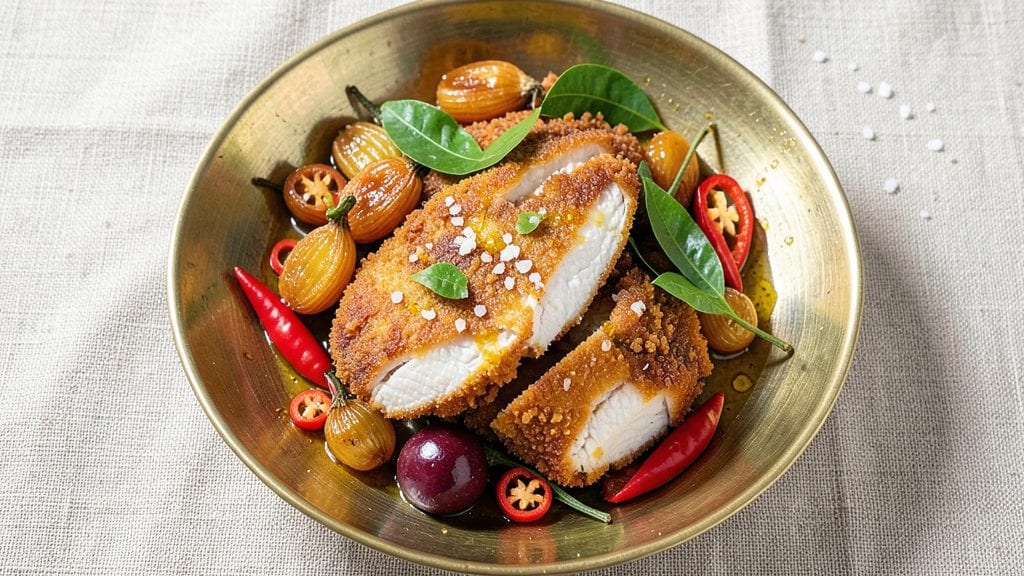
This Goan fish fry recipe delivers the crispy, golden bites of coastal India in just 30 minutes, using traditional spices and a secret double-frying technique.
The marriage of coconut, curry leaves, and mustard seeds creates a flavor profile that’s both bold and comforting—exactly what makes this dish a staple in Goan households. I’ve perfected the marinade and batter to ensure every piece stays tender inside while achieving that coveted crunch outside.
The key to authentic Goan fish fry lies in the preparation: a tangy marinade with kokum and turmeric tenderizes the fish while building flavor, and a light coconut-curry batter adds texture without overwhelming the natural taste.
Double-frying is non-negotiable—it transforms the fish into crispy, caramelized bites that hold up even when served with spicy accompaniments. This method might sound advanced, but once you try it, you’ll never go back to single-frying.
By the time you’re done, you’ll have a plate of golden, crispy fish that’s impossible to resist, paired perfectly with Goan rice or a cooling cucumber raita. The aroma alone—warm spices, coconut, and the sizzle of frying—will have everyone asking for seconds.
This recipe isn’t just a dish; it’s a taste of home, and it comes together faster than you’d expect.
Serve immediately with traditional sides like Goan curry or steamed rice to complete the meal. The leftovers? They’re rare, but if you have any, reheat gently in a pan to restore that crispy texture. Let’s get cooking—this is the kind of recipe that turns weeknights into a celebration.
Ingredients for goan fish fry
Fourteen ingredients transform simple fish into Goan-inspired crispy perfection in 30 minutes.
| Ingredient | Amount | Notes |
|---|---|---|
| White Fish Fillets 🐟 | 1 ½ lb | Firm texture preferred (cod, snapper, or pomfret) |
| Fresh Curry Leaves 🌿 | ¼ cup | Packed, stems removed |
| Shallots 🧅 | 3 whole | Finely minced, about 0.25 cup |
| Green Chilies 🌶️ | 2 whole | Slit lengthwise, seeds removed |
| Kokum 🍇 | 2 pieces | Dried, soaked in 1 cup warm water |
| Turmeric Powder 🌿 | ½ tsp | Freshly ground preferred |
| Mustard Seeds 🌱 | 1 tbsp | Whole, yellow variety |
| Coconut Flakes 🥥 | ½ cup | Unsweetened, toasted lightly |
| All-Purpose Flour 🌾 | ½ cup | Sifted for light batter |
| Baking Soda 🧪 | ½ tsp | Essential for crispiness |
| Salt 🧂 | 1 tsp | Diamond Crystal preferred |
| Vegetable Oil 🫒 | 3 cups | High smoke point for frying |
| Lemon Juice 🍋 | 1 tbsp | Freshly squeezed |
| Asafoetida (Hing) 🌿 | ¼ tsp | Pinch for aroma |
The fish is non-negotiable—cod, snapper, or pomfret hold up best to double-frying. Look for fillets with firm texture and minimal bones at specialty seafood markets like Whole Foods or Trader Joe's. If using frozen, thaw overnight in the fridge—never under running water. Curry leaves are the soul of this dish; find them in the international aisle or at an Indian grocery like Patel Brothers. Toast the mustard seeds in oil until they pop—this releases their aroma and prevents bitterness. Kokum can be tricky to find; if unavailable, substitute 1 tbsp lemon juice for tanginess, though it won’t replicate kokum’s unique depth.
No fresh curry leaves? Dried curry powder at half the amount works, but fresh is ideal. Asafoetida is optional but adds that signature Goan aroma—substitute with 1/4 tsp garlic powder if unavailable. For the batter, baking soda is critical for crispiness; don’t skip it. The coconut flakes should be toasted lightly in a dry pan until fragrant—this enhances their flavor without burning. If you can’t find unsweetened flakes, grated coconut works, but taste first. Vegetable oil is best for frying; canola or sunflower oil are fine alternatives. The shallots should be finely minced—almost paste-like—to ensure even flavor distribution. For heat control, remove green chili seeds entirely if you prefer mild flavor.
This dish is best served immediately, but if you must store leftovers, place them on a wire rack to maintain crispiness. Reheat in a 350°F oven for 5-7 minutes—microwaving turns the batter soggy. The batter components (flour, baking soda, salt) can be mixed ahead and stored in an airtight container for up to 3 days. The marinade ingredients (except kokum) keep in the fridge for 5 days. For a crowd, double the batter and fry in batches—don’t overcrowd the pan, or the oil temperature drops. The fish should sizzle immediately upon hitting the oil; if not, your oil isn’t hot enough.
Why You'll Love This Recipe
- I’ll be real: I don’t always have fresh kokum, but the dried version works just as well if you soak it first. Shallots? Swap for onions if needed. The curry leaves are non-negotiable for that aroma, but the rest? This recipe doesn’t judge. It’s the kind of dish that turns "what’s for dinner?" into "oh, we’re having that?" without breaking the bank.
- No Chopping Chaos: I swear by this recipe because it’s actually minimal prep—just slice the shallots thin (or buy pre-chopped), crush the green chilies with your palm, and toss in the curry leaves whole. The fish? One quick pat of flour and it’s ready for the fry. Honestly, I’ve made it after work when I was too tired to even open a jar.
- Tangy Crisp Magic: That kokum soak? Chef’s kiss. The fish absorbs just enough sour punch to balance the shallots’ sweetness and the green chilies’ heat, while the crust stays golden and shatteringly crisp. It’s not just flavor—it’s that perfect contrast where every bite feels like a little vacation.
- Leftover Reinvention: Between us, this is my secret weapon for lazy days. Fry a big batch, store it in the fridge, and reheat it in a pan with a splash of water—suddenly, you’ve got a quick curry base. Or toss cold pieces into a salad for a protein boost. My kids beg for it even when it’s not "fresh."
Step-by-step instructions for Goan fish fry
Mastering this crispy coconut-curry coating requires precision in timing and technique.
Prepare the Fish and Batter Mixture
Pat the 1.5 lb white fish fillets completely dry with paper towels—this is critical for achieving that signature crisp. Cut each fillet into 1-inch thick pieces, ensuring even thickness for consistent cooking. In a shallow bowl, whisk together the 0.5 cup all-purpose flour, 0.5 tsp baking soda, 1 tsp salt, and 0.25 tsp asafoetida (hing). The baking soda is non-negotiable—it reacts with the acidity in the batter to create that signature crispy texture.
In a separate bowl, combine the 0.5 cup toasted coconut flakes with 1 tbsp lemon juice. This pre-mix will form the aromatic base of your coating. The lemon juice prevents the coconut from clumping while adding a subtle tang that balances the richness of the fried fish.
Create the Curry-Coconut Coating
Heat 3 cups vegetable oil in a deep fryer or heavy-bottomed pot to 350°F—use a thermometer to monitor this precisely. While the oil heats, prepare the curry paste by blending the soaked 2 pieces kokum (drained and chopped), 0.25 cup fresh curry leaves, 3 minced shallots, 2 slit green chilies, 1 tbsp mustard seeds, 0.5 tsp turmeric powder, and 0.25 cup water into a smooth paste. This blend forms the aromatic backbone of the dish.
Once the oil reaches temperature, carefully dip each fish piece into the flour mixture, allowing excess to drip off, then coat thoroughly in the coconut-lemon mix. The batter should adhere lightly—don't overcrowd the bowl or the coating will become soggy. Work in batches if needed to maintain even coverage.
Fry to Golden Perfection
Fry the coated fish pieces in batches for 3-4 minutes per side until they turn a deep golden brown. The key here is patience—don't rush the cooking or the exterior won't develop that satisfying crunch. Use a slotted spoon to transfer the fish to a paper towel-lined plate, ensuring excess oil drains away. The fish should maintain its shape with a crisp exterior that shatters slightly when pressed.
While still hot, drizzle the blended curry paste over the fried fish and toss gently to distribute evenly. The residual heat from the fish will help the paste adhere without making it greasy. Serve immediately with lemon wedges to cut through the richness and enhance the curry's vibrant flavors.
Rest and Serve for Maximum Crispiness
Let the fish rest for 2-3 minutes before serving—this brief pause allows the coating to set slightly while keeping it crisp rather than soggy. The contrast between the crunchy exterior and tender fish is what makes this dish unforgettable. For an extra touch, garnish with additional toasted coconut flakes and a sprinkle of fresh curry leaves just before serving.
This method delivers restaurant-quality results at home, with a balance of textures and flavors that define Goan cuisine. The secret lies in the baking soda's chemical reaction during frying—it's what transforms a simple batter into something extraordinary.
Pro Tips For Making Goan Fish Fry
- PAT THE FISH DRY: I learned this the hard way—wet fish won’t crisp. Grab paper towels and press hard on both sides before frying. The extra 30 seconds saves you from soggy, greasy fillets that stick to the pan like glue.
- FRY IN BATCHES: Overcrowding drops the oil temperature fast, and your fish will steam instead of fry. Two fillets max per batch—yes, even if you’re impatient like me. The sizzle should sound like a movie trailer, not a sad fizz.
- SOAK KOKUM LONG: Skip the 10-minute soak, and you’ll taste the dry, chewy bits. Split the kokum, submerge in warm water for at least 20 minutes, then squeeze out every last drop. The tangy punch is worth the wait.
- TEMPER THE OIL: My grandmother swore by this, and she was right: heat the oil to medium-high (not smoking) before adding shallots. If you start low, the onions will sweat instead of caramelize, and your fry loses that sweet, nutty base. A quick sniff test—if it smells like perfume, it’s too hot.
Make-ahead tips for goan fish fry
Marinade Prep Ahead
Prep the marinade ingredients the night before to save 15 minutes of active time the next day. Soak the 2 pieces kokum in 1 cup warm water overnight—this softens them and extracts their tangy essence. Store the soaked kokum and water in an airtight container in the fridge.
The next morning, simply blend it with the other marinade components (0.25 cup curry leaves, 3 minced shallots, etc.) right before coating the fish. 🌱
Batter Components
The batter mix stays fresh for 3 days in an airtight container at room temperature. Combine the 0.5 cup flour, 0.5 tsp baking soda, 1 tsp salt, and 0.25 tsp asafoetida ahead of time.
When ready to fry, simply add the 0.5 cup toasted coconut flakes and 1 tbsp lemon juice—this keeps the coconut from clumping and maintains crispiness. I like to store the dry ingredients in a ziplock bag with a tight seal.
Double-Fry Technique
For make-ahead meals, fry the fish once at 350°F for 2 minutes per side, then let cool completely on a wire rack. Store in an airtight container for up to 2 days.
Reheat in a 375°F oven for 5-7 minutes to restore crispiness, then complete the double-fry by reheating in fresh oil at 375°F for 1-2 minutes per side. This two-step process ensures the fish stays tender while regaining its crunch. 🔥
Curry Paste Storage
Blend the curry paste ingredients (except water) into a smooth paste and store in a small airtight container in the fridge for up to 5 days. When ready to use, thin it with 0.25 cup water and reheat gently in a small pan.
This paste is the flavor foundation of the dish—don't skip storing it ahead to streamline cooking day. I like to label it clearly since it looks like a thick, greenish paste.
Serving Prep
Set out serving essentials the night before: warm Goan rice or appam in a covered dish, lemon wedges in a small bowl, and a plate of cucumber raita chilled in the fridge.
Preheat your serving tray so the fish stays warm while you plate. The aroma of the freshly fried fish with these sides creates an instant feast atmosphere—minimal effort, maximum impact. ✨
Batch Frying Tips
For larger gatherings, fry in two batches to maintain oil temperature. Keep the second batch of coated fish ready in a wire basket lined with paper towels while frying the first. The oil should sizzle immediately when fish touches—if it bubbles gently, your oil isn't hot enough.
Use a deep-fry thermometer to monitor at 350°F. This method ensures consistent crispiness even when frying multiple servings. 💡
Nutrition facts
Frequently asked questions
What type of fish works best for Goan fish fry?
Firm white fish like cod, snapper, or pomfret hold up best to double-frying. Look for fillets with minimal bones and a firm texture—these varieties stay tender inside while achieving that signature crispy exterior. Avoid delicate fish like tilapia, which can fall apart during frying.
Why does the recipe call for double-frying?
Double-frying creates the perfect texture: the first fry cooks the fish through while the second fry crisps the batter to golden perfection. The initial fry at 350°F ensures even cooking, while the second fry at 375°F locks in that irresistible crunch. This two-step method is key to authentic Goan restaurant-style results.
Can I make this recipe ahead of time?
Yes! Fry the fish once at 350°F for 2 minutes per side, then let it cool completely on a wire rack. Store in an airtight container for up to 2 days. Reheat in a 375°F oven for 5-7 minutes before completing the double-fry in fresh oil. This preserves both tenderness and crispiness.
What's the secret to crispy batter?
The baking soda is non-negotiable—it reacts with the lemon juice and coconut to create air pockets for maximum crunch. Keep your oil at 350°F and avoid overcrowding the fryer. Pat the fish bone-dry before coating, and work in batches to maintain even coverage.
What sides pair best with Goan fish fry?
Traditional pairings include Goan rice, appam (rice hoppers), or a cooling cucumber raita. The tangy flavors complement the richness of the fried fish perfectly. Serve with lemon wedges to cut through the coconut-curry coating and enhance the dish's vibrant flavors.