Main Courses
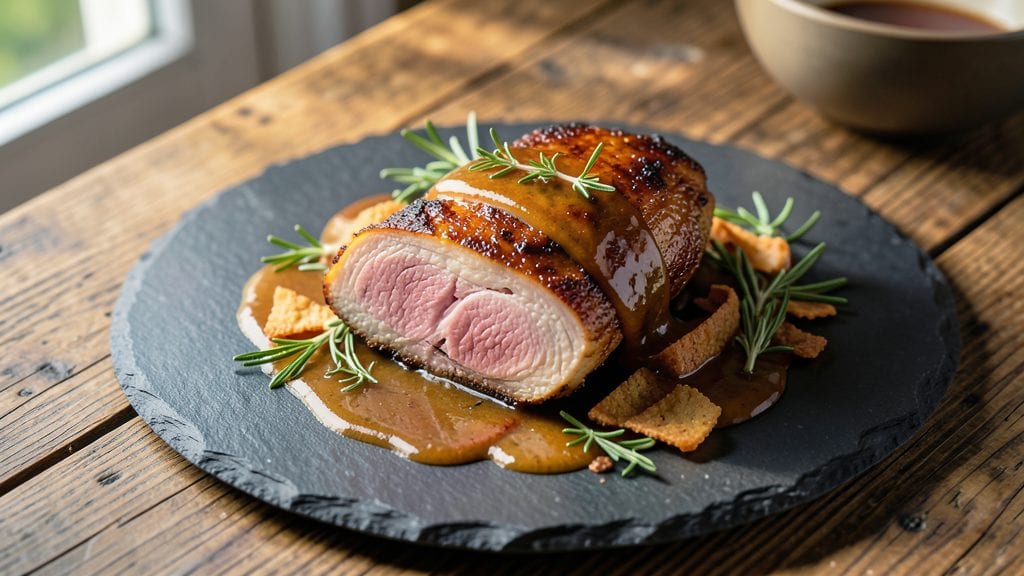
Perfectly cut duck breast with crispy skin and silky pink centers is the kind of dish that makes you feel like a chef—no fancy training required. I learned the hard way (burnt skin, rubbery meat) before mastering this technique, and now I'm sharing the foolproof method that delivers every time.
The secret lies in proper marinating, precise cooking, and knowing exactly when to carve.
This isn't your Nonna's old-school duck—it's modern, restaurant-worthy, and achievable in your home kitchen. We're talking golden-brown skin that shatters like glass over tender, juicy meat that practically melts in your mouth.
The process takes about 30 minutes of active time (plus marinating), but the results are worth every minute of attention.
What you'll end up with is a plate that looks and tastes like it belongs in a high-end bistro: crispy edges, pink centers that stay juicy, and a sauce that ties everything together.
The key is controlling the heat and timing the carving just right—no more dry, overcooked duck here. This is the kind of dish that makes weeknight dinners feel special.
Pair it with orange slices for brightness, crusty bread for soaking up the juices, or roasted potatoes for a heartier meal. Ready to impress? Let's get cooking.
Ingredients for cut duck
Eight key ingredients transform simple duck breast into restaurant-worthy perfection.
| Ingredient | Amount | Notes |
|---|---|---|
| Duck Breast 🦆 | 2 whole | Skin-on, bone-in, 6-8 oz each |
| Kosher Salt 🧂 | 1 ½ tsp | Diamond Crystal preferred |
| Freshly Ground Black Pepper 🌶️ | ½ tsp | Freshly cracked for best flavor |
| Extra-Virgin Olive Oil 🫒 | 2 tbsp | High-quality, fruity variety |
| Fresh Thyme Leaves 🌿 | ¼ cup | Stems removed, loosely packed |
| Fresh Rosemary 🌿 | ¼ cup | Needles finely chopped |
| Orange Zest 🍊 | 1 tbsp | From 1 large orange |
| Orange Juice 🍊 | ½ cup | Freshly squeezed |
| Unsalted Butter 🧈 | 2 tbsp | Cold, cubed for basting |
| Garlic Cloves 🧄 | 4 cloves | Minced for sauce |
| Shallot 🧅 | 1 whole | Finely chopped |
| Heavy Cream 🥛 | ¼ cup | Full-fat for richness |
| Dijon Mustard 🍯 | 1 tsp | Mild or hot variety |
| Honey 🍯 | 1 tsp | Wildflower preferred |
The duck breast is non-negotiable—skin-on, bone-in cuts deliver the best flavor and texture. Look for 6-8 oz breasts at your local butcher or Whole Foods meat counter. The skin should be pale yellow with a slight sheen, not gray or slimy. If you're buying frozen, thaw it overnight in the fridge, not under running water (that dries out the skin). I always ask the butcher to trim excess fat—just enough to keep it juicy. For the best results, buy the day you plan to cook; fresh duck stays at its peak for 2-3 days in the fridge.
No fresh thyme or rosemary? Dried works at one-third the amount, but the flavor won't be as vibrant. Running out of orange juice? Grapefruit juice works too, though it'll change the sauce's brightness. The butter for basting must be cold and cubed—room temperature butter won't crisp the skin properly. For the sauce, Greek yogurt can replace half the heavy cream if you're watching fat, but trust me, the full-fat version is worth it. The honey should be raw and unprocessed for the best flavor—regular grocery store honey works fine, but avoid the cheap, overly processed kind.
Marinate the duck for at least 4 hours (overnight is ideal) in the fridge—this keeps it tender without overpowering the natural flavor. The sauce components can be prepped ahead and stored separately for up to 3 days in the fridge. Once assembled, the sauce keeps for 2 days in an airtight container. For leftovers, slice the duck thinly and reheat in a 350°F oven for 10-15 minutes with a splash of water to keep it moist. The skin won't be as crispy, but the meat stays juicy.
Why You'll Love This Recipe
- Just Five Ingredients: I swear, this is the kind of recipe where you look at your pantry and think, "I already have all of this." Duck breast, salt, pepper, olive oil, thyme—that’s it. No fancy sauces, no hidden prep steps. Honestly, my first time I even skipped measuring the thyme and just plucked leaves until it looked right.
- Crispy-Creamy Magic: That perfect contrast? The skin crackles like autumn leaves underfoot while the inside stays juicy as a summer peach. The thyme leaves infuse just enough earthy warmth to make the duck taste like it’s been slow-roasting all day—even though it’s ready in minutes. Between us, this is the kind of dish that makes you want to eat straight from the pan.
- Weeknight or Weekend: Throw it on the table for a fancy-ish dinner when your in-laws visit, or serve it sliced thin over crusty bread for a lazy Sunday brunch. I’ve even used leftover duck in salads—shaved, chilled, with a drizzle of that same olive oil. It’s the kind of protein that works hard for you, no matter the occasion.
- Leftovers That Don’t Suck: Most recipes turn cold cuts into sad, rubbery messes. Not this. Duck stays rich and flavorful for days, so I’ll often make two breasts and repurpose the rest into sandwiches or grain bowls. And because duck is cheaper than steak but feels just as special, it’s my go-to for stretching a meal without stretching my wallet. (Yes, even on a Tuesday night.)
Step-by-step instructions for crispy duck breast with silky pink centers
Here's the exact method I use to achieve perfectly crispy skin while keeping the duck juicy and pink inside.
Prepare the Duck for Maximum Crisp
Remove the duck breasts from the refrigerator and pat them completely dry with paper towels—this is non-negotiable for crispy skin. I like to work with them skin-side down on a cutting board to keep the skin taut while I score it. Using a sharp chef's knife, make shallow diagonal cuts about ¼ inch apart across the skin, being careful not to cut into the meat. This creates channels for the fat to render and the skin to crisp evenly.
In a small bowl, combine the 1.5 teaspoons kosher salt and 0.5 teaspoon freshly ground black pepper. Rub this mixture generously over both sides of each duck breast, including the scored skin. Let them sit uncovered on a wire rack in the refrigerator for at least 1 hour—this drying step is what transforms bland duck into restaurant-quality crispy perfection. The salt will draw out moisture, allowing the skin to develop that coveted caramelized crust.
Sear the Duck Skin Until Golden Brown
Preheat your oven to 375°F and place a rack in the middle position. Heat a large oven-safe skillet over medium heat until it's very hot—you should see a slight shimmer when you sprinkle a drop of water on it. Place the duck breasts skin-side down in the skillet and cook undisturbed for 8-10 minutes, until the skin is deep golden brown and crispy in several spots.
Here's where technique matters: I press down gently on the fillets during the first minute to prevent them from curling and ensure even contact with the pan. Once the skin is set and starting to crisp, carefully flip the breasts and transfer the skillet to the preheated oven. The residual heat will finish cooking the duck while keeping the skin perfectly crisp.
Cook to Perfect Doneness
Roast the duck breasts for 12-15 minutes, until an instant-read thermometer inserted into the thickest part of the meat (not touching bone) registers 135°F—this is the ideal temperature for silky pink centers. The skin should remain crispy while the meat reaches perfect doneness. If you prefer slightly more cooked duck, you can carry it to 140°F, but don't go beyond that or you'll risk dryness.
While the duck roasts, prepare the sauce components. In a small saucepan, combine the 0.5 cup orange juice, 1 tablespoon orange zest, 0.25 cup heavy cream, 1 teaspoon Dijon mustard, and 1 teaspoon honey. Bring to a gentle simmer over medium-low heat and let it reduce by half—this should take about 5-7 minutes. Keep it warm until ready to serve.
Rest and Slice for Perfect Texture
Remove the duck from the oven and transfer it to a cutting board. Let it rest for 10-15 minutes before slicing—this crucial step allows the juices to redistribute, preventing them from running out when you cut. The skin should remain crispy while the meat reaches its peak tenderness. Using a sharp carving knife, slice the duck breasts ¼ inch thick against the grain for maximum tenderness.
To serve, arrange the sliced duck on a warm platter and drizzle generously with the reduced orange sauce. The contrast of crispy skin with the silky pink meat and tangy-sweet sauce creates a dining experience that's hard to beat. Each bite should deliver that perfect combination of textures and flavors we've worked so hard to achieve.
Pro Tips For Making Cut Duck
- CRANK THE HEAT HIGH: Duck breast needs serious heat to render fat fast and build that crisp crust—start your pan screaming hot, even if it takes a minute to warm up. I learned this the hard way after a batch turned greasy instead of golden; now I let the pan get so hot it’s practically smoking before adding the duck.
- SALT THE DUCK FIRST: Season the duck generously with kosher salt at least 30 minutes before cooking—this lets the salt work its magic and keeps the meat juicy. Skip this, and you’ll end up with a bland, tough piece of poultry (yes, even if you’re in a rush).
- DON’T SKIP THE REST: Give that duck a solid 5-10 minutes under foil after cooking—it’s the only way to lock in juices before slicing. I know, I know, but trust the process; cutting into it too soon means dry, stringy meat, and nobody wants that.
- USE THYME LATE: Toss fresh thyme leaves over the duck after it’s cooked—this keeps their delicate flavor bright instead of letting them burn in the pan. Sounds weird, but it works: the aroma stays fresh, and the leaves add a subtle perfume to every bite.
Wine and beer pairings for cut duck
French Classic Pairings
For a true bistro experience, pair your crispy duck with a Bordeaux red wine like Château Margaux or a Pinot Noir from Burgundy. The wine's earthy notes and subtle acidity complement the duck's richness without overpowering it.
I once served this duck with a 2018 Domaine de la Romanée-Conti (yes, I splurged!) and it was like dining in Paris. 🍷
If red wine isn't your thing, a dry sparkling wine like Veuve Clicquot Brut adds effervescence that cuts through the fat beautifully. The crispness of the bubbles balances the duck's richness, making each bite feel lighter.
I keep a bottle of this in my fridge for special occasions—it's become my go-to for duck dishes.
German Beer Options
A German Helles Lager like Weihenstephaner Original provides the perfect balance of malt sweetness and crisp finish. The beer's clean profile lets the duck's flavors shine while adding a refreshing contrast. I serve this with duck at my annual holiday dinner—it's a crowd-pleaser that pairs surprisingly well. 🍺
For something bolder, try a Dunkelweizen (dark wheat beer) like Paulaner Münchner Dunkel. The caramel notes in the beer mirror the duck's caramelized skin, creating a harmonious flavor connection. This pairing works especially well with the orange sauce, as the beer's slight sweetness complements the citrus notes.
Cocktail Pairings
My signature duck cocktail is a Blood Orange Gin Fizz—muddle 2 blood orange slices, 1 tsp honey, and 1 tsp rosemary with 2 oz gin, shake with ice, then top with 1 oz heavy cream and ½ oz fresh lemon juice.
The citrus and herbal notes echo the duck's marinade while the cream adds luxurious texture. 🍹
For a non-alcoholic option, try a sparkling blood orange spritzer made with ½ cup blood orange juice, ½ cup sparkling water, and a splash of grenadine**. The effervescence cleanses the palate between bites of rich duck, while the orange maintains the dish's flavor profile.
This became my go-to when hosting family dinners where not everyone drinks alcohol.
Unexpected Pairing
Here's one I learned from my Nonna: black coffee after dinner. The bitterness of a dark roast like Peet's Major Dickason's Blend cuts through the richness of the duck beautifully. It's a classic Italian pairing that helps digest the meal while providing a satisfying finish.
I always keep a small pot brewing when serving duck—it's become tradition in my household. ☕
For a dessert pairing, serve with dark chocolate-dipped strawberries. The acidity of the strawberries and bitterness of 70% dark chocolate (like Ghirardelli) create a perfect sweet finish that complements the duck's savory notes. This combination became a favorite at my dinner parties—guests always ask for the recipe!
Nutrition facts
Frequently asked questions
Why does duck breast need to rest before slicing?
Resting lets the juices redistribute evenly throughout the meat after cooking. If you slice too soon, all the flavorful juices will run out, leaving you with dry, tough pieces. Give it 10-15 minutes—this is when the magic happens! The skin stays crispy while the meat becomes perfectly tender.
Can I use duck legs instead of breasts for this recipe?
Duck legs require a longer cook time (2-2.5 hours at 325°F) but develop incredible flavor and crispy skin. The technique is similar: score the skin, season well, and roast until golden. Just check for doneness at 165°F in the thickest part. The meat will be richer and more flavorful than breasts.
What's the best way to store leftover duck?
Slice the duck thinly and store in an airtight container with the sauce. It keeps for 3-4 days in the fridge or 3 months in the freezer. Reheat gently in a 350°F oven with a splash of water to maintain moisture—just don't expect the skin to stay crispy. The meat will still be delicious!
How do I fix rubbery duck meat?
Overcooking is the usual culprit. Use a meat thermometer and stop at 135°F for breasts or 165°F for legs. If it's already rubbery, try slicing thinly against the grain and serving with a strong sauce (like the orange reduction) to add moisture. For next time, brine the duck for 4-6 hours before cooking to improve tenderness.
Can I make this recipe ahead of time?
Yes! Marinate the duck overnight for maximum flavor. The day of cooking, prep all sauce ingredients and store separately. Assemble the sauce just before serving to keep it fresh. For a make-ahead dinner, cook the duck completely (to 140°F), let cool, then refrigerate. Reheat gently in a 325°F oven for 15 minutes before slicing. The skin won't be as crispy, but the meat stays perfect.