
Desserts
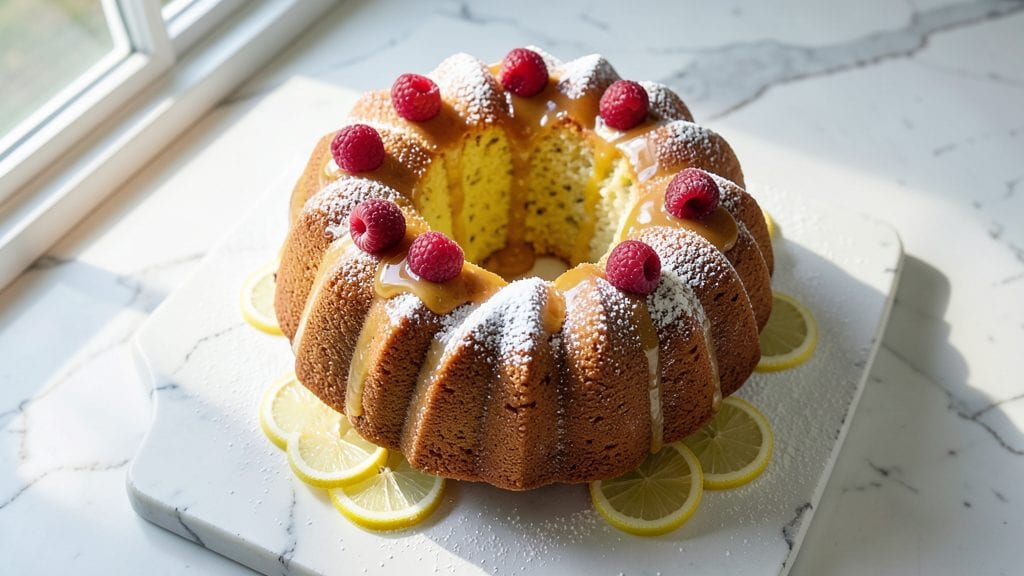
Betty Crocker's lemon Bundt cake delivers that perfect balance of bright citrus and tender crumb that makes every slice feel like a little burst of sunshine. The secret lies in the precise blend of leavening agents and fresh lemon zest that infuses every bite with zesty flavor—no artificial substitutes needed.
I've baked this recipe dozens of times, and the difference between a good Bundt cake and a great one comes down to proper pan preparation and baking times.
This recipe uses simple ingredients you likely already have in your pantry, yet achieves restaurant-quality results with just 30 minutes of active prep and 50 minutes in the oven.
The key to that signature moist texture is combining all-purpose flour with a precise ratio of baking powder and baking soda, while the lemon glaze soaks into every crumb for maximum flavor impact. Even beginners can achieve perfectly domed tops and crisp edges with this foolproof method.
What makes this Bundt cake truly special is how the bright lemon flavor shines through without overpowering the delicate cake texture. The glaze isn't just for show—it penetrates the layers, creating a moist, flavorful bite in every slice.
Whether you're serving it at a brunch gathering or enjoying a solo slice with coffee, this cake delivers that perfect balance of sweet and tangy that makes it a crowd-pleaser every time.
The beauty of this recipe is its versatility—serve it plain with fresh berries for a light dessert, or add a dollop of whipped cream for extra indulgence. The Bundt pan creates that iconic shape that makes any dessert feel special, and this version stays moist for days when stored properly.
Let's get started on creating your perfect lemon Bundt cake.
Ingredients for betty crocker lemon bundt cake
Pantry staples plus a few bright lemons—this is your ticket to sunshine in cake form.
| Ingredient | Amount | Notes |
|---|---|---|
| All-Purpose Flour 🌾 | 2 ½ cups | Sifted for light texture |
| Granulated Sugar 🍚 | 2 cups | White or light brown |
| Baking Powder 🧂 | 2 tsp | Double-acting preferred |
| Baking Soda 🧂 | ½ tsp | Freshly opened |
| Salt 🧂 | ½ tsp | Fine sea salt |
| Unsalted Butter 🧈 | 1 cup | Room temperature, cubed |
| Fresh Lemon Juice 🍋 | ¾ cup | From 3-4 medium lemons |
| Fresh Lemon Zest 🍋 | 2 tbsp | Fine, from 2 lemons |
| Large Eggs 🥚 | 3 whole | Room temperature |
| Whole Milk 🥛 | 1 cup | Room temperature |
| Vanilla Extract 🌸 | 2 tsp | Pure, not imitation |
| Powdered Sugar 🍚 | 1 ½ cups | For glaze |
| Heavy Cream 🥛 | ¼ cup | For glaze |
| Lemon Extract 🍋 | ½ tsp | Optional extra zing |
The flour and leavening agents are non-negotiable here. King Arthur or Bob's Red Mill flour gives the best texture, but any good all-purpose works. Baking powder and soda need to be fresh—if your box is older than six months, grab a new one. Trader Joe's sells them in small containers perfect for this recipe. For the butter, Land O'Lakes unsalted is my go-to, but any brand works as long as it's room temperature (that means sitting out for 20-30 minutes). The lemons? Juice from 3-4 medium lemons gives you that perfect balance—too little and it's sweet, too much and it's tart. Zest from 2 lemons is plenty—don't overdo it or the cake gets bitter.
No fresh lemons? Bottled lemon juice works in a pinch, but add an extra 0.25 cup to account for water content. Short on butter? Vegetable oil at 3/4 cup keeps it moist, though texture won't be quite as tender. The glaze can be made ahead—just add a splash of milk if it thickens overnight. For extra lemon flavor without overpowering, lemon extract is your secret weapon. Want to make this gluten-free? Swap the flour for a 1:1 gluten-free blend, but add an extra 0.25 cup to account for dryness. The powdered sugar in the glaze? Confectioners' sugar from the canister is fine, but sift it first to avoid lumps.
This cake stays moist for 3 days at room temperature, wrapped tightly in plastic. For longer storage, slice and freeze portions for up to 3 months. The glaze sets as it cools, so no need to rush—let it sit for at least 10 minutes before serving. Pro tip: Brush the warm cake with a bit of lemon juice before glazing for extra zing. Serve with whipped cream or fresh berries to highlight that bright lemon flavor. Leftovers? Reheat slices in the microwave for 10-15 seconds to restore that fresh-from-the-oven feel.
Why You'll Love This Recipe
- No Mixer Needed: I swear by this recipe when my mixer’s on strike—just stir, pour, bake. The simple combo of flour, sugar, and baking powder does all the heavy lifting while I’m sipping coffee.
- Zesty Magic: That bright lemon flavor? It’s not just a drizzle—it’s in every bite, thanks to the tangy zest and juice balanced by the tender crumb. Honestly, it’s the kind of cake that makes you reach for seconds without guilt.
- Party in a Bundt: Whether it’s a brunch spread or a last-minute dessert, this cake shines. Glaze it, dust with powdered sugar, or serve it plain—it’s always the showstopper, no matter the occasion.
- Budget-Friendly Joy: Flour, sugar, and a splash of lemon? This recipe costs next to nothing but delivers big-time flavor. Plus, the leftovers? They disappear faster than I can say “slice me another.”
Step-by-step instructions for Betty Crocker lemon Bundt cake
This bright, citrusy cake delivers a moist crumb and a glaze that soaks into every bite—just like Betty Crocker's classic.
Prep and Mix Dry Ingredients
Preheat your oven to 350°F and grease a 10-cup Bundt pan thoroughly with butter and flour, tapping out excess. In a large bowl, whisk together the 2.5 cups all-purpose flour, 2 tsp baking powder, 0.5 tsp baking soda, and 0.5 tsp salt. Sift the mixture once to aerate it—this ensures a light, tender crumb. Set aside.
In a separate bowl, combine the 2 cups granulated sugar, 0.75 cup fresh lemon juice, 2 tbsp fresh lemon zest, 2 tsp vanilla extract, and 0.5 tsp lemon extract (if using). Stir until the sugar dissolves completely—this creates a flavorful syrup that keeps the cake moist. The bright citrus aroma will fill your kitchen, signaling you're on the right track.
Cream Butter and Wet Ingredients
In a stand mixer fitted with the paddle attachment, beat the 1 cup unsalted butter on medium speed until smooth and creamy, about 1 minute. Gradually add the sugar mixture while mixing on low speed to avoid a mess. This slow incorporation prevents sugar from crystallizing and creates a silky texture.
Add the 3 whole large eggs, one at a time, mixing well after each addition. Scrape down the sides of the bowl to ensure everything is fully combined. The batter should look thick and glossy—almost like a pale yellow ribbon when you lift the paddle. This is your signal that the fat and sugar are properly emulsified for maximum moisture.
Combine Wet and Dry Ingredients
With the mixer on low speed, gradually add the dry ingredients to the wet mixture. Mix just until combined—you should still see small streaks of flour. Avoid overmixing, which develops gluten and makes the cake dense. Then, pour in the 1 cup whole milk and mix again until smooth.
Divide the batter evenly between two 8-inch round cake pans or transfer it directly to your prepared Bundt pan. The batter should fill the pan about ¾ full, leaving room for rising. Tap the pan gently on the counter to remove any air bubbles, then place it in the preheated oven.
Bake to Golden Perfection
Bake for 50-60 minutes, or until a toothpick inserted into the center comes out clean. The cake should spring back slightly when pressed in the center, and the edges should be golden brown. If the top browns too quickly, tent the pan with foil after 30 minutes to prevent over-browning.
Once baked, remove the cake from the oven and let it cool in the pan for 15 minutes. Then, invert it onto a wire rack to cool completely. This step is crucial—cooling upside down helps the cake release from the pan and prevents a gummy texture. The aroma of freshly baked lemon cake will make your kitchen smell like sunshine.
Make and Apply the Lemon Glaze
While the cake cools, whisk together the 1.5 cups powdered sugar, 0.25 cup heavy cream, and 1-2 tbsp fresh lemon juice (start with 1 tbsp and add more as needed) until smooth. The glaze should be thick enough to drip slightly but still coat the back of a spoon. If it’s too thick, add a splash more lemon juice.
Once the cake is completely cool, drizzle the glaze evenly over the top. Let it set for 10 minutes before slicing. The glaze should soak into the cake beautifully, creating a moist, flavorful bite with every slice. Serve with a dollop of whipped cream or fresh berries for a perfect dessert.
Pro Tips For Making Betty Crocker Lemon Bundt Cake
- Grease Bundt Pan Properly: Use 2 tablespoons of softened butter and flour—rub it in like you’re coating a cast-iron skillet. The Betty Crocker recipe’s tight bundt shape sticks to greased pans if you skip the flour step. (Yes, even if you’re impatient like me.)
- Sift Dry Ingredients Together: Don’t just eyeball the flour, baking powder, and salt—sift them into a bowl first. The recipe’s leavening agents (baking powder/soda) work better when evenly distributed, and you’ll avoid lumps that make the cake dense. I learned this the hard way after a lumpy first try.
- Measure Sugar Precisely: Use a kitchen scale for the 1½ cups of granulated sugar—spooning it into a cup leaves air gaps that throw off the cake’s moisture balance. The Betty Crocker recipe relies on sugar for structure, so accuracy here keeps the crumb light instead of gummy.
- Check Doneness Early: Pull the cake from the oven when the edges spring back and the center reads 190°F—it’ll drop another 10 degrees while cooling. Overbaking turns the bundt dry, especially in a hot oven. (Your toothpick test is fine, but don’t wait for it to come out squeaky clean.)
Storing and reheating your leftovers
Room Temperature Storage
This lemon Bundt cake stays fresh and moist for up to 3 days at room temperature when stored properly. After cooling completely, wrap the cake tightly in plastic wrap or place it in an airtight container with a damp paper towel on top to maintain moisture.
The damp towel prevents the cake from drying out while keeping the glaze intact. Store it in a cool, dark place away from direct sunlight to preserve its bright lemon flavor. 🌞
Refrigerator Storage
For longer storage, refrigerate the cake in an airtight container for up to 5 days. The cold temperature helps the glaze set more firmly, preventing it from becoming sticky. When ready to serve, let the cake sit at room temperature for 10-15 minutes before slicing to restore its texture.
I like to keep a slice in the fridge for quick after-dinner treats—just reheat it in the microwave for 10-15 seconds to soften the glaze slightly. 🍋
Freezing for Later
Freezing is the best way to preserve this cake for up to 3 months. Wrap individual slices tightly in plastic wrap and place them in a freezer bag to prevent freezer burn. Label the bag with the date to keep track.
When you're ready to enjoy, thaw the slices at room temperature for 1-2 hours or reheat them in the microwave for 20-30 seconds to restore moisture. The lemon flavor holds up beautifully in the freezer, making this a great make-ahead dessert. ❄️
Reheating Slices
Microwave reheating is the quickest method for restoring the cake’s texture. Place a slice on a microwave-safe plate and heat it for 10-15 seconds on medium power. For a more even warmth, cover the slice with a damp paper towel to prevent the glaze from drying out.
If you prefer oven reheating, bake the slice at 300°F for 5-7 minutes until warmed through. This method works best for thicker slices and helps the glaze soften evenly. 🔥
Reviving Dried Cake
If your cake loses moisture over time, don’t toss it! Brush the slices lightly with 1-2 tbsp warm lemon juice and let them sit for 5 minutes before serving. The acidity in the lemon juice helps restore moisture and brightens the flavor.
For extra indulgence, drizzle a little heavy cream over the top before serving. This trick works wonders for stale cake and brings back that fresh-from-the-oven feel. 💫
Nutrition facts
Frequently asked questions
Can I make this lemon Bundt cake without a Bundt pan?
Transfer the batter to two 8-inch round cake pans instead. Bake for 25-30 minutes or until a toothpick comes out clean. The flavor will be identical—just the shape changes. For extra lemon flavor, brush warm layers with lemon juice before adding frosting.
Why did my cake sink in the middle?
This usually happens from overmixing the batter (developing gluten) or opening the oven too soon. Mix just until combined and avoid peeking during the first 40 minutes of baking. For extra insurance, place the pan on a baking sheet to catch any drips.
How do I adjust this recipe for a vegan diet?
Swap butter for 3/4 cup vegetable oil, use flax eggs (1 tbsp ground flax + 3 tbsp water per egg), and replace milk with 1 cup almond milk. For the glaze, use coconut cream instead of heavy cream. The texture will be slightly denser but still delicious.
Can I use bottled lemon juice instead of fresh?
Yes, but add an extra 0.25 cup bottled juice since it's more watery. For zest, fresh is best—bottled zest lacks the bright aroma. If you must use bottled, double the amount to 4 tbsp for maximum flavor impact.
What's the best way to serve leftover Bundt cake?
Slice and freeze portions for up to 3 months. Reheat individual slices in the microwave for 15 seconds or warm in a 300°F oven for 5 minutes. For a restaurant-style presentation, dust with powdered sugar or add fresh berries. The lemon flavor actually improves overnight!