
Main Courses
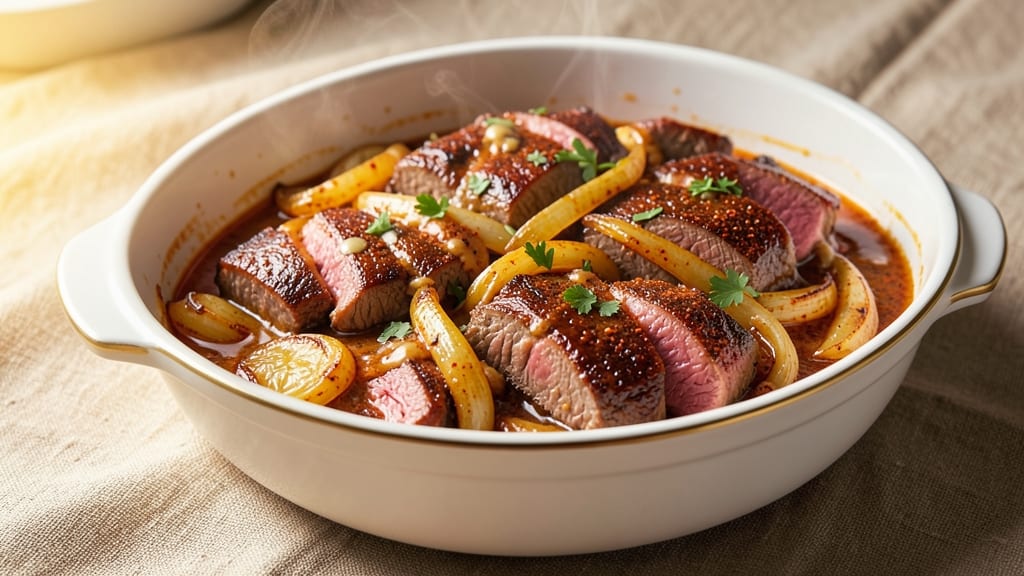
This beef paprikash recipe delivers the rich, creamy comfort of Hungary's most beloved dish with tender beef swimming in a velvety paprika-infused sauce. 🌟 After years of perfecting this classic, I've found the secret lies in slow-braised beef and a balanced blend of sweet and hot paprika that transforms simple ingredients into something extraordinary.
What makes this recipe stand out is its approachability—no special equipment needed beyond a heavy pot or Dutch oven. The beef becomes fork-tender through gentle simmering, while the sauce develops deep, complex flavors from toasted spices and reduced cream. This method ensures restaurant-quality results without requiring hours at the stove.
By the time you serve it, you'll have perfectly tender beef slices in a sauce that's perfectly balanced—creamy yet not heavy, spicy yet not overpowering. The aroma alone will fill your kitchen with warmth, making it ideal for cozy family dinners or special occasions.
This is comfort food at its finest.
The best part? It reheats beautifully, so leftovers taste just as good the next day. Pair with buttery egg noodles or crusty bread to soak up every last drop of that flavorful sauce. Let's get cooking!
Ingredients for beef paprikash
Hungarian comfort meets home kitchen with these essential ingredients for velvety beef paprikash.
| Ingredient | Amount | Notes |
|---|---|---|
| Beef Chuck Roast 🥩 | 2 lb | Cut into 1-inch cubes |
| Sweet Paprika 🌶️ | 2 tbsp | Hungarian or Spanish preferred |
| Hot Paprika 🌶️ | 1 tbsp | For balanced heat |
| All-Purpose Flour 🌾 | 2 tbsp | For dredging beef |
| Unsalted Butter 🧈 | 4 tbsp | Full-fat for richness |
| Yellow Onion 🧅 | 1 whole | Thinly sliced |
| Garlic Cloves 🧄 | 4 cloves | Minced for depth |
| Fresh Thyme Leaves 🌿 | ¼ cup | Or 1 tsp dried thyme |
| Heavy Cream 🥛 | 1 cup | Full-fat preferred |
| Tomato Paste 🍅 | 2 tbsp | Smooth texture |
| Beef Broth 💧 | 2 cups | Low-sodium preferred |
| Bay Leaves 🍃 | 2 whole | Remove before serving |
| Salt 🧂 | 1 ½ tsp | Adjust to taste |
| Black Pepper 🌶️ | ½ tsp | Freshly ground |
| Sour Cream 🥛 | ¼ cup | For serving (optional) |
The beef is the foundation—chuck roast delivers that melt-in-your-mouth tenderness when braised properly. Look for well-marbled cuts at your local butcher or the meat department at Whole Foods or Kroger. If you're using pre-cubed beef, aim for 1-inch pieces for even cooking. The paprika blend is critical: Hungarian or Spanish sweet paprika provides that signature color and mild sweetness, while hot paprika adds depth without overpowering. Penzeys carries excellent Hungarian paprika if you want to splurge, but the regular grocery store brands work fine for everyday cooking. Toast the spices in your Dutch oven for 30 seconds before adding the beef—this deepens their flavor dramatically.
No sweet paprika? Smoked paprika with a pinch of sugar works in a pinch, though the color won't be as vibrant. Substituting heavy cream with half-and-half cuts costs but reduces richness—stick with full-fat if possible. The tomato paste can be skipped entirely if you prefer a cleaner sauce, but it adds a subtle sweetness that balances the spices. For the thyme, fresh is ideal, but dried thyme at one-third the amount works if that's what you have. The beef broth should be low-sodium to control seasoning—Swanson or Pacific Foods brands are reliable. If you're short on time, you can use 2 cups water plus 1 beef bouillon cube instead, but the flavor won't be as deep.
This dish tastes even better the next day as the flavors meld together. Store leftovers in an airtight container in the fridge for up to 5 days, or freeze portions for 3 months—the sauce thickens beautifully when reheated. For serving, a dollop of sour cream adds a cooling contrast to the rich sauce. The beef will stay tender when reheated if you add a splash of broth or water. Double the recipe and freeze half—this is the kind of dish that deserves to be made twice in one week. The sauce can also be made ahead and reheated with fresh beef added at the end for a quicker meal.
Why You'll Love This Recipe
- One-Pan Magic: I swear by this recipe when I’m too tired to fuss. Toss the chuck roast in flour, brown it in butter, then dump everything into one pot—paprika, broth, onions—and let it simmer. No chopping, no flipping, no stress. Just rich, smoky flavors with almost no effort.
- Smoky-Sweet Obsession: That mix of sweet and hot paprika? It’s the star. The sweet paprika gives it depth, while the hot paprika adds a slow-building warmth that lingers. Honestly, the first time I made this, I ate a spoonful of the sauce straight from the pot—no shame.
- Leftovers That Beg for More: This dish tastes even better the next day, and I’m not just saying that. The beef gets tenderer, the sauce thickens, and suddenly you’ve got a meal that’s even more comforting. I’ve reheated portions for breakfast (yes, really) with a fried egg on top—game-changer for lazy mornings.
- Budget-Friendly Feast: A chuck roast stretches for days, and paprikash is one of those dishes where the flavors get richer as it sits. Between us, I’ve fed six people for under $20 with this recipe, and no one ever complains. It’s the kind of meal that makes you feel like you’re eating at a restaurant without the price tag.
Step-by-step instructions for beef paprikash
Here's how to create rich, paprika-spiced beef with a velvety sauce that clings to every bite.
🍳 Step 1: Sear the Beef for Maximum Flavor
Cut the 2 lb beef chuck roast into 1-inch cubes and pat them dry with paper towels. Heat 2 tablespoons of the unsalted butter in a large Dutch oven over medium-high heat until foaming. Working in batches, add the beef cubes and sear for 2-3 minutes per side until deeply browned. This step develops the deep, meaty flavor that forms the base of your dish.
Don't crowd the pan—sear in batches if needed. You want each piece to develop a rich crust. Transfer the browned beef to a plate and set aside. If the butter starts to smoke, reduce the heat slightly to prevent burning. You'll know it's ready when the beef releases easily from the pan and has a caramelized crust.
👨🍳 Step 2: Build the Paprika Base
In the same Dutch oven, reduce the heat to medium and add the remaining 2 tablespoons of unsalted butter. Toss in the thinly sliced yellow onion and cook for 3-4 minutes until softened. Add the 4 minced garlic cloves and cook for 30 seconds until fragrant—don't let it brown or it'll turn bitter.
Sprinkle in the 2 tablespoons of sweet paprika and 1 tablespoon of hot paprika, stirring constantly for 1 minute. This creates the signature paprika aroma that defines the dish. Immediately add the 2 tablespoons of all-purpose flour and stir vigorously for 1 minute to cook off the raw flour taste. Pour in the 2 tablespoons of tomato paste and stir to combine, creating a rich, spiced base.
🥘 Step 3: Simmer the Beef in Flavorful Broth
Return the seared beef to the Dutch oven along with the 2 cups of beef broth. Add the 2 whole bay leaves, 1.5 teaspoons of salt, and 0.5 teaspoon of freshly ground black pepper. Bring to a gentle simmer, then reduce heat to low. Cover and let it cook for 1 hour 15 minutes, stirring occasionally, until the beef is fork-tender and easily pulls apart.
Here's the thing—this low-and-slow cooking transforms tough chuck roast into melt-in-your-mouth beef. You'll know it's ready when the meat separates with minimal resistance and the sauce has thickened slightly. If the liquid reduces too quickly, add a splash of water or broth to maintain the proper consistency.
🥘 Step 4: Finish with Cream and Thyme
Remove the bay leaves and stir in the 0.25 cup of fresh thyme leaves and 1 cup of heavy cream. Simmer uncovered for 5-7 minutes until the sauce thickens slightly and coats the back of a spoon. The cream should be hot but not boiling—you're looking for a velvety texture that clings beautifully to the beef.
Taste and adjust seasoning with additional salt or pepper if needed. The sauce should be rich but not overly heavy. If it's too thick, whisk in 1-2 tablespoons of water to reach your desired consistency. The thyme adds a bright, herbal note that cuts through the richness of the cream and beef.
🍽️ Step 5: Serve with Sour Cream
Ladle the beef paprikash into serving bowls, ensuring each portion has generous amounts of beef and sauce. For serving, dollop each portion with 1 tablespoon of the 0.25 cup sour cream. The cool, tangy cream provides a perfect contrast to the warm, spiced beef and creamy sauce.
Serve immediately with crusty bread or over egg noodles to soak up every last bit of that luscious sauce. The combination of tender beef, aromatic paprika, and velvety cream creates a dish that's both comforting and sophisticated—exactly what makes beef paprikash a classic.
Pro Tips For Making Beef Paprikash
- Sear the Roast First: Get that beef browning deep and dark—no pale, sad meat here. Pat the chuck dry, then sear it in batches over high heat with butter until it’s got a crust, about 3-4 minutes per side. I learned this the hard way—skipping the sear means flavorless mush, and you don’t want that.
- Bloom the Paprika: Don’t just dump the paprika in cold. Melt 2 tablespoons of butter in the pot first, then add the paprika (both sweet and hot) and cook it for 2 full minutes—it’ll smell like heaven and deepen the flavor. I used to rush this, and the sauce always tasted flat.
- Deglaze Aggressively: After searing the beef, don’t let those browned bits sit. Immediately add a splash of broth or wine and scrape the bottom like you’re mad at it—every bit of flavor counts. I was skeptical until I tried it: the sauce goes from good to rich in seconds.
- Simmer Low and Slow: This isn’t a race. After adding the liquid, keep the heat at a gentle simmer—just enough to see tiny bubbles. Too hot, and the flour will cook into glue; too low, and the beef stays tough. I skip this when I’m lazy, but the dish is noticeably better when I don’t.
Flavor customization for this dish
Sweet vs. Hot Paprika
Start with a 1:2 ratio of hot to sweet paprika for balanced heat and depth—about 1 tbsp hot and 2 tbsp sweet. If you prefer milder flavor, reduce the hot paprika to ½ tbsp and add ½ tsp sugar to enhance the sweetness.
For extra warmth, toast the paprika blend in the Dutch oven for 30 seconds before adding the flour—this intensifies the aroma and flavor. 🌶️
Creamy or Light?
Swap heavy cream for ½ cup Greek yogurt to lighten the sauce while keeping richness. For a richer version, add 2 tbsp sour cream at the end.
If you're watching fat, use ½ cup low-fat milk and ½ cup evaporated milk—the sauce will still coat beautifully, though with slightly less body.
Smoky Depth
Add 1 tsp smoked paprika to the base for a deeper, campfire-like flavor. For extra smokiness, sear the onions with ½ tsp liquid smoke (like La Choy) or char them in a dry skillet before adding to the Dutch oven.
I’ve even experimented with ½ cup beef stock reduced by half for a more concentrated umami kick.
Herbal Variations
Boost the herbs with 1 tsp dried marjoram or ½ tsp dried oregano for a Mediterranean twist. Fresh parsley at the end brightens the dish—chop 2 tbsp and stir in during the final 2 minutes of simmering.
For a bold flavor, add 1 sprig fresh rosemary while simmering the beef, then remove before serving.
Acid Balance
Brighten the sauce with 1 tbsp apple cider vinegar or 1 tsp lemon juice during the final simmer. This cuts through the richness and adds complexity. For a tangy finish, stir in 2 tbsp crème fraîche at the end instead of sour cream—it’s less acidic and adds a luxurious texture.
Spice Level Control
If the dish is too spicy, balance it with 1 extra tbsp sweet paprika or ½ tsp sugar. For heat lovers, add ½ tsp cayenne pepper or 1 tsp Hungarian wax pepper (a mild but flavorful chili).
I once accidentally added too much hot paprika—fixing it with 1 extra tbsp tomato paste saved the dish entirely. 💡
Nutrition facts
Frequently asked questions
Can I use a slow cooker for this beef paprikash?
Brown the beef first in a skillet, then transfer everything to a 6-quart slow cooker. Cook on low for 6-7 hours or high for 3-4 hours until the beef is tender. Add the cream and thyme during the last 30 minutes to prevent curdling. The slow cooker method is perfect for hands-off cooking!
What's the best way to store leftovers?
Store leftovers in an airtight container in the fridge for up to 5 days. The flavors actually improve overnight! To reheat, warm gently in a saucepan with a splash of broth or water until heated through. For freezing, portion into ziplock bags and freeze for up to 3 months—the sauce thickens beautifully when reheated.
Why does my sauce look too thin?
If your sauce is too thin, it's likely because the beef released too much liquid. Simmer uncovered for 5-10 minutes to reduce it, or mix 1 tablespoon cornstarch with 2 tablespoons cold water and stir in slowly until thickened. The sauce should coat the back of a spoon but still be pourable. Pro tip: Skim excess fat from the surface first for cleaner results.
Can I make this dish in an Instant Pot?
Yes! Sear the beef first, then add all ingredients except cream. Cook on high pressure for 25 minutes, then quick-release. Stir in cream and simmer for 5 minutes to thicken. The Instant Pot version cooks 40% faster than stovetop, but monitor closely—beef can become mushy if overcooked. Use the manual setting for best results.
What's the best side dish pairing?
Classic choices include egg noodles or crusty bread to soak up the sauce. For a lighter option, serve with roasted potatoes or a fresh green salad with a tangy vinaigrette. The creamy sauce also pairs beautifully with buttered dumplings or mashed potatoes for extra comfort.