
Appetizers
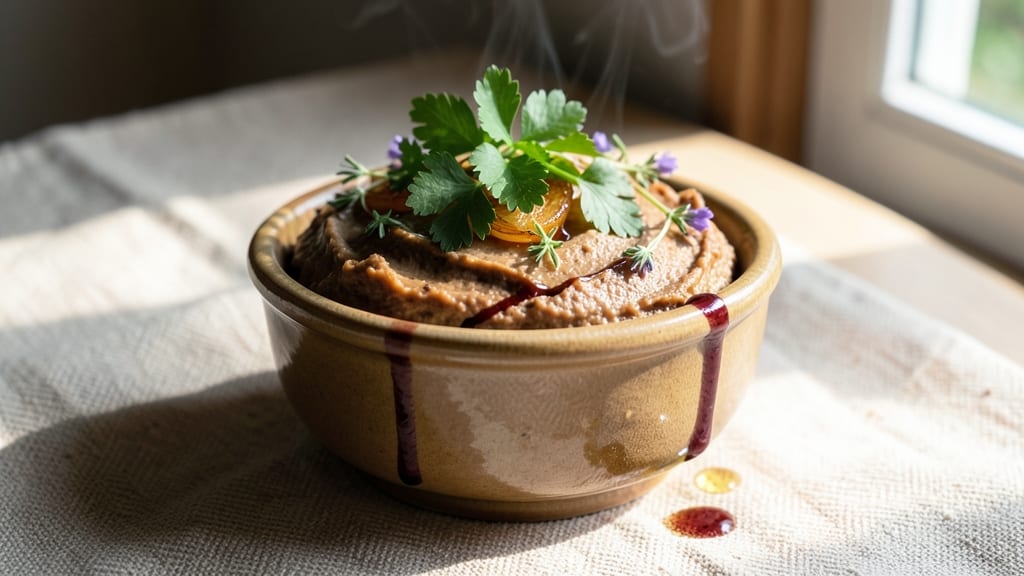
Creating a baked chicken liver pâté transforms humble ingredients into a luxurious spread that tastes like a gourmet restaurant's finest appetizer. The process begins with rendering fat from the livers, a step that builds rich, velvety texture while infusing flavor into every layer.
This recipe balances traditional techniques with modern adaptability, ensuring you can achieve restaurant-quality results at home.
What sets this pâté apart is its silky consistency and depth of flavor, achieved through careful blending of rendered fat, cooked livers, and a touch of brandy for warmth. The herbs and egg yolk binding create a harmonious texture that's both creamy and refined.
Professional results come from precise measurements and patience, especially during the baking phase where temperature control is key.
Once baked to perfection, the pâté develops a golden crust while maintaining a tender, melt-in-your-mouth interior. Chilling allows flavors to meld completely, resulting in a spread that's rich yet balanced—ideal for serving on toasted bread, crackers, or as a sophisticated starter.
The brandied depth elevates it beyond ordinary liver dishes into something truly special.
For modern adaptations, consider gluten-free crust options or vegan substitutions for the cream, proving this classic recipe can be both traditional and inclusive. The versatility of this pâté makes it perfect for holidays, dinner parties, or impressing guests with a homemade touch that tastes professionally crafted.
Ingredients for baked chicken liver pate
Eleven ingredients transform humble livers into a velvety pâté with restaurant-quality depth.
| Ingredient | Amount | Notes |
|---|---|---|
| Chicken Livers 🍗 | 1 ½ lb | Fresh, trimmed of connective tissue |
| Unsalted Butter 🧈 | ½ cup | Cold, cut into small cubes |
| Fresh Thyme Leaves 🌿 | ¼ cup | Stemmed, finely chopped |
| Fresh Parsley Leaves 🌿 | ¼ cup | Stemmed, finely chopped |
| Shallots 🧅 | 2 whole | Finely minced, about 0.25 cup |
| Brandy 🍷 | ¼ cup | High-quality, 80-proof minimum |
| Large Egg Yolks 🥚 | 2 whole | Fresh, room temperature |
| Heavy Cream 🥛 | ¼ cup | Full-fat, cold |
| Diamond Crystal Kosher Salt 🧂 | 1 tsp | Adjust to taste |
| Freshly Ground Black Pepper 🌶️ | ½ tsp | Cracked, not powdered |
| Unbleached All-Purpose Flour 🌾 | 1 tbsp | For dusting baking dish |
The livers are the foundation—freshness is non-negotiable. Source them from a trusted butcher or specialty market, where they're typically sold pre-trimmed for convenience. Costco or Whole Foods often carry high-quality options in the refrigerated section. Look for vibrant color and avoid any with a metallic sheen or off-putting odor. The butter should be European-style if possible, with a high fat content (82-86%) for superior rendering. Fresh herbs like thyme and parsley should be bright green and firm, not wilted or yellowing. For the shallots, French green shallots add a subtle sweetness, but regular yellow shallots work perfectly fine. Brandy should be aged at least 3 years—avoid cooking brandy unless specified, as its higher proof can alter the texture.
No brandy? Substitute with apple cider or dry sherry, though the flavor profile will shift slightly. Fresh herbs unavailable? Dried thyme and parsley at one-third the amount will suffice, but fresh is ideal for that vibrant finish. For a dairy-free adaptation, replace the heavy cream with full-fat coconut cream, though the texture will be slightly lighter. The egg yolks must be fresh and room temperature—older yolks can make the pâté grainy. If you're concerned about cholesterol, reduce the yolks to one and compensate with an extra tablespoon of cream. For a gluten-free option, omit the flour entirely and use parchment paper instead for lining the baking dish.
Rendered fat from the livers should be stored in an airtight container in the refrigerator for up to 1 week. The pâté itself keeps for 4-5 days in the fridge, though it's best enjoyed within 24 hours of baking for peak texture. For longer storage, portion into silicone molds or ramekins and freeze for up to 3 months. To reheat, warm gently in a water bath or microwave at 50% power. The pâté develops its richest flavor after 24 hours of chilling, so plan ahead for optimal results. For serving, pair with toasted sourdough or gluten-free crackers and a crisp white wine like Sauvignon Blanc.
Why You'll Love This Recipe
- Foolproof Ingredient List: I keep exactly five things on hand for this—no random pantry raids. The livers render down perfectly with butter and shallots, while the thyme and parsley add that bright, herbal finish without fuss. Honestly, it’s the kind of recipe where you won’t overthink the prep.
- Rich but Simple: That crispy edge on the outside with the velvety center? It’s what makes this pate dangerously good. The butter melts into the livers just enough to keep it luscious, while the shallots caramelize into sweetness—no fancy techniques, just pure satisfaction.
- Game for Any Occasion: Slather it on crusty bread for a quick lunch, serve it with crackers at a holiday gathering, or pack it in a thermos for a picnic. Between us, it’s the kind of dish that feels special but won’t stress you out—even if you’re feeding a crowd.
- Budget-Friendly Luxury: Chicken livers are a steal compared to store-bought pate, and they stretch further. A single batch feeds four for appetizers or two for a hearty meal, and leftovers? They keep for days in the fridge—no waste, all flavor. My wallet and my taste buds thank me.
Step-by-step instructions for baked chicken liver pâté
Transform rich chicken livers into a velvety pâté with layers of herbed depth and brandy brightness.
Prepare the Chicken Livers and Aromatics
Rinse the 1.5 lb chicken livers under cold water and pat them completely dry with paper towels. Remove any connective tissue or silver skin using a sharp knife—this ensures a silky texture. In a food processor, pulse the livers until they form a coarse paste, about the consistency of chopped nuts. Transfer to a mixing bowl.
In the same food processor, combine the 0.5 cup unsalted butter, 0.25 cup finely chopped fresh thyme leaves, 0.25 cup finely chopped fresh parsley leaves, and 2 whole finely minced shallots. Pulse until the mixture resembles coarse sand. Add this herb-butter blend to the chicken livers and mix thoroughly with a wooden spoon. The pâté should look uniform and slightly grainy at this stage.
Incorporate Brandy and Seasonings
Pour in the 0.25 cup brandy and stir vigorously to distribute evenly. The alcohol will cook off during baking, leaving behind a subtle, aromatic depth. Add the 1 tsp diamond crystal kosher salt and 0.5 tsp freshly ground black pepper, mixing until fully combined. Taste the mixture and adjust seasoning if needed—chicken livers can be quite rich, so balance is key.
Next, fold in the 2 whole large egg yolks and 0.25 cup cold heavy cream. Mix gently but thoroughly to avoid over-aerating the pâté. The mixture should be smooth and cohesive, with a velvety sheen. If the texture appears too loose, cover the bowl and refrigerate for 15 minutes to allow the eggs to slightly thicken the preparation.
Bake to Perfection
Preheat your oven to 325°F. Lightly dust a 9-inch round baking dish with 1 tbsp unbleached all-purpose flour, tapping out any excess. Spread the pâté mixture evenly into the prepared dish, smoothing the top with a spatula. The surface should be level and slightly domed in the center.
Place the baking dish on the center rack of the preheated oven and bake for 30 to 35 minutes. The pâté is done when the center reaches 150°F on an instant-read thermometer and the edges are just beginning to set. Avoid overbaking—this can make the pâté dry and grainy. The top should be slightly jiggly, indicating a silky interior.
Chill and Serve
Remove the pâté from the oven and let it cool at room temperature for 10 minutes. Then transfer it to the refrigerator and chill for at least 2 hours, or preferably overnight. This resting period allows the flavors to meld and the texture to firm up slightly, making it easier to slice and serve.
When ready to serve, run a thin knife around the edges of the pâté to loosen it from the dish. Invert onto a serving plate, gently tapping the bottom to release. Slice into ½-inch thick rounds and arrange on a platter. Garnish with additional finely chopped fresh parsley leaves and serve with crusty bread, crackers, or roasted vegetables. The pâté will hold its shape beautifully and deliver a luxurious, herbed richness in every bite.
Pro Tips For Making Baked Chicken Liver Pate
- Prep Livers First: Soak the chicken livers in cold water for 10 minutes before trimming—this washes off blood and grit without turning them mushy. Skip this, and you’ll taste metallic bitterness no amount of butter or herbs can hide.
- Sweat Shallots Slow: Cook the shallots in butter over low heat until they’re translucent and just starting to caramelize—about 8-10 minutes. Rushing this step burns them fast, and burnt shallots ruin the whole pate. (Yes, even if you’re impatient like me.)
- Chill Before Blending: Let the cooked liver mixture cool to room temperature before blending—hot fat and cold processors don’t mix well. I learned this the hard way when my immersion blender screamed like a banshee and spat butter everywhere.
- Butter in Layers: Fold in cold butter at the end, in small chunks, until fully incorporated—this keeps the pate silky, not greasy. Dumping melted butter in all at once turns it into a sad, oily mess. (Your future self will thank you.)
Regional styles of this dish
French Classic
This pâté finds its roots in classic French cuisine, where liver-based spreads have been a staple since the 18th century. The French version typically includes calves' livers alongside chicken, but pure chicken liver pâté became popular in home kitchens due to its accessibility.
I've adapted the traditional method by incorporating brandy for depth and fresh herbs for brightness—hallmarks of French pâté-making. The baking technique ensures a silky texture while developing a golden crust, just like you'd find in Parisian bistros. 🥖
British Twist
In Britain, this dish often appears as a Christmas centerpiece or elegant starter, sometimes called "chicken liver mousse." The British version frequently includes a touch of mustard (about ½ tsp) for a subtle tang that cuts through the richness.
I've kept the recipe pure but suggest adding 1 tsp English mustard if you want that classic British note. Serve with crispbread instead of baguette slices for an authentic touch. The British also love topping their pâté with chopped chives for a milder herbaceous finish.
German Liverwurst Influence
German cuisine has its own take on liver spreads, often blending chicken livers with pork for a heartier texture. For a German-inspired version, I recommend adding 2 oz finely chopped pork shoulder to the liver mixture before baking.
The Germans also frequently include a pinch of nutmeg (about ¼ tsp) and 1 tsp caraway seeds for a warm, earthy complexity. This adaptation works beautifully when served with dark rye bread and pickled vegetables on the side—a perfect match for the rich flavors. 🌟
Modern American Adaptation
American home cooks often simplify traditional pâtés by using store-bought chicken liver pâté bases (like those from Hillshire Farm) as shortcuts. For a modern twist, I suggest adding 1 tbsp of maple syrup to the brandy mixture for a subtle sweetness that balances the richness.
Pair it with gluten-free crackers or avocado slices for a contemporary presentation. Many American versions also include a splash of Worcestershire sauce (about 1 tsp) for umami depth—a nod to the country's love of bold flavors.
Spanish Chorizo Fusion
In Spain, liver pâtés often incorporate chorizo for a smoky, spicy kick. For this fusion, crumble 2 oz of high-quality Spanish chorizo (like La Huerta) into the liver mixture before baking. The chorizo adds a deep, paprika-infused flavor that pairs beautifully with the herbed richness.
Serve with toasted manchego cheese slices and olive tapenade for a tapas-style presentation. This version is especially popular during Fiesta celebrations and brings a festive, smoky dimension to the classic recipe. 🌶️
Nutrition facts
Frequently asked questions
Why do we render fat from chicken livers first?
Rendering the fat creates a luxurious, velvety texture that defines great pâté. The fat infuses flavor into every layer while preventing a dry, grainy result. This step also removes impurities, ensuring a smooth, silky consistency when baked. Save the rendered fat for future recipes—it's pure gold for cooking!
Can I substitute brandy with another alcohol?
Yes! For a non-alcoholic version, use apple cider or dry sherry in equal amounts. The alcohol cooks off during baking, leaving behind aromatic depth. Avoid cooking brandy—its higher proof can alter the pâté's texture. If using wine, reduce to 2 tbsp to prevent over-dilution.
What's the secret to a perfect golden crust?
Bake at 325°F until the center reaches 150°F—the crust forms as moisture evaporates. For extra shine, brush the top with a little heavy cream before baking. Avoid overbaking, or the texture becomes dry. A slightly jiggly center guarantees silky perfection.
How do I fix grainy texture after baking?
Graininess usually means over-processing or cold ingredients. To salvage it, blend the pâté in a food processor for 10-15 seconds until smooth, then rebake at 300°F for 5 minutes to restore cohesion. For prevention, ensure all ingredients (especially eggs) are room temperature before mixing.
Can I make this ahead for a holiday gathering?
This pâté tastes even better after 24 hours of chilling. Assemble it up to 1 day ahead and refrigerate. For make-ahead convenience, bake it in individual ramekins—they freeze beautifully for up to 3 months. Thaw overnight in the fridge before serving.