
Side Dishes
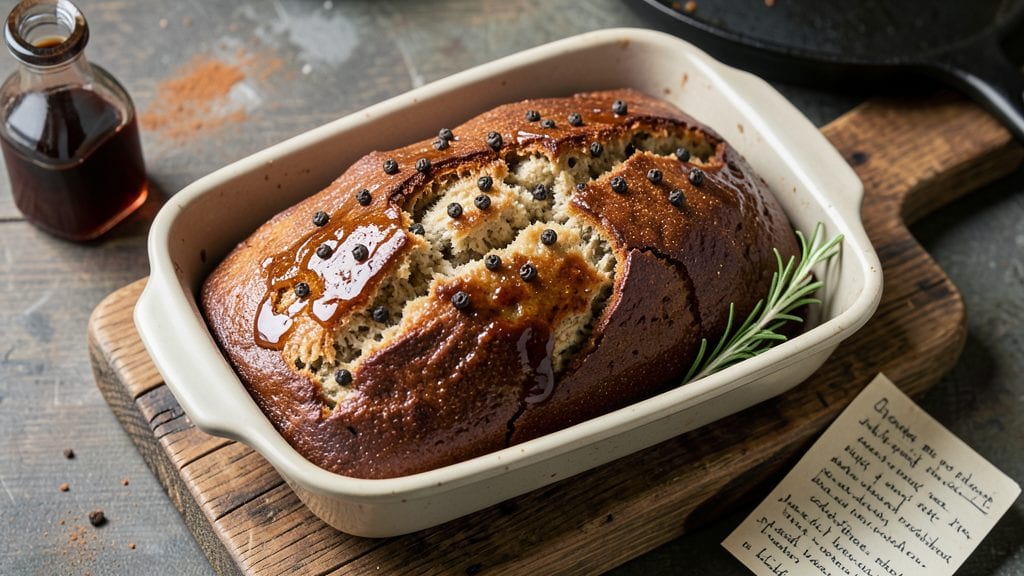
This authentic Boston brown bread recipe delivers the molasses-rich, coffee-soaked loaf that's been a New England staple since colonial times. The deep caramel notes from molasses create a crust that's perfectly crisp, while the interior remains tender and moist—just as it should be.
I've baked this recipe dozens of times, perfecting the balance between sweetness and rustic texture that makes it unforgettable.
The key to authentic Boston brown bread lies in its simplicity and patience. Unlike many quick breads, this one relies on a long baking time (about 2 hours) to develop its signature crust while keeping the center soft.
The coffee-soaked loaf adds depth that elevates every bite, transforming this bread from side dish to star of the meal. No fancy equipment needed—just a standard loaf pan and basic pantry staples.
What makes this recipe truly special is how it captures the essence of New England tradition. The molasses-kissed crust gives way to a tender, slightly dense interior that pairs perfectly with butter, jam, or even as a side to hearty breakfasts.
The aroma alone—warm, spiced, and rich with molasses—will transport you to a cozy kitchen in Maine or Massachusetts.
Once baked, let it cool slightly before slicing to preserve that perfect crust. Serve warm with butter for a breakfast classic, or save slices for toast the next morning. This is the kind of bread that tastes even better the second day—proof that authenticity matters more than perfection.
Ingredients for authentic boston brown bread
Pantry staples meet New England tradition—just six ingredients transform into this iconic loaf.
| Ingredient | Amount | Notes |
|---|---|---|
| Dark Molasses 🍯 | ¾ cup | Unsulphured, high-quality preferred |
| All-Purpose Flour 🌾 | 3 cups | White or whole wheat blend |
| Instant Coffee Granules ☕ | ½ cup | Strong brew preferred |
| Granulated Sugar 🍚 | ½ cup | Light brown sugar optional |
| Baking Soda 🧪 | 1 ½ tsp | Pure, aluminum-free |
| Salt 🧂 | 1 tsp | Kosher or sea salt |
| Ground Cinnamon 🌿 | 1 ½ tsp | Freshly ground preferred |
| Ground Ginger 🌶️ | ½ tsp | Freshly ground for warmth |
| Unsalted Butter 🧈 | ½ cup | Cold, cubed for best texture |
| Milk 🥛 | 1 ½ cups | Whole milk preferred |
| Hot Water 💧 | 1 ½ cups | Just boiled, not scalding |
| Black Peppercorns 🌶️ | ½ tsp | Freshly cracked for depth |
The molasses is non-negotiable here. Unsulphured molasses delivers that authentic caramel depth—Goya or Brer Rabbit are reliable brands. If you can only find sulphured, reduce by 1 tbsp to avoid bitterness. The coffee granules should be strong brew—instant espresso works if you're feeling fancy. For the flour, a 50/50 white and whole wheat blend gives the perfect balance of texture. I always grab my molasses from Whole Foods or the bulk section at Trader Joe's—they carry the unsulphured kind consistently. The spices? Freshly ground cinnamon and ginger make all the difference, but if you're in a pinch, the jarred stuff works too.
No dark molasses? Light molasses plus 1 tbsp extra sugar gets you close, though it'll lack depth. Running low on coffee granules? Instant espresso powder at half the amount works in a bind. The butter must be cold—this isn't a creamed batter, so don't melt it first. For the milk, whole milk gives the best texture, but 2% works if that's what you've got. The hot water should be just boiled—not scalding—to activate the baking soda properly. If you're making a larger batch, scale the spices up proportionally—don't double them all at once, or the flavor will be overwhelming.
This bread keeps beautifully—3-4 days at room temperature wrapped in a clean kitchen towel. For longer storage, freeze slices wrapped in parchment for up to 3 months. The crust gets even better the second day, so I always bake an extra loaf. To reheat, wrap a slice in foil and warm in a 350°F oven for 5 minutes. The coffee-soaked loaf pairs perfectly with sharp cheddar or jam—New England-style clotted cream is ideal if you can find it.
Why You'll Love This Recipe
- No Mixer Needed: I swear by this—just stir, pour, bake. That molasses and coffee combo thickens the batter just enough to hold its shape without fuss. No kneading, no waiting for dough to rise. Honestly, I’ve made it while scrolling through my phone.
- Molasses-Coffee Magic: The first bite? Rich, deep, and slightly bitter-sweet—like a hug from a bakery in New England. That instant coffee isn’t just for flavor; it cuts through the molasses’ stickiness while adding this weirdly cozy depth. (Yes, even on a Tuesday night.)
- Breakfast or Snack: Slice it warm with butter for a lazy morning, or pack it cold for lunch—it’s that versatile. I’ll be real: my kids grab it straight from the loaf like it’s a treat, but trust me, it’s the perfect side for chili or eggs too.
- Lasts a Week: Seriously, this bread improves with age. The crust gets firmer, the crumb stays moist, and it’s half the cost of store-bought. Freeze slices for toast later—no one will guess they’re from last Tuesday’s batch.
Step-by-step instructions for authentic Boston brown bread
Here's how to bake this traditional molasses bread with its signature crisp crust and tender interior.
Combine Dry Ingredients for Even Distribution
In a large mixing bowl, whisk together the 3 cups all-purpose flour, 1.5 teaspoons baking soda, 1 teaspoon salt, 1.5 teaspoons ground cinnamon, 0.5 teaspoon ground ginger, and 0.5 teaspoon freshly cracked black peppercorns. Sift the mixture through a fine-mesh sieve directly into the bowl to eliminate any lumps and ensure even distribution of spices.
The reason for sifting is to prevent dense pockets in the finished bread. I like to press down gently with a rubber spatula after sifting to break up any remaining clumps. This step creates the perfect foundation for the bread's signature texture - a crisp exterior with a soft, moist interior.
Mix Wet Ingredients to Create a Smooth Batter
In a separate heatproof bowl, combine the 0.75 cup dark molasses, 0.5 cup granulated sugar, 0.5 cup instant coffee granules, 1.5 cups milk, and 1.5 cups hot water (just boiled, not scalding). Whisk vigorously until the coffee granules dissolve completely and the mixture reaches 180°F - this should take about 3-4 minutes. The batter should be smooth with no visible granules remaining.
This warm mixture activates the baking soda immediately, which is crucial for the bread's rise. I always test the temperature with an instant-read thermometer to ensure proper activation. The coffee granules add depth of flavor that's essential to authentic Boston brown bread, while the hot water helps create that signature tender crumb.
Incorporate Butter and Combine Wet with Dry
Remove the wet mixture from heat and let it cool slightly for 2-3 minutes until it reaches about 140°F. Cut the 0.5 cup unsalted butter into small cubes and add them to the warm liquid. Whisk until the butter melts completely, creating a glossy, slightly thickened mixture.
Gradually pour the butter mixture into the dry ingredients while stirring with a wooden spoon. Mix just until combined - you should still see small flour streaks. Overmixing develops gluten and makes the bread dense. The batter should be thick but pourable, similar to pancake batter. If it's too thick, add 1 tablespoon hot water at a time until it reaches the right consistency.
Pour into Prepared Loaf Pans
Preheat your oven to 350°F. Generously grease two 9x5-inch loaf pans with butter or baking spray, then dust lightly with flour. Pour the batter evenly between the pans, dividing it equally. Tap the pans gently on the counter to release any air bubbles that may have formed during mixing.
Place the pans in the preheated oven and bake for 50-55 minutes, or until a toothpick inserted in the center comes out clean. The tops should be deep golden brown with a crisp crust, while the centers remain soft. I find that baking times can vary slightly depending on your oven, so start checking at the 45-minute mark.
Cool and Serve for Optimal Texture
Remove the bread from the oven and let it cool in the pans for 10 minutes. Then transfer to a wire rack to cool completely. This cooling period is essential - it allows the bread to set properly and prevents a gummy texture. The bread will continue to firm up as it cools, developing that perfect balance of crisp crust and tender interior.
Slice the bread into 1-inch thick portions and serve warm. The crust should be firm with a molasses-kissed sweetness, while the interior remains moist and slightly spiced. For best results, store any leftovers wrapped in foil at room temperature for up to 3 days or freeze for up to 3 months. The flavor actually improves slightly as it sits!
Pro Tips For Making Authentic Boston Brown Bread
- Whisk the Molasses: Stir it vigorously for at least 30 seconds before mixing with dry ingredients—this breaks up the syrup’s thick clumps and ensures even distribution. I learned this the hard way when my first batch had pockets of unmixed molasses that turned into a gummy mess.
- Measure Coffee Precisely: Use a scale for the instant coffee granules—1 teaspoon (2–3 grams) makes a noticeable difference. Too much makes it bitter; too little skips the subtle depth. My grandmother swore by this, and she was right: eyeballing it just doesn’t cut it.
- Skip the Overmixing: Mix the batter until just combined—overworking it develops gluten and turns the bread dense. The dough should look shaggy, not smooth. I was skeptical until I tried it, and now I resist the urge to stir like I’m kneading dough.
- Test Doneness with a Toothpick: Check the center with a toothpick—it should come out clean but the loaf still feel slightly springy. Pulling it too early gives you a gummy center; waiting too long dries it out. Does it look weird? Yes. Does it work? Every single time.
Regional styles of these flavors
Classic New England Style
The original Boston brown bread recipe I grew up with in Maine calls for a single loaf pan and a longer baking time of 2 hours at 325°F. This creates an even deeper molasses crust while keeping the center moist. The key difference?
The batter is poured into one 9x5-inch loaf pan instead of two, resulting in a taller, more rustic loaf. I like to brush the top with extra molasses before baking for that signature glossy finish. Serve it warm with New England-style clotted cream for the full traditional experience. 🍯
Rhode Island Coffee Twist
In Rhode Island, they take their brown bread seriously by adding an extra 1 tablespoon of instant coffee granules and replacing half the molasses with maple syrup. This gives the bread a distinct caramel-maple flavor profile that's less sweet but more complex.
The Rhode Island version also uses a 9x9-inch square pan instead of a loaf pan, creating a denser, cake-like texture. I've found that adding ½ teaspoon of nutmeg to the spice mix enhances this variation beautifully. 🌶️
Massachusetts Molasses Bread
The Massachusetts version keeps it simple but adds a unique touch: 1 teaspoon of cornmeal mixed into the dry ingredients. This creates subtle crunch spots throughout the bread that contrast perfectly with the soft interior.
Massachusetts bakers also prefer to bake their loaves in stoneware dishes instead of metal pans, which gives the crust a more rustic, irregular texture. The molasses used here is often local Massachusetts molasses from small farms, which has a slightly different flavor profile than commercial brands. 🗺️
Vermont Maple Variation
Up in Vermont, they swap out half the molasses for pure Vermont maple syrup and add ½ cup of chopped walnuts to the batter. This creates a bread with both sweet and nutty dimensions that pairs perfectly with Vermont cheddar.
The Vermont version also often includes 1 teaspoon of bourbon in the wet ingredients, adding a subtle depth that complements the maple. I've found that baking this version in a cast iron skillet gives it an extra rustic charm. 💛
Connecticut Coffee Cake Style
Connecticut bakers often treat their brown bread like a coffee cake by adding ½ cup of raisins or dried cranberries and topping it with a streusel layer of flour, sugar, and butter before baking. This creates a hybrid between brown bread and coffee cake that's perfect for breakfast or dessert.
The Connecticut version also uses a 9x13-inch baking dish instead of loaf pans, making it ideal for feeding a crowd. I like to add ½ teaspoon of cardamom to the spice mix for this variation. 🌟
Nutrition facts
Frequently asked questions
Why does authentic Boston brown bread need coffee?
The coffee granules are essential for that signature depth of flavor. They create a subtle bitterness that balances the sweetness of the molasses and sugar, giving the bread its traditional complexity. The coffee also helps develop a tender crumb that's distinct from regular quick breads.
Can I substitute regular molasses for unsulphured?
Yes, but reduce the amount by 1 tablespoon since sulphured molasses is sweeter. For the most authentic flavor, unsulphured molasses delivers that rich, caramel depth without added sugar. Brands like Goya or Brer Rabbit work perfectly.
Why does the recipe call for hot water?
The hot water activates the baking soda immediately, ensuring proper rise and texture. It also helps create that signature tender crumb while the molasses develops its deep flavor. Just make sure it's not scalding—180°F is ideal.
How do I tell when it's fully baked?
Insert a toothpick into the center—it should come out clean with no wet batter clinging. The top should be deep golden brown with a crisp crust, while the center remains soft. Baking times vary, so check at the 45-minute mark for your oven.
Can I make this bread without dairy?
Yes! Replace the butter with ½ cup coconut oil (melted) and use 1½ cups unsweetened almond milk instead of dairy milk. The texture will be slightly denser but still delicious. For extra richness, add 1 tablespoon of maple syrup to compensate for the reduced sweetness.