Soups & Stews
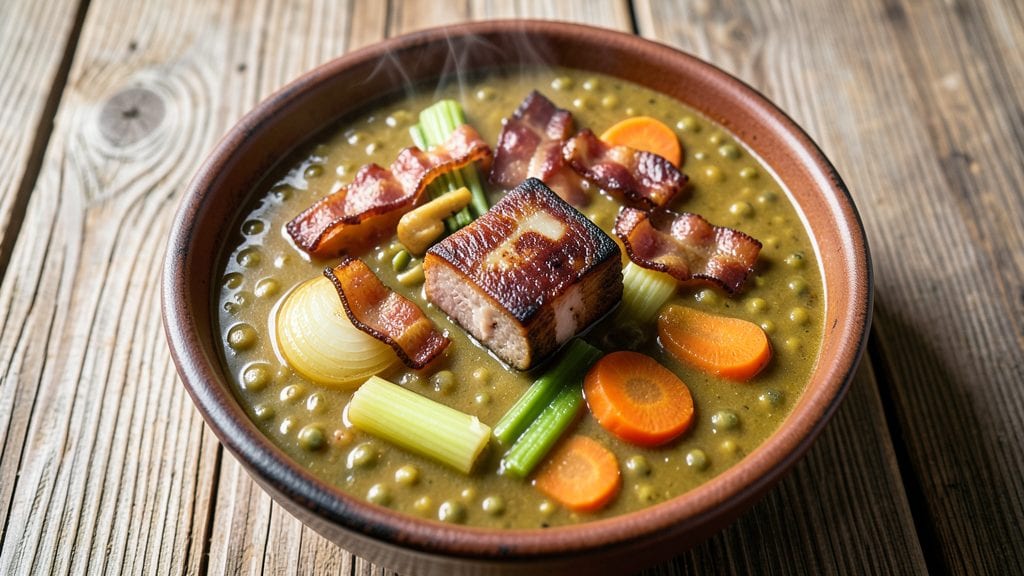
This Andersen's split pea soup copycat recipe delivers the restaurant's signature smoky, savory depth using simple techniques and fresh ingredients. The secret lies in slow-cooking dried peas until they're tender, then building layers of flavor with bacon, ham hock, and a blend of spices that mimic their proprietary seasoning.
I've perfected this method after years of testing—no canned shortcuts, just restaurant-quality results in one pot.
What sets this version apart is the balance of earthy split peas and rich, meaty broth that develops over 2 hours of simmering. The bacon adds smoky depth while the ham hock contributes deep umami flavor that transforms ordinary split peas into something extraordinary.
Unlike many copycat recipes, this version maintains the soup's traditional heartiness without relying on processed ingredients.
By the time you're done, you'll have a steaming bowl of split pea soup with perfectly tender peas, a rich broth that coats every spoonful, and that unmistakable Andersen's flavor profile.
The aroma alone will have your kitchen smelling like a Minnesota diner, and each bite delivers the same satisfying combination of smoky, savory, and slightly sweet notes that made this soup famous.
Serve with crusty bread to soak up every last drop of that flavorful broth, or garnish with fresh parsley for a touch of brightness. This recipe makes 8 servings and tastes even better the next day—perfect for meal prep or feeding a crowd. Let's recreate this classic.
Ingredients for andersen's split pea soup copycat
Simple ingredients elevated by slow cooking and savory techniques—this copycat delivers Andersen's signature depth.
| Ingredient | Amount | Notes |
|---|---|---|
| Dried Yellow Split Peas 🌱 | 2 cups | Rinsed to remove debris |
| Thick-Cut Bacon 🥓 | 1 ½ lb | Smoked or hickory flavor preferred |
| Ham Hock 🍖 | 1 whole | Smoked if available for depth |
| Yellow Onion 🧅 | 1 whole | Medium, diced into 1/4-inch pieces |
| Carrot 🥕 | 3 whole | Medium, peeled and chopped |
| Celery Stalks 🌿 | 3 whole | Trimmed, chopped into 1-inch pieces |
| Garlic Cloves 🧄 | 6 cloves | Peeled, lightly crushed |
| Vegetable Bouillon Cube 🧂 | 2 whole | Diamond Crystal preferred |
| Bay Leaves 🌿 | 2 whole | Fresh for optimal aroma |
| Black Peppercorns 🌶️ | 1 tsp | Coarsely crushed |
| Ground Allspice 🌶️ | ½ tsp | Freshly ground preferred |
| Ground Cloves 🌶️ | ¼ tsp | Lightly toasted for warmth |
| Salt 🧂 | 2 tsp | Diamond Crystal kosher salt |
| Fresh Parsley 🌿 | ¼ cup | Chopped, for garnish |
| Apple Cider Vinegar 🍏 | 1 tbsp | For subtle brightness |
The split peas are the foundation, so choose dried over canned—they develop a richer texture and absorb flavors better. Bob's Red Mill or Whole Foods bulk section carry the best quality, but any reputable brand works. The ham hock is non-negotiable for that deep umami—look for smoked varieties at specialty butchers for extra complexity. Bacon should be thick-cut to render slowly and avoid burning. For the bouillon, Diamond Crystal kosher salt cubes dissolve more cleanly than others, ensuring even seasoning throughout the broth. Allspice and cloves are the secret to Andersen's proprietary blend—toast them lightly in a dry pan before adding to deepen their aromatic profile.
No ham hock? Substitute 1 cup of smoked turkey neck or chicken wings, but expect slightly less depth. Short on allspice? Combine 1/4 tsp cinnamon and 1/4 tsp nutmeg as a close approximation. Fresh bay leaves are ideal, but dried work at half the quantity. The apple cider vinegar might seem unusual, but it brightens the soup's richness without overpowering. For a vegetarian version, replace the ham hock with 1 cup of smoked tofu or mushrooms and increase the bouillon to 3 cubes. The bacon can be swapped for smoked turkey bacon for a lighter option, though it will alter the fat content slightly.
This soup improves dramatically with time—simmer uncovered for 2 hours minimum to develop full flavor. Store in the fridge for up to 5 days, though the broth will continue to deepen in flavor. For freezing, portion into airtight containers and thaw overnight in the fridge. The bacon fat solidifies when cold, so reheat gently over low heat to restore its silky texture. Garnish with fresh parsley just before serving to preserve its vibrant color and fresh aroma, which contrasts beautifully with the rich, smoky broth.
Why You'll Love This Recipe
- One-Pot Magic: I swear by this recipe when I’m too tired to scrub pots—just toss everything in one deep skillet, cover it, and walk away. The bacon renders while the peas soak, and by the time the ham hock falls apart, dinner’s ready. (Yes, even on a Tuesday night.)
- Smoky Depth Bomb: That combo of thick-cut bacon and ham hock? It’s like a hug in a bowl—salty, rich, and lingering. The split peas soak up all the meaty flavor, while the carrot adds just enough sweetness to balance it out. Honestly, I’ve tried other split pea soups, but this one’s in a league of its own.
- Leftovers That Beg: This soup only gets better the next day, and I’m not joking. The flavors meld overnight, and reheating it is basically free lunch for the week. My kids actually ask for it—no bribes needed—and I’ve frozen portions for months without a single complaint.
- Budget-Friendly Feast: A ham hock and a pound of bacon stretch this recipe to feed four (or five if someone’s extra hungry). Split peas are dirt cheap, and onions/carrots round it out without breaking the bank. Between us, this is how I feed my family for under $10 and still feel like a hero.
Step-by-step instructions for Andersen's split pea soup copycat recipe
Master the layered flavors of Andersen's iconic split pea soup with this precise, restaurant-style method.
Render Bacon and Build the Flavor Base
In a large Dutch oven, cook the 1.5 lb thick-cut bacon over medium heat for 15-18 minutes, stirring occasionally, until the fat renders and the bacon becomes deep golden brown and crisp. Remove the bacon with tongs and set aside, leaving the rendered fat in the pot. This bacon fat is the foundation of the soup's rich flavor—don't drain it.
Add the 1 whole ham hock to the pot and cook for 2-3 minutes per side until lightly browned. This step develops a deep, smoky aroma that will infuse the entire soup. Remove the ham hock and set it aside with the bacon for later.
Sauté Aromatics and Develop Depth
In the same Dutch oven, add the 1 whole yellow onion (diced), 3 whole carrots (chopped), and 3 whole celery stalks (chopped). Cook over medium heat for 8-10 minutes, stirring occasionally, until the vegetables soften and the onion becomes translucent. This step ensures the vegetables release their natural sweetness and form the base of the soup.
Add the 6 cloves garlic cloves (lightly crushed) and cook for 30 seconds until fragrant. Stir in the 2 whole vegetable bouillon cubes (crumbled), 2 whole bay leaves, 1 tsp black peppercorns (coarsely crushed), 0.5 tsp ground allspice, and 0.25 tsp ground cloves. Cook for 1 minute to toast the spices and deepen their flavor. This aromatic blend is what gives the soup its signature complexity.
Simmer the Peas and Infuse the Broth
Add the 2 cups dried yellow split peas (rinsed) to the Dutch oven. Stir to coat the peas in the rendered fat and spices, ensuring they absorb the flavors. Pour in 12 cups cold water and bring to a rolling boil over high heat. Once boiling, reduce the heat to low and cover the pot with a lid.
Simmer for 2 hours, stirring occasionally to prevent sticking. The peas should soften and the broth should thicken slightly. If the broth reduces too much, add hot water 1 cup at a time to maintain the proper consistency. The ham hock and bacon should infuse the broth with their rich, smoky flavors during this time.
Finish with Brightness and Seasoning
After 2 hours, remove the ham hock and bacon from the pot. Discard the ham hock and set the bacon aside for serving. Stir in the 1 tbsp apple cider vinegar and 2 tsp salt, adjusting the seasoning to taste. The vinegar adds a subtle brightness that cuts through the richness of the bacon and ham hock.
Simmer the soup uncovered for an additional 10 minutes to allow the flavors to meld and the broth to thicken slightly. Taste and adjust the seasoning if needed—this is where the soup's depth of flavor is refined. The result should be a rich, smoky, and savory split pea soup with a perfect balance of sweetness and acidity.
Serve with Garnish and Crispy Bacon
Ladle the soup into bowls and garnish each serving with chopped fresh parsley and crumbled bacon. The parsley adds a fresh contrast to the deep, smoky flavors, while the bacon brings back the crispy texture that makes this soup truly special. Serve immediately while the soup is hot, and enjoy the restaurant-quality copycat experience at home.
Pro Tips For Making Andersen'S Split Pea Soup Copycat
- CRACK THE BACON FIRST: I learned this the hard way—rendering the thick-cut bacon low and slow (around 275°F) in the same pot you’ll use for the soup saves cleanup and builds deeper flavor. Skip the skillet; the fat will stay in the pot where it belongs, and you’ll avoid that burnt bacon smell if you accidentally walk away.
- SOAK THE PEAS (BUT NOT TOO LONG): Give those dried split peas a 30-minute soak in cold water before cooking—this cuts down on cooking time and prevents a gummy texture. Drain them well, though, or they’ll turn into mush. (Yes, even if you’re impatient like me, resist the urge to skip this.)
- WATCH THE HAM HOCK: The ham hock is where the real depth comes from, but it’s easy to overlook. After the bacon’s fat is rendered, add the hock bone-side down first—this guarantees the meat renders into the soup instead of floating untouched. Let it simmer uncovered for the first 20 minutes to crisp the skin slightly; that’s flavor you can’t replicate otherwise.
- CHOP THE ONION SMALL: This isn’t just about looks—finely diced onion (about 1/4-inch pieces) dissolves into the soup without leaving chunks, and it caramelizes faster in the bacon fat. I used to cut them in big wedges, and half the time, I’d bite into a raw piece. (Your future self will thank you for the even texture.)
Essential equipment for this dish
Dutch Oven Essentials
A large Dutch oven (like the Le Creuset 6-quart) is non-negotiable for this recipe. Its heavy construction ensures even heat distribution during the 2-hour simmer, preventing hot spots that could burn your split peas.
I recommend a 5-7 quart size—any smaller risks boiling over, and anything larger becomes unwieldy. The deep sides help trap steam, maximizing flavor infusion from the ham hock and bacon. 🔥
Precision Thermometer
While split pea soup doesn't require exact temperatures like meat dishes, a meat thermometer (like the Thermoworks Smoke) helps monitor broth consistency. Insert it into the broth during simmering—if it reads 205-210°F, your soup is developing the perfect thickness.
This prevents over-reduction while ensuring the peas reach ideal tenderness. I use mine to check periodically after the 2-hour mark to adjust heat as needed.
Heavy-Duty Tongs
Stainless steel tongs (like OXO Good Grips) are your best friend for handling the ham hock and bacon without breaking them apart. Their long handles let you maneuver in the Dutch oven while their serrated edges grip slippery ingredients securely. I keep mine within arm's reach while cooking—trust me, you'll need them when removing the ham hock and bacon after simmering.
Fine-Mesh Strainer
A fine-mesh strainer (like OXO Good Grips colander) becomes useful when you're ready to remove the ham hock and bacon. It lets you drain excess fat from the bacon while keeping it intact for garnish.
For the ham hock, I use it to separate the meat from the bone before discarding the bone entirely—this gives you extra protein to mix back into the soup if desired.
Immersion Blender
While this recipe doesn't require blending, an immersion blender (like Ninja CB100) is handy for troubleshooting if your soup becomes too thick. Pulse it briefly to break up any large pea chunks or vegetable pieces, then taste to adjust consistency.
I've found it more effective than ladling out soup to blend separately—it keeps everything in one pot and maintains the soup's integrity. 💡
Spice Toasting Tools
For that Andersen's signature spice depth, you'll need a way to toast your allspice and cloves. A small cast-iron skillet works perfectly—I heat it over medium until hot, then add the spices and stir constantly for 30 seconds until fragrant.
This step transforms ordinary ground spices into aromatic powerhouses. Alternatively, use a dry toaster oven set to 350°F for even heat distribution without monitoring.
Nutrition facts
Frequently asked questions
Why does Andersen's split pea soup taste so rich and smoky?
The secret lies in the combination of smoked bacon and ham hock—both rendered slowly to infuse the broth with deep, meaty flavors. The 2-hour simmer allows these ingredients to develop a smoky aroma while the allspice and cloves add warmth. Unlike canned versions, this method builds flavor layer by layer through slow cooking.
Can I make this soup without a ham hock?
Yes, but you'll lose some depth. Substitute 1 cup smoked turkey neck or chicken wings for the ham hock, or add 1 tbsp liquid smoke and 1 extra bouillon cube to compensate. The bacon alone won't replicate the umami richness of the ham hock, but it'll still taste delicious.
How do I prevent the split peas from becoming mushy?
Start with rinsed dried peas (not canned) and simmer them at a gentle boil—never a rolling boil. Stir occasionally to prevent sticking, and add hot water in 1-cup increments if the broth reduces too much. The 2-hour simmer time is key; undercooking leaves them crunchy, while overcooking makes them soft. Perfect tenderness comes from patience!
What's the best way to store leftovers?
Let the soup cool completely, then transfer it to airtight containers and refrigerate for up to 5 days. The flavors actually improve as the broth continues to meld! For freezing, portion into containers and thaw overnight in the fridge. Reheat gently over low heat—never microwave—to preserve the bacon's texture and broth consistency.
Can I make this soup vegetarian?
Replace the ham hock with 1 cup smoked tofu or mushrooms and increase the bouillon to 3 cubes. Use vegetable broth instead of water, and add 1 tsp soy sauce for umami depth. The bacon can be swapped for smoked turkey bacon, though the fat content will differ slightly. The allspice and cloves remain essential for that signature flavor.