
Side Dishes
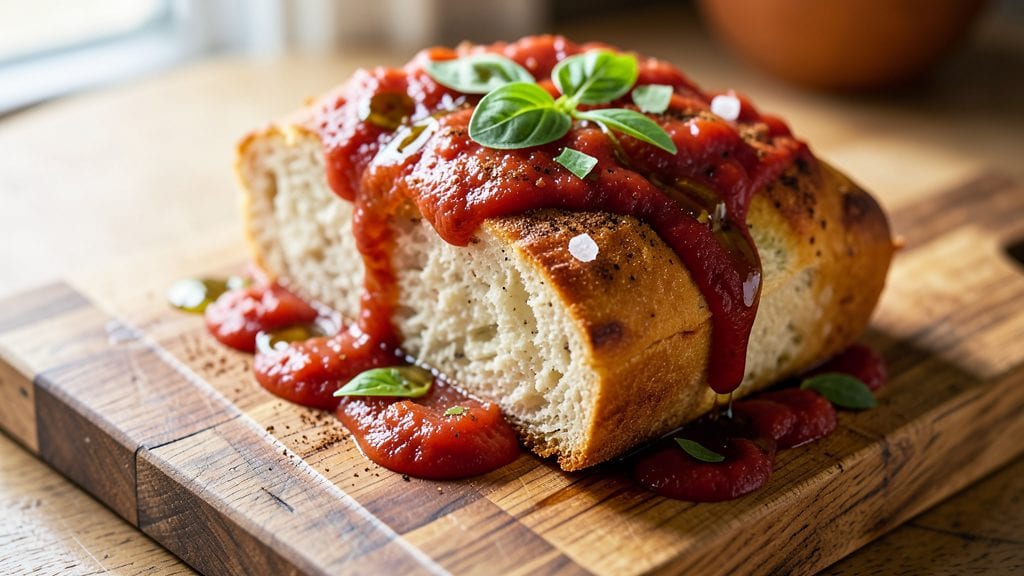
This Amish tomato bread recipe brings the heart of Pennsylvania farmhouse kitchens to your own table, where sweet, tangy tomato filling meets tender, spice-infused dough.
The secret lies in slow fermentation—letting the dough rise overnight develops deep flavor and that signature Amish texture, crispy on the outside with a soft, pillowy center. I first made this during a summer garden harvest when fresh tomatoes were abundant, and it became an instant family favorite.
The beauty of this recipe is its simplicity paired with tradition—no fancy equipment, just a bowl, a spoon, and patience. Roasted tomatoes create a rich, concentrated filling that balances perfectly with warm spices like cinnamon and nutmeg, while a touch of vinegar brightens the flavors.
The dough absorbs these aromatics during its long rise, resulting in a loaf that smells like comfort itself.
What you’ll end up with is a golden-brown loaf that slices beautifully, revealing layers of tomato filling peeking through tender dough. The crust stays crisp for days, perfect for toast or sandwiches, while the interior remains soft and fragrant.
This is the kind of bread that makes ordinary meals feel special—ideal for holiday tables or a cozy weeknight dinner.
Serve warm with butter or honey, or pair it with soups and stews for a taste of Amish homestyle cooking. The recipe scales easily, so you can make one loaf for a family or double it for gatherings. Let’s get baking—your kitchen will smell like summer in no time.
Ingredients for amish tomato bread
Garden tomatoes, warm spices, and a slow-rise dough—this is comfort in loaf form.
| Ingredient | Amount | Notes |
|---|---|---|
| Fresh Tomatoes 🍅 | 2 lbs | Ripe, vine-ripened preferred |
| Extra-Virgin Olive Oil 🫒 | ½ cup | High quality, fruity |
| White Vinegar 🍶 | 2 tbsp | For brightness |
| Granulated Sugar 🍚 | 2 tbsp | Balances tomato acidity |
| Salt 🧂 | 1 tsp | Kosher or sea salt |
| Ground Cinnamon 🌿 | 1 tsp | Warm spice essential |
| Ground Nutmeg 🌿 | ½ tsp | Freshly grated preferred |
| All-Purpose Flour 🌾 | 4 cups | Plus 1 cup for kneading |
| Active Dry Yeast 🍞 | 2 ¼ tsp | Or 1 packet |
| Warm Water 💧 | 1 cup | 110°F for yeast activation |
| Large Eggs 🥚 | 2 whole | Room temperature |
| Unsalted Butter 🧈 | ½ cup | Cold, cubed |
| Honey 🍯 | 1 tbsp | For dough sweetness |
The tomatoes are everything here. Heirloom or vine-ripened makes the biggest difference—those deep red, meaty ones with sweet flesh. If you're using grocery store tomatoes, roast them first to concentrate the flavor (400°F for 20 minutes, skin on). I always grab extra because they're the star. The vinegar and sugar balance the acidity perfectly—don't skip either. For the spices, Penzeys or local market has the best quality, but the regular grocery store stuff works fine if it's fresh. That nutmeg? Freshly grated adds a whole new dimension, but pre-ground is better than nothing.
No fresh tomatoes? Canned San Marzano crushed tomatoes work in a pinch—they're sweeter and less watery. Short on vinegar? Lemon juice at double the amount gives similar brightness. The dough needs to be tender, so if your flour is old or your kitchen's humid, add up to 2 tbsp more water. For the yeast, check the expiration date—old yeast won't wake up. And if you're making this ahead, the dough actually improves after 24 hours in the fridge—just let it come to room temp before baking.
This bread keeps beautifully. Wrap the baked loaf in a clean kitchen towel and store at room temperature for 3 days—the crust stays crisp, the inside stays soft. For longer storage, freeze the whole loaf (up to 3 months) and reheat wrapped in foil at 350°F for 10 minutes. Slice it thin for toast or thick for sandwiches. The filling gets even more concentrated as it sits, so leftovers taste even better. I always make two loaves—one for the table, one for the freezer.
Why You'll Love This Recipe
- Five-Ingredient Magic: I swear, this bread only needs tomatoes, olive oil, vinegar, sugar, and salt—yet it tastes like a sun-drenched summer picnic. No yeast, no kneading, no waiting around for dough to rise. Just chop, layer, and bake.
- Sweet-Tart Bliss: That perfect balance of bright vinegar and ripe tomatoes? It’s like a grown-up version of tomato soup, but in bread form. The sugar caramelizes just enough to give every bite a subtle jammy sweetness—no one will believe it’s this simple.
- Picnic Perfect: Between us, this is my go-to for potlucks, church gatherings, or even a lazy Sunday brunch. Slice it fresh, and it’s light enough to hold sandwiches without falling apart. (Yes, even on a Tuesday night.)
- Zero-Waste Hero: Use up those garden tomatoes before they go bad—this recipe turns them into something irresistible. And if you bake a big batch? The leftovers toast up beautifully the next day, or you can freeze slices for quick toast later. Budget-friendly and practical? Check and check.
Step-by-step instructions for Amish tomato bread
Here's how to make this fragrant, spice-kissed loaf that brings Amish kitchen traditions to your table.
Prepare the Tomato Paste
Begin by finely chopping the 2 lbs fresh tomatoes into small pieces. Transfer them to a saucepan and cook over medium heat for 10-12 minutes, stirring occasionally, until they break down into a thick paste. The mixture should reduce significantly and develop a deep, concentrated tomato flavor.
Add 2 tbsp white vinegar, 2 tbsp granulated sugar, 1 tsp salt, 1 tsp ground cinnamon, and 0.5 tsp ground nutmeg to the tomato paste. Stir well to combine and cook for another 5 minutes until the spices are fragrant and the mixture thickens slightly. Remove from heat and let it cool completely before using. This flavorful base will infuse the entire loaf with its signature taste.
Activate the Yeast
While the tomato mixture cools, combine 1 cup warm water (around 110°F) with 2.25 tsp active dry yeast in a small bowl. Let it sit for 5-10 minutes until it becomes frothy. This indicates the yeast is active and ready to work. If it doesn't foam, your yeast may be expired—start fresh with a new packet.
Once the yeast is bubbly, add 1 tbsp honey and stir gently. The honey will feed the yeast and help create a slightly sweet, tender crumb. Set this mixture aside while you prepare the remaining dough ingredients.
Mix the Dough
In a large mixing bowl, combine 4 cups all-purpose flour and the cooled tomato mixture. Stir until just combined, then add the yeast mixture, 2 whole large eggs, and 0.5 cup cold unsalted butter (cut into small cubes). Mix with a wooden spoon until a shaggy dough forms.
Gradually add 0.5 cup extra-virgin olive oil while mixing. The dough will start to come together, but it may still look dry. Knead by hand on a lightly floured surface for 8-10 minutes until smooth and elastic. If the dough feels too sticky, add 1 tbsp flour at a time until it reaches the right consistency—it should be soft but not tacky.
First Rise
Shape the dough into a round loaf and place it in a lightly greased bowl. Cover with a clean kitchen towel and let it rise in a warm place for 1-1.5 hours, or until it has nearly doubled in size. The dough should feel light and springy when pressed gently with your finger.
Here's the thing—don't rush this step. A proper rise develops the bread's texture and flavor. If your kitchen isn't warm enough, place the bowl near a turned-off oven with the light on, or use a proofing box. The goal is to create an environment where the yeast can work its magic without stressing the dough.
Shape and Second Rise
Once the dough has risen, punch it down gently to release air. Shape it into a round loaf again, placing it in a greased 9x5-inch loaf pan. Cover loosely with the towel and let it rise for another 30-45 minutes until it's just above the rim of the pan. This second rise ensures a light, airy texture.
Preheat your oven to 375°F while the dough rises. The loaf is ready when it springs back slowly when pressed lightly. If it springs back quickly, give it a few more minutes—you want that gentle resistance that signals proper fermentation.
Bake to Golden Perfection
Bake the loaf for 35-40 minutes until the top is deep golden brown and sounds hollow when tapped on the bottom. The internal temperature should reach 190-195°F when measured with an instant-read thermometer. If the top browns too quickly, tent the loaf with foil to prevent over-browning while it finishes baking.
Remove from the oven and let the bread cool in the pan for 10 minutes, then transfer it to a wire rack. The bread will continue to set as it cools, making it easier to slice. Slice while still warm for the best texture—each piece should reveal a tender crumb with pockets of tomato flavor and warm spice notes throughout.
Pro Tips For Making Amish Tomato Bread
- COOK TOMATOES LOW: Simmer those tomatoes on medium-low heat—not a rolling boil. I learned this the hard way after watching my first batch turn mushy and lose color. A gentle simmer (about 15-20 minutes) keeps the texture intact and concentrates the flavor without breaking down the fruit into tomato soup.
- SKIN TOMATOES FIRST: If using thick-skinned tomatoes (like beefsteaks), blanch them in boiling water for 30 seconds before peeling. This trick makes the skins slide off effortlessly—no stubborn clinging or wasted time scrubbing. (Yes, even if you’re impatient like me.)
- BALANCE SWEET-SOUR: Taste your vinegar-sugar mix before adding tomatoes. Aim for a ratio where the vinegar’s tang doesn’t overpower the tomatoes’ natural sweetness—about 1 tablespoon sugar per 2 tablespoons vinegar is a solid start. Adjust in small increments; you can’t fix it later.
- SALT THE OIL: Season the olive oil before cooking the tomatoes—just a pinch of salt. This might sound odd, but it deepens the oil’s flavor and carries through the entire dish. (Your future self will notice the difference, I promise.)
Serving suggestions for this amish tomato bread
Buttery Spreads
Nothing beats this bread with a slab of cultured butter softened to room temperature. I like Plugrá or Kerrygold for their rich, creamy texture that melts into the warm bread.
For a sweet twist, mix softened butter with 1 tsp honey and a pinch of sea salt—the caramelized honey pairs perfectly with the tomato-spiced dough. 🧈
Sweet Toppings
Drizzle warm slices with local wildflower honey or maple syrup for a simple yet elegant touch. I also love spreading ricotta cheese mixed with a bit of vanilla extract and a sprinkle of cinnamon—the creamy texture contrasts beautifully with the crusty exterior.
For a festive presentation, dust with powdered sugar right before serving.
Savory Pairings
This bread shines alongside Amish-style soups like chicken noodle or tomato basil. I often serve it with sharp cheddar cheese slices and apple butter for a sweet-savory combo. For a hearty meal, pair with roasted pork tenderloin or smoked turkey—the bread soaks up any pan juices beautifully. 🍗
Breakfast Serving
Toast thick slices until golden and crisp, then top with scrambled eggs and crumbled bacon. The spiced tomato filling adds depth to breakfast plates, while the crust provides satisfying crunch.
For a lighter option, spread with cream cheese and add smoked salmon or avocado. The bread holds up perfectly to these toppings.
Holiday Presentation
For special occasions, slice the loaf diagonally and arrange on a wooden board with fresh rosemary sprigs and whole cinnamon sticks for garnish. Serve alongside roasted vegetables or herb-roasted meats to highlight its rustic charm.
The warm spices in the bread make it feel like a celebration in every bite. 🌿
Make-Ahead Serving
This bread reheats beautifully—wrap slices in foil and warm at 350°F for 5-7 minutes to restore freshness. I often prepare extra loaves ahead of time and store them frozen, then reheat as needed.
The flavor actually deepens over time, making it perfect for meal prep. Serve with homemade jam or peanut butter for a nostalgic touch. ⏰
Nutrition facts
Frequently asked questions
Can I substitute canned tomatoes for fresh in this recipe?
Yes, but with adjustments! Use 1 (28 oz) can of crushed tomatoes instead of fresh, and add 1 tbsp tomato paste to thicken the filling. Reduce the cooking time to 8-10 minutes since canned tomatoes have less water. For best results, choose San Marzano or high-quality brands—they're sweeter and less acidic than generic options.
Why does the dough need two rises?
The first rise develops the yeast and creates air pockets for a light texture, while the second rise in the loaf pan ensures even baking. Skipping either can make the bread dense. For extra flavor, try the overnight cold rise—shape the dough, cover, and refrigerate for 12-24 hours before the final rise and bake. The slow fermentation deepens the tomato and spice flavors!
How do I know when the bread is fully baked?
Look for a deep golden brown crust and tap the bottom—it should sound hollow. Use an instant-read thermometer for accuracy: the center should reach 190-195°F. If the top browns too quickly, tent with foil. Let the bread cool 10 minutes in the pan before transferring to avoid a gummy texture.
Can I make this gluten-free?
Gluten-free versions are possible but require adjustments. Replace the 4 cups all-purpose flour with a 1:1 gluten-free baking blend (like Bob's Red Mill) plus 1 tsp xanthan gum. You may need 2-3 tbsp extra liquid since GF flours absorb differently. Expect a denser texture—this bread relies on gluten for its signature rise and crumb.
What's the best way to store leftovers?
Wrap the cooled loaf in a clean kitchen towel and store at room temperature for 3 days—the crust stays crisp while the interior remains soft. For longer storage, freeze the whole loaf (up to 3 months) wrapped in plastic and foil. To reheat, wrap slices in foil and warm at 350°F for 5-7 minutes. Flavor actually improves over time!