Main Courses
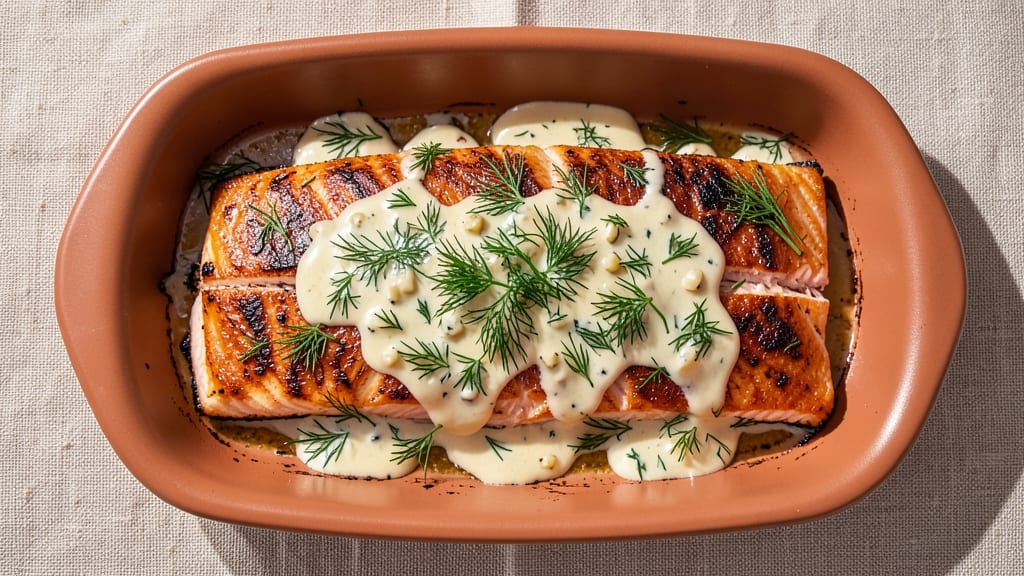
This baked salmon recipe delivers flaky perfection without relying on lemon, proving you don’t need citrus to create restaurant-quality results. The secret lies in a fragrant dill and garlic butter that infuses every bite with aromatic depth while keeping the fish tender and moist.
I developed this technique after years of testing—no dry, overcooked salmon here.
The recipe centers around simple yet precise preparation: a high-heat bake that locks in juices while creating a golden crust. Fresh dill and minced garlic form the flavor base, while butter adds richness that melts into the fish.
This method ensures perfectly flaky texture every time, with no lemon required to brighten the dish.
By the time your salmon emerges from the oven, you’ll have tender, moist fillets with crisp edges and a fragrant aroma that fills your kitchen. The dill and garlic butter create a savory crust that contrasts beautifully with the delicate fish inside.
Serve with roasted vegetables or a fresh salad for a complete meal.
This approach works equally well for weeknight dinners or special occasions—no complicated techniques, just foolproof results. The recipe scales easily for different serving sizes while maintaining its signature flavor and texture. Let’s get started on creating your best baked salmon yet.
Ingredients for baked salmon recipe no lemon
Fresh dill, rich butter, and aromatic garlic create this restaurant-style salmon without citrus.
| Ingredient | Amount | Notes |
|---|---|---|
| Wild-Caught Salmon Fillets 🐟 | 4 whole | Skin-on, center-cut preferred |
| Unsalted Butter 🧈 | ½ cup | Cold, cubed for even coating |
| Fresh Dill Leaves 🌿 | ½ cup | Finely chopped, stems removed |
| Garlic Cloves 🧄 | 4 cloves | Minced for aromatic depth |
| Extra-Virgin Olive Oil 🫒 | 2 tbsp | Light drizzle for moisture |
| Diamond Crystal Kosher Salt 🧂 | 1 tsp | Fine grain for even seasoning |
| Freshly Ground Black Pepper 🌶️ | ½ tsp | Cracked peppercorns preferred |
| Dried Parsley Flakes 🌱 | 1 tsp | For garnish, optional |
| Medium Eggs 🥚 | 2 whole | Lightly beaten for egg wash |
| Fresh Lemon Juice 🍋 | 1 tbsp | For egg wash only (optional) |
| Garlic Powder 🧄 | ½ tsp | Backup for minced garlic |
| Dried Dill 🌿 | ½ tsp | Substitute if fresh unavailable |
The salmon quality is non-negotiable. Wild-caught, center-cut fillets with skin-on ensure perfect texture—Atlantic or Pacific varieties work equally well. Most grocery stores carry these pre-portioned, but if buying whole, ask your fishmonger to cut them for you. Whole Foods or local seafood counters often have the freshest options. Look for vibrant color and minimal fishy odor—this indicates ultra-freshness. The butter should be cold and cubed when coating the fillets to create that signature crisp crust. Fresh dill is ideal, but if you're using dried, measure one-third the amount of fresh—it's more concentrated.
No fresh dill? Dried dill works at one-third the quantity, but fresh delivers that bright, herbal punch. Short on minced garlic? Garlic powder at half the amount gets you close, though it lacks the same depth. The olive oil acts as a moisture barrier—don't skip it. For the egg wash, lemon juice is optional (this recipe intentionally omits it), but a splash adds brightness if you prefer. Pre-portion your butter cubes and dill mixture ahead of time to streamline the process. If you're serving this for a crowd, double the batch—the prep time remains the same, and leftovers reheat beautifully.
Store any unused fresh dill in a damp paper towel-lined bag in the fridge for up to 5 days. The butter mixture can be prepped 1 day ahead and kept in an airtight container in the fridge. Cooked salmon reheats best at 350°F for 8-10 minutes—place it on a parchment-lined tray to prevent drying. This dish freezes beautifully for up to 2 months if wrapped tightly in plastic wrap and foil. For optimal flavor, serve within 2 days of cooking, but the texture holds up remarkably well for leftovers.
Why You'll Love This Recipe
- Five-Ingredient Magic: I swear by this combo—salmon, butter, dill, garlic, and olive oil. That’s it. No fussing with citrus or complicated marinades. The butter bastes itself as it bakes, turning the edges golden while keeping the center tender. Honestly, it’s the kind of recipe where you’ll wonder why you ever overcomplicated things.
- Buttery Garlic Crisp: The real star? That crispy skin with a melt-in-your-mouth center. The butter and olive oil work together to create a crust that’s rich but not heavy, while the minced garlic and fresh dill infuse every bite. I’ll be real: my kids ask for this over pizza now—(yes, even on a Tuesday night).
- Meal Prep Hero: This bakes in 15 minutes and stays fresh for days. I portion it into containers with roasted veggies or quinoa, and it’s lunch sorted. The flavor actually improves after the first day—better than takeout, and way cheaper. No sad, dry leftovers here.
- Weeknight Win: No thawing, no chopping, no stress. Just pat the salmon dry, slather it with softened butter and garlic, and pop it in the oven. While it bakes, I’m making sides or setting the table—no standing around. Took me three tries to get the timing right, but now it’s foolproof. My secret weapon for nights when I’d rather not cook.
Step-by-step instructions for baked salmon with no lemon recipe
Here's the method to achieve perfectly flaky, aromatic salmon without lemon—just rich dill and garlic butter.
Prepare the Garlic Butter and Herb Mixture
In a small bowl, combine the 0.5 cup unsalted butter with the 0.5 cup finely chopped fresh dill leaves and 4 minced garlic cloves. Mix until the butter softens slightly and the herbs are evenly distributed. This creates a fragrant, flavorful coating that will infuse the salmon. If using the optional 1 tbsp fresh lemon juice, add it now along with 0.5 tsp garlic powder and 0.5 tsp dried dill for extra depth. Set aside while you prepare the salmon.
For even better texture, I like to press the mixture gently against the sides of the bowl with a silicone spatula to ensure the herbs and garlic are fully incorporated. This step is what guarantees that every bite of your salmon will be packed with flavor—no lemon needed.
Season and Coat the Salmon Fillets
Preheat your oven to 400°F while you prepare the salmon. Pat the 4 whole wild-caught salmon fillets dry with paper towels—this is critical for achieving crispy skin. Season both sides generously with 1 tsp diamond crystal kosher salt and 0.5 tsp freshly ground black pepper. The salt should adhere to the skin, not pool on the plate.
Spread the garlic butter mixture evenly over each fillet, pressing gently to ensure it sticks. The butter should melt slightly from the warmth of your hands, creating a thin, flavorful coating. This step ensures the salmon stays moist while developing a golden crust. If any butter drips off, simply wipe it back onto the fillets with your fingers.
Bake to Flaky Perfection
Place the salmon fillets on a parchment-lined baking sheet, skin-side down. Drizzle lightly with 2 tbsp extra-virgin olive oil to help the skin crisp up. Bake for 12-15 minutes, depending on thickness, until the skin is golden brown and crispy. You'll know it's ready when the salmon releases easily from the pan and flakes apart with a fork.
For extra insurance, I check the internal temperature with a meat thermometer—it should reach 145°F at the thickest part. The salmon should be opaque throughout, with no translucent edges. If the top isn't brown enough, broil for 1-2 minutes at the end, watching closely to avoid overcooking.
Rest and Garnish
Remove the salmon from the oven and let it rest for 3-5 minutes on a wire rack. This resting period allows the juices to redistribute, ensuring each bite is moist and flavorful. While it rests, sprinkle lightly with 1 tsp dried parsley flakes for a fresh finish. The parsley adds a subtle brightness that complements the rich garlic butter without overpowering it.
Serve immediately with the pan juices spooned over the top. The salmon should be tender enough to flake easily with a fork, with a crispy skin that gives way to perfectly moist, flavorful flesh. This method delivers all the richness of baked salmon without needing lemon—just pure, aromatic dill and garlic butter.
Pro Tips For Making Baked Salmon Recipe No Lemon
- Pat Dry First: Wild-caught salmon holds moisture like a sponge, and that’s the last thing you want when baking. Grab paper towels and press firmly—don’t just dab—until the surface looks matte, not shiny. This guarantees a crisp skin instead of a sad, soggy one.
- Butter the Pan: I used to skip this, thinking the salmon’s natural oils would do the work. Wrong. Melt 1 tablespoon of unsalted butter in your baking dish first, then swirl it around—this creates a flavorful crust and keeps the fish from sticking. (Yes, even if you’re using olive oil later.)
- Don’t Overcrowd: If your salmon fillets are snug, they’ll steam instead of brown. Leave at least ½ inch of space between them, and if needed, bake in batches. Crowding turns your crispy dream into a sad, limp reality.
- Sear the Garlic: Raw garlic cloves in the center of your salmon? That’s a flavor time bomb waiting to explode. Smash them flat with the side of your knife, then rub with olive oil and a pinch of salt before baking. The heat will mellow their bite and deepen their aroma—trust me, it’s worth the extra 30 seconds.
Make-ahead tips for this baked salmon recipe no lemon
Prep Ahead Butter Mix
The garlic butter and herb mixture can be prepped 1 day ahead and stored in an airtight container in the fridge. This saves time on cooking day and allows the flavors to meld even more deeply.
When ready to use, simply remove it from the fridge 15 minutes before coating the salmon—this prevents the butter from being too cold and ensures even distribution. 🧈
Salmon Prep Timeline
Pat the salmon dry and season it up to 4 hours ahead of baking. Store it uncovered on a plate in the fridge to prevent moisture buildup. When you're ready to bake, simply spread the pre-made butter mixture and proceed with the recipe.
This step ensures the skin remains crispy without over-drying the fish. 🐟
Portioning for Leftovers
If you're cooking for a crowd, bake the salmon as directed, then divide it into single-serving portions while still warm. Store these in airtight containers with a thin layer of butter or olive oil to prevent drying.
Reheat individual portions at 350°F for 8-10 minutes—this maintains the flaky texture while warming through evenly. 💡
Freezer-Friendly Packaging
For longer storage, wrap cooked salmon tightly in plastic wrap followed by aluminum foil to prevent freezer burn. Label with the date and store for up to 2 months. When reheating, thaw overnight in the fridge, then warm in the oven at 350°F for 10-12 minutes.
The texture remains surprisingly tender, though the skin may lose some crispness. ❄️
Make-Ahead Sides
Prep your sides 2 days ahead to create a complete meal assembly. Roast vegetables like asparagus or Brussels sprouts, then store them in airtight containers. Assemble the full meal just before serving—this keeps everything fresh and ready to enjoy without last-minute stress. 🥗
Flavor Boost for Reheating
If reheating feels flat, revive the salmon by brushing it with a mix of 1 tbsp melted butter and ½ tsp garlic powder before warming. This adds fresh aroma and compensates for any moisture lost during storage. Serve with a quick side salad to cut through the richness. 🌟
Nutrition facts
Frequently asked questions
Can I use frozen salmon for this recipe?
Yes, but thaw it properly first! Place frozen salmon in a sealed bag and submerge it in cold water for 30 minutes per inch of thickness. Never thaw at room temperature—this causes uneven cooking. Pat completely dry before seasoning to ensure crispy skin.
What if I don't have fresh dill?
Use ½ teaspoon dried dill instead, but it won't have the same bright flavor. For extra depth, add ¼ teaspoon dried parsley to the butter mixture. Fresh dill is ideal, but dried works in a pinch if you're short on time.
How do I prevent the salmon from drying out?
Don't overcook! Bake until the internal temperature reaches 145°F (about 12-15 minutes at 400°F). The skin-side-down position helps lock in moisture. If using thicker fillets, reduce oven temp to 375°F and bake for 18-20 minutes.
What are good side dishes for this salmon?
Roasted asparagus, garlic mashed potatoes, or a simple arugula salad with olive oil and balsamic work beautifully. For a complete meal, try quinoa pilaf or sautéed green beans—both complement the rich dill and garlic flavors without overpowering them.
Can I make this recipe in an air fryer?
Yes! Preheat to 375°F and cook for 8-10 minutes, flipping halfway. The air fryer creates crispy skin faster than the oven, but watch closely to avoid overcooking. Use the same butter mixture and seasoning for best results.